
The most common oxygen sensor symptoms are a lit Check Engine light, worse gas mileage, a rough idle, hesitation when you accelerate, and a failed emissions test. A failing sensor can also show up with no drivability complaint at all, just a stored trouble code. Because other problems can look the same, the sensor should be tested before it is replaced.
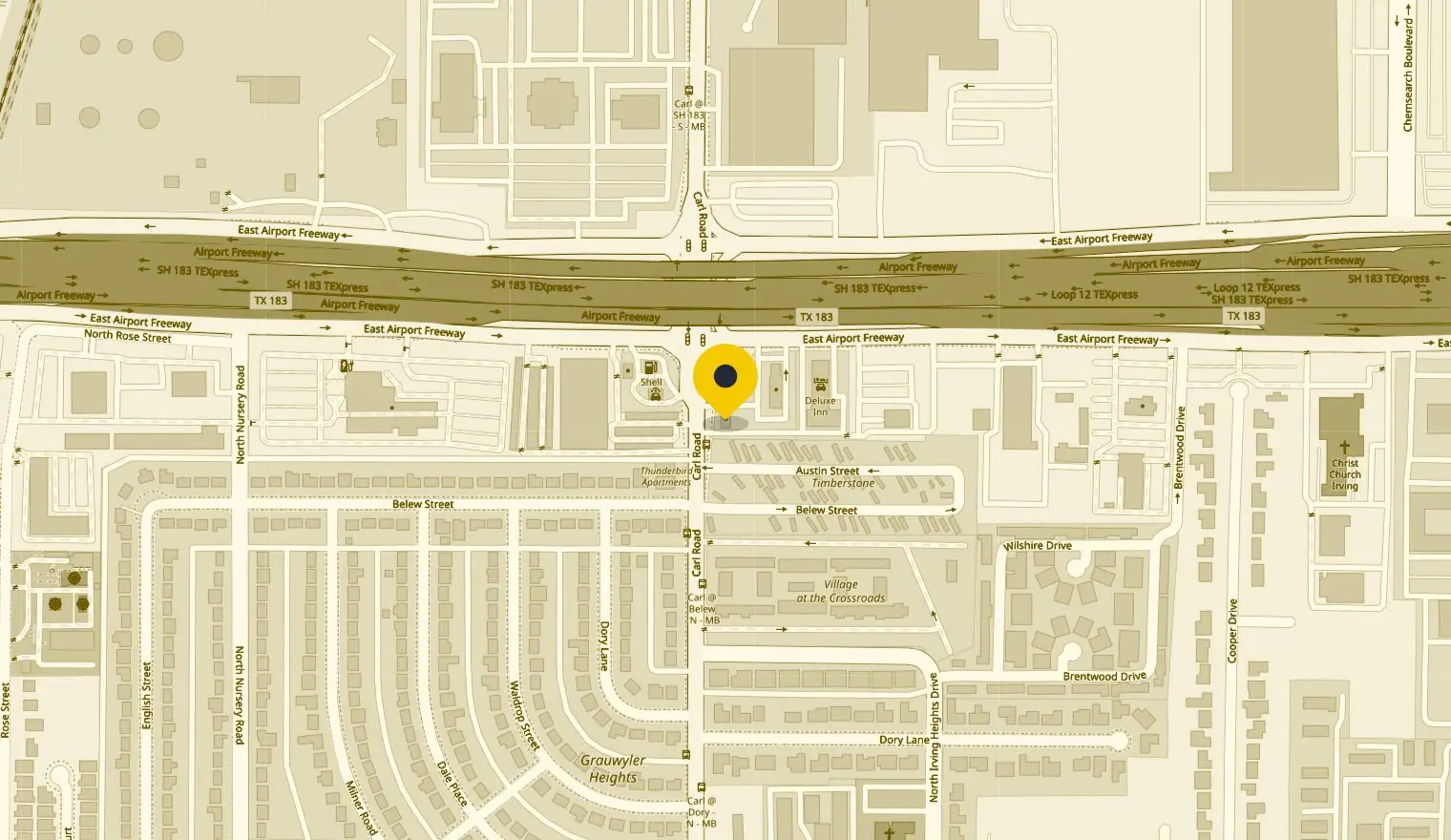
This guide covers each warning sign, what the O2 sensor codes mean, what replacement typically costs, and what happens at a shop visit. We wrote it from the service bay at Kwik Kar Oil Change & Auto Care, 2100 Carl Rd, Irving, TX 75061, where we see these codes on drivers’ cars every week.
TL;DR
- The usual signs are a Check Engine light, lower fuel economy, rough idle, hesitation or surging, and a failed emissions test.
- Some sensors wear out slowly, so the only clue may be a code or a gradual drop in miles per gallon.
- An O2 code is a starting point, not proof the sensor is bad. Wiring, exhaust leaks, fuel delivery and other parts can set the same code.
- A typical US professional replacement runs about $150 to $600, parts and labor, depending on the vehicle and sensor location.
- Get the light diagnosed before an emissions test. Clearing the code just before a test can leave the car not ready to pass.
Table of Contents
- What does an oxygen sensor do?
- Oxygen sensor symptoms to watch for
- Can you tell if an O2 sensor is bad just by looking at it?
- O2 sensor codes: what the numbers mean
- What else can mimic a bad oxygen sensor?
- Can you clean an oxygen sensor instead of replacing it?
- How much does it cost to replace an oxygen sensor?
- Should you keep driving with a bad oxygen sensor?
- Oxygen sensors and Texas emissions testing
- What happens at a shop visit for an O2 sensor code
- Our perspective: a code is a clue, not a verdict
- Get a clear answer on your Check Engine light
- FAQ
- Sources
What does an oxygen sensor do?
An oxygen sensor sits in your exhaust and reports how much unburned oxygen is leaving the engine. The engine computer uses that reading to trim the fuel mixture, adding or cutting fuel moment to moment so the engine burns cleanly. Most cars have at least two: one or more before the catalytic converter (upstream) and one or more after it (downstream).
The upstream sensor is mostly about fuel control. The downstream sensor mostly checks that the catalytic converter is doing its job. The sensor only reports information. As Walker Products’ troubleshooting guide points out, an OBD-II code on its own does not mean the sensor itself has failed. That single idea saves a lot of drivers from buying parts they did not need.
Oxygen sensor symptoms to watch for
These are the signs we see most, roughly in the order drivers notice them.
1. The Check Engine light comes on
This is the most common sign. Cars built for the US since model year 1996 use onboard diagnostics that monitor emissions-related parts and turn on the malfunction indicator when they detect a fault, according to the EPA’s OBD FAQ. A steady light is a request to schedule a diagnosis. A flashing light usually means an active misfire that can damage the catalytic converter, so reduce speed and have it looked at promptly. Our guide on what the Check Engine light means walks through that difference.
2. Gas mileage drops
If you are filling up more often with no change in driving habits, a lazy sensor may be pushing the mixture richer than needed. Walker Products notes that some older, slow sensors may cut fuel economy by 10 to 15 percent, though that is not a promise for every vehicle. Track a few tanks before you decide. One bad week of stop-and-go on I-635 is not a sensor problem.
3. Rough idle or stalling
When the fuel mixture is off, the engine may shake at a red light, idle unevenly, or in worse cases stall. This one has a long list of other causes, including vacuum leaks, worn spark plugs and dirty throttle bodies. If you also feel a shudder under load, see our P0300 misfire guide.
4. Hesitation, surging or weak acceleration
A sensor that responds slowly can make the engine stumble when you press the pedal, or surge slightly at steady highway speed. Drivers often describe it as the car feeling “tired” merging onto Highway 183 or State Highway 114.
5. A failed emissions test
A bad oxygen sensor can push tailpipe readings out of range, and a related code can mean the car is not ready to be tested at all. More on that in the Texas section below.
6. A rotten-egg smell or black soot at the tailpipe
A rich mixture can leave dark soot on the exhaust tip, and a struggling catalytic converter can produce a sulfur smell. Both point to a fuel or exhaust problem that deserves a look, though neither identifies the sensor by itself.
7. No symptoms at all
Some sensors fade gradually. In that case you may notice only slightly worse mileage or a stored code. This is one reason we recommend a scan any time the light comes on, even if the car seems to drive fine.
Can you tell if an O2 sensor is bad just by looking at it?
Not reliably. The sensor is bolted into the exhaust, so it will show heat discoloration whether it is healthy or not. Soot, oil, coolant or silicone deposits can hint at a contamination problem, but a visual check cannot tell you how fast the sensor reacts.
Proper testing uses a scan tool to watch live sensor data. A conventional narrowband sensor can only be judged once the engine is at operating temperature, and Walker describes a healthy signal swinging roughly between 0.2 and 0.8 volts. Wideband air-fuel sensors, common on newer vehicles, work differently and need their own test procedure, so those voltage numbers do not apply to every car.
O2 sensor codes: what the numbers mean
Oxygen sensor trouble codes fall into a few families. Exact bank and sensor numbers depend on your engine layout. Bank 1 is the side with cylinder number one, and sensor 1 is upstream of the converter.
| Code range | General meaning | What else can cause it |
|---|---|---|
| P0130 to P0167 | Sensor circuit, voltage, slow response, no activity or heater faults | Damaged wiring, blown heater fuse, exhaust leak, a worn sensor |
| P0170 to P0175 | Fuel trim, system too lean or too rich | Vacuum leak, weak fuel pressure, leaking injector, dirty MAF sensor |
| P0420 and P0430 | Catalyst efficiency below threshold | Failing converter, exhaust leak, misfire, a slow sensor |
The first two rows come from Walker’s OBD-II code reference, which notes that the P0170 to P0175 family can have causes other than the sensor. The catalyst codes are the ones drivers most often ask about, and they are a good example of why diagnosis matters: replacing a converter when a sensor or a misfire was the real issue is an expensive mistake.
Why does the code keep coming back after replacement?
Usually because the sensor was reporting a real problem. A lean code can come from an intake leak. A rich code can come from a leaking injector or a failing MAF sensor. A heater circuit code can be a wiring or fuse problem. Contamination from an oil or coolant leak can also ruin a new sensor. Fixing the cause matters more than swapping the part.
What else can mimic a bad oxygen sensor?
Before a sensor goes on the parts order, a thorough technician checks the rest of the system. The list is long:
- Wiring and connectors near the exhaust, which see constant heat
- Heater circuit fuses and relays
- Exhaust leaks ahead of the sensor, which let in outside air and fake a lean reading
- Vacuum leaks and fuel delivery problems
- Leaking injectors or a faulty mass airflow sensor
- Oil or coolant contamination
- A failing catalytic converter
That is why we cross-check other sensors when symptoms overlap. If your car has a rough idle and a lean code, a bad MAP sensor or an EVAP leak may be involved instead.
Can you clean an oxygen sensor instead of replacing it?
We do not recommend it. Cleaning products cannot repair a sensor that has aged internally, and most vehicle manufacturers advise against cleaning O2 sensors. If a sensor is contaminated, the better move is to find and fix the source of the contamination and replace the sensor if testing shows it is slow or dead.
How much does it cost to replace an oxygen sensor?
As of June 2025, AutoZone reported a typical US professional range of $150 to $600 for parts and labor, with DIY parts running $20 to $300 per sensor. That is a market reference, not a quote from us. Your actual cost depends on:
- How many sensors need replacing and which ones
- Whether the sensor is easy to reach or rusted into the exhaust
- Vehicle make, engine and sensor type (universal versus direct-fit)
- Diagnostic time needed to confirm the cause
- Local labor rates
We give vehicle-specific estimates after inspection. Ask any shop what the diagnostic fee includes. Our breakdown of engine diagnostic costs lists the questions worth asking.
Should you keep driving with a bad oxygen sensor?
Short term, the car will usually run. Long term, it is a gamble. A bad sensor can throw off fuel control and raise emissions, and the EPA describes the Check Engine light as an early warning meant to catch small emissions faults before they become major repair bills. Walker also lists premature catalytic converter failure among the possible results of a failing sensor. The converter is typically the costliest part in the exhaust system.
If the light is flashing, the engine is running very rough, or you smell fuel or hot sulfur, stop driving and call a shop. Those are not situations to wait out.
Oxygen sensors and Texas emissions testing
Texas ended annual safety inspections for most non-commercial vehicles, effective January 1, 2025. Emissions testing did not go away everywhere. Drivers in 17 of the state’s most populous counties, including Dallas, still need an annual emissions test, and a $7.50 replacement fee now applies to the inspection program. Qualifying commercial vehicles remain subject to applicable safety inspections. If you want a broader look at how inspection programs work, a vehicle inspection process guide is a helpful companion. Verify your own vehicle’s requirements before you go, since rules and eligibility can change.
For O2 sensors, the practical advice is simple:
- Do not clear the code right before a test. Clearing it resets the car’s readiness monitors, and they need to run again before the car can be tested. Our post on readiness monitors that are not ready explains how that works.
- Diagnose first, repair second, then retest.
- Read our Texas emissions test guide and the state inspection rundown to confirm what applies to you.
The EPA also notes that inspection requirements vary by state, so advice you read for California or Florida may not fit Irving.
What happens at a shop visit for an O2 sensor code
Here is how we approach it at our Irving shop:
- Scan and record. We retrieve the stored codes and the freeze-frame data, which shows engine conditions when the fault was set.
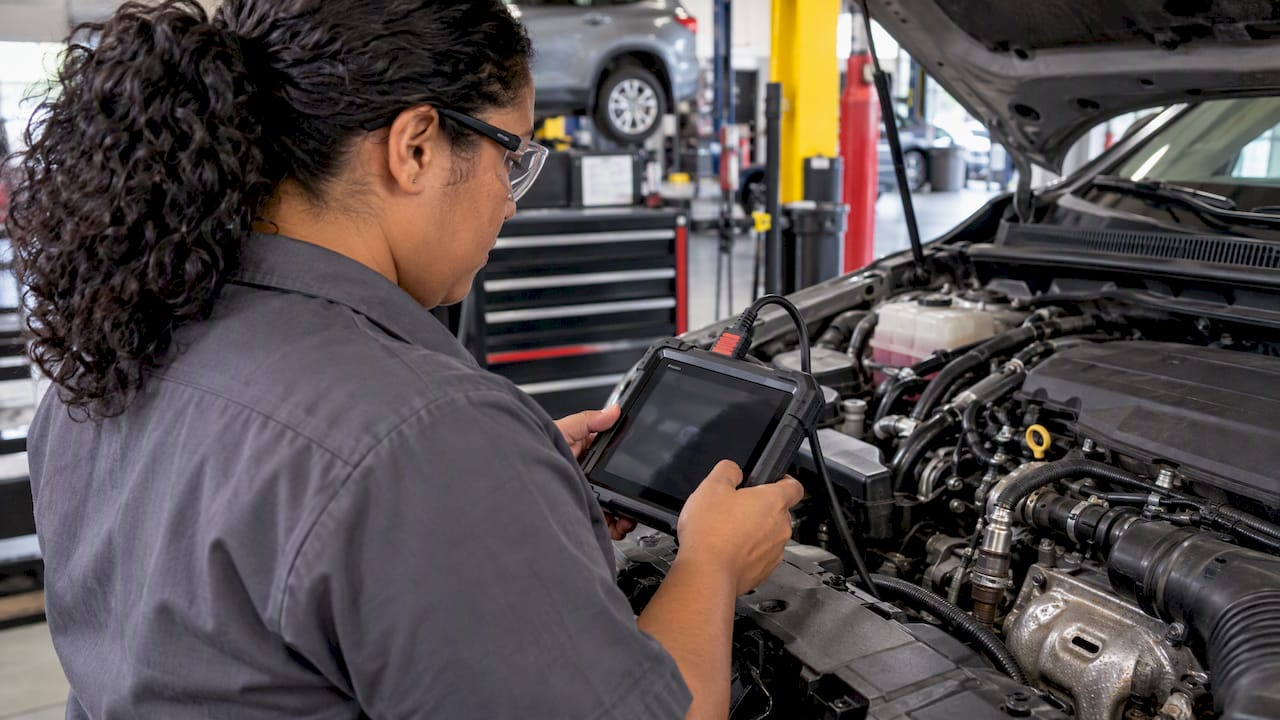
- Look at live data. We watch sensor response and fuel trims with the engine warm.
- Check the surroundings. Wiring, heater fuses, exhaust leaks, vacuum leaks and fuel delivery all get a look.
- Explain the finding. Our Digital Vehicle Inspection sends photos, video and technician notes to your phone, so you can see what we saw.
- Repair and verify. If a sensor is needed, we replace it, then confirm the fix with a follow-up scan.
Our engine diagnostic service follows this process.
Our perspective: a code is a clue, not a verdict
We see two mistakes more than any others. One is ignoring the light for months because the car still drives. The other is buying a sensor online because a code reader said “O2 sensor,” then finding the light is back in a week.

Both come from treating a code as a final answer. Our ASE-certified technicians treat it as the first line of the story. If the data says the sensor is slow or dead, we replace it and tell you why. If the data points to an exhaust leak or an injector, we tell you that instead, and we show you the evidence in your inspection report. That kind of transparent recommendation is how we want to earn repeat visits from Irving, Las Colinas, Grand Prairie and Euless drivers.
Routine maintenance helps too. Oil leaks and burning oil can contaminate sensors, and a worn tune-up item like a spark plug can cause a misfire that looks like a sensor problem. Staying on schedule with oil change intervals is cheap protection for the whole exhaust system.
— Kwik Kar
Get a clear answer on your Check Engine light
If your car is showing any of the signs above, bring it to Kwik Kar Oil Change & Auto Care at 2100 Carl Rd, Irving, TX 75061, or call (469) 276-7337. We will scan it, test the sensor and the systems around it, and send you photos and notes so you can decide with confidence. Qualifying repairs are covered by our 24-month/24,000-mile warranty. Third-party financing may be available for larger repairs, subject to provider approval and terms. You can also schedule through our site or read about our engine diagnostic and repair service.
FAQ
What are the first signs of a bad oxygen sensor?
Usually the Check Engine light, followed by a gradual drop in fuel economy. Rough idle, hesitation and a failed emissions test can follow. Some sensors give no feel-it-in-the-pedal symptoms at all.
What are the common codes for a faulty oxygen sensor?
Codes in the P0130 to P0167 range cover sensor circuit, response and heater faults. P0170 to P0175 point to lean or rich fuel conditions, and P0420 or P0430 relate to catalyst efficiency. None of them proves the sensor is the culprit, so the car needs testing first.
How long do oxygen sensors last?
There is no single mileage that fits every car. Walker’s technical booklet notes that early advice to replace sensors every 15,000 to 30,000 miles proved too short, since many still work fine long after. Replace based on test results and your manufacturer’s maintenance schedule.
Will a bad oxygen sensor make me fail the Texas emissions test?
It can. A fault can raise tailpipe emissions or leave the car’s readiness monitors not ready. If you live in an emissions county such as Dallas County, get the light diagnosed and repaired before testing.
Can I drive with a bad O2 sensor?
Often for a short time, but it is not wise to wait. Poor fuel control wastes gas and raises emissions, and it may contribute to catalytic converter damage. Stop and call a shop if the light flashes or the engine runs very rough.
Sources
- Troubleshooting Oxygen Sensors, Walker Products
- OBDII Codes, Walker Products
- Oxygen Sensors, Walker Products
- Oxygen Sensors 101 booklet, Walker Products
- Oxygen Sensor Replacement Cost, AutoZone
- OBD: Frequently Asked Questions, EPA
- Next Steps: Correcting Your Vehicle’s Emission Problems, EPA
- Everything you need to know about Texas’ vehicle inspection requirements, Yahoo Autos