
Follow your owner’s manual or your car’s oil-life monitor first. Ignore the old 3,000-mile rule. Most vehicles driven under normal conditions go 5,000 to 7,500 miles between changes, and many synthetic-oil vehicles stretch to 10,000 or even 15,000 miles when the manufacturer allows it. Your specific interval depends on oil type, driving habits, and what your automaker actually built the engine to handle.
TL;DR:
- Most cars can safely go between 5,000 and 7,500 miles with conventional oil, while synthetic oil and an oil-life monitor can extend the interval up to 15,000 miles under ideal conditions.
- Short trips, towing, idling, dusty roads, and extreme temperatures can shorten oil life, making more frequent changes necessary regardless of mileage.
- Checking your owner’s manual and understanding your car’s oil-life system is essential to avoid unnecessary changes or risking engine damage from overdue oil.
- Oil should be changed at least once every 6 to 12 months, even if low mileage, because oil degrades chemically over time.
- Overchanging oil beyond the manufacturer’s recommendation wastes money, increases environmental waste, and offers no additional engine protection.
Table of Contents
- How Often Should You Really Get an Oil Change?
- How Do You Find Your Vehicle’s Recommended Oil Change Interval?
- Does Synthetic Oil Really Let You Wait Longer Between Changes?
- What Counts as Severe Service for Your Vehicle?
- Does Oil Change Frequency Depend on Time, Not Just Mileage?
- Is It Wasteful to Change Your Oil Too Often?
- How Kwik Kar Approaches Oil Change Recommendations
- A Technician’s Take on Honest Maintenance
- Get Your Next Oil Change Done Right in Irving
- Sources
- FAQ
How Often Should You Really Get an Oil Change?
The honest answer depends on your oil and your driving pattern, but the ranges are more predictable than most drivers assume.
For normal driving conditions, most cars fall somewhere between 5,000 and 7,500 miles per change. That’s the range AAA points to as the standard automaker recommendation for gasoline engines without severe-service demands.
If your car runs full synthetic oil and the manufacturer built it around an oil-life monitoring system, the interval often stretches to 7,500 to 15,000 miles. Consumer Reports confirms that vehicles with these systems, plus factory-fill synthetic oil, routinely handle the longer end of that range without added engine risk.
A few things shorten that window fast:
- Frequent short trips under 10 minutes, especially in cold weather
- Regular towing, hauling heavy loads, or driving with a full cargo bay
- Stop-and-go city driving with a lot of idling
- Dusty, unpaved, or off-road conditions
- Extreme heat, like a Texas summer parking lot
Even if you rack up few miles, don’t stretch past the clock. Most automakers and independent experts recommend a change at least once every 6 to 12 months regardless of mileage, since oil degrades chemically whether or not the car moves.
How Do You Find Your Vehicle’s Recommended Oil Change Interval?
Guessing is how drivers end up either wasting money on unneeded services or pushing worn oil too far. Here’s how to nail down the real number for your car.
- Pull out the owner’s manual. Look for a section titled “Maintenance Schedule” or “Service Intervals.” It lists mileage and time-based recommendations specific to your engine, not a generic industry average.
- Learn how your oil-life monitor works. These systems track engine hours, cold starts, temperature swings, and load, not just odometer miles. AAA notes that automakers calibrate them to protect warranty coverage, so when the dashboard light comes on, it’s a genuine signal, not a sales gimmick.
- Check the required oil specification. Before assuming you qualify for a longer interval, confirm the SAE viscosity grade and the API or ILSAC performance category your engine needs. API’s own guidance is clear that using the wrong spec can undercut the extended-interval benefit entirely.
- No manual on hand? Check the manufacturer’s website or call a dealer parts department. Until you confirm the number, stick with a conservative 5,000-mile schedule.
Pro Tip: Take a photo of the maintenance schedule page in your manual and keep it in your phone. You’ll want it the next time a service advisor quotes an interval that sounds off.
Does Synthetic Oil Really Let You Wait Longer Between Changes?
Yes, in most cases, and the reason comes down to chemistry, not marketing. Conventional oil breaks down faster under heat and friction. Full synthetic oil resists that breakdown, which is why AAA’s research on synthetic intervals shows it holds up better in extreme temperatures and heavy-duty conditions.
Some engines essentially need it:
- Turbocharged and high-output engines often require synthetic oil to handle heat concentrated around the turbo
- Vehicles regularly driven in severe conditions benefit even when the manufacturer doesn’t mandate it
- Many everyday sedans and light trucks run fine on conventional oil if driving conditions stay mild
Synthetic costs more per change, but it can offset that with fewer visits per year. One caveat matters more than any mileage number: never let a long mileage allowance push you past the manufacturer’s time limit, even with premium synthetic. Oil oxidizes on a calendar, not just an odometer.
What Counts as Severe Service for Your Vehicle?
Automakers publish two schedules for a reason. If your driving looks like the list below, use the shorter “severe service” interval instead of the normal one, even if your dashboard hasn’t flagged it yet.
- Short trips that never let the engine reach full operating temperature
- Frequent towing, hauling, or carrying heavy cargo
- Extended idling, like delivery routes or drive-through lines
- Dusty or unpaved roads on a regular commute
- Sustained extreme heat or cold
Manufacturers define severe service exactly this way in their maintenance guides, and it applies more often than most drivers think. If two or three of these describe your weekly routine, don’t wait for a warning light. Switch to the severe-service interval now.
Does Oil Change Frequency Depend on Time, Not Just Mileage?
Yes. A car that sits in the garage all week still needs attention on a schedule, because oil breaks down through oxidation and moisture even when the engine barely runs.
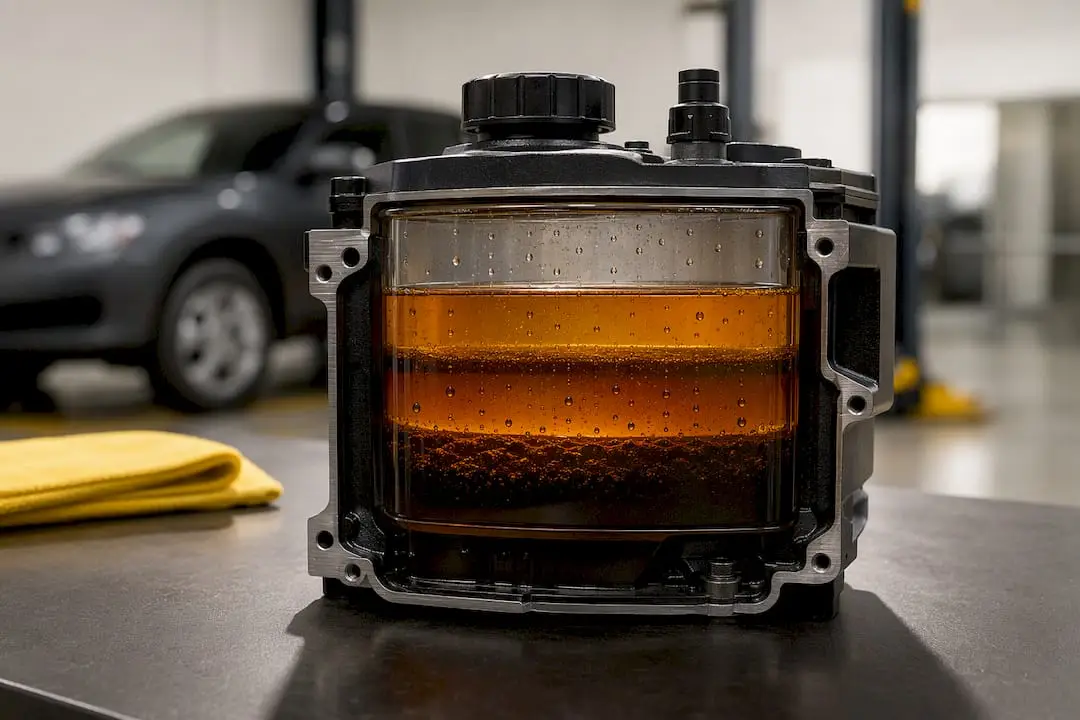
Consumer Reports recommends changing oil at least every 6 to 12 months for low-mileage vehicles, regardless of how few miles show on the odometer. That’s the practical minimum for weekend cars, second vehicles, and anyone working from home who barely drives.
If your car sits for extended stretches:
- Get a pre-storage oil change before parking it long-term
- Start the engine periodically and take short drives to circulate fresh oil
- Check the oil level monthly, even if the car isn’t moving much
- Don’t assume low mileage means the oil is still fine six months later
Is It Wasteful to Change Your Oil Too Often?
Changing oil more often than needed isn’t just unnecessary. It costs you real money over the life of the vehicle and creates avoidable waste.
Every extra change adds up across years of ownership, and those costs compound faster than most drivers realize. Consumer Reports has documented that the old “every 3,000 miles” advice is outdated for the vast majority of modern engines, and following it strictly just drains your wallet without extending engine life.
There’s an environmental cost too. Each extra oil change means another quart of used oil that needs proper disposal, plus another filter in the waste stream. Consumer advocacy groups and AAA both point the same direction: stick with the manufacturer’s actual schedule.
- Extra changes rarely add engine protection beyond what the manufacturer’s spec already provides
- Waste oil and filters require proper disposal, and skipping unneeded changes cuts that volume
- Manufacturer-backed intervals are tested against warranty and durability standards, not guesswork
Curious what a properly scheduled visit actually costs over time? Our breakdown of oil change costs walks through what to budget without over-servicing.
How Kwik Kar Approaches Oil Change Recommendations
Every recommendation starts with the owner’s manual and the car’s oil-life monitor, not a fixed number pulled from habit. When the driving pattern fits the severe-service profile, technicians flag it and explain why, rather than defaulting to whichever schedule is easier to sell.
We back that up with Digital Vehicle Inspections. Every oil change comes with photos and video of what technicians actually find, sent straight to your phone, so you’re never taking our word for it on faith. A clean, well-maintained engine bay is easier to inspect accurately too. If you’re curious about safe engine-bay upkeep between visits, this guide to cleaning an engine bay covers the basics without risking sensitive components.
Pro Tip: Before you leave any shop, ask three things: what oil spec they used, whether they reset the oil-life monitor, and when your next service is due.

A Technician’s Take on Honest Maintenance
We follow the manual. That’s not a slogan, it’s how we schedule every oil change, every reset of your oil-life monitor, and every note we leave in your Digital Vehicle Inspection. You see the same photos and video our techs use to make the call, so you’re deciding alongside us instead of guessing after the fact.
The simplest habit we recommend costs nothing: set a calendar reminder for your interval and check your oil level monthly between visits. It catches problems before they become expensive ones.
— Kwik Kar
Get Your Next Oil Change Done Right in Irving
Kwik Kar Oil Change & Auto Care gives Irving drivers something a quick-lube chain often skips: technicians who check your manufacturer’s spec and oil-life monitor before recommending an interval, instead of defaulting to a mileage sticker on your windshield. Technicians handle both conventional and full synthetic oil changes, and every visit includes a Digital Vehicle Inspection with photos and video so you can see exactly what your engine needs, not just what a service menu suggests.
Whether your car needs a standard interval or the severe-service schedule, you can book your oil change service online in a few minutes. If you’re due soon, check out our current oil change specials before your appointment. Ready for your next visit? Schedule your appointment with Kwik Kar Oil Change & Auto Care in Irving today.
Sources
- 5 Things to Know About Oil Changes for Your Car – Consumer Reports
- AAA Car care fluids / Oil change intervals (AAA guidance)
- API Motor Oil Guide
FAQ
How Often Do You Realistically Need an Oil Change?
Most drivers need a change every 5,000 to 7,500 miles under normal conditions, or up to 10,000 to 15,000 miles with full synthetic oil and an oil-life monitor. Your exact number comes from your owner’s manual, not a generic rule.
Can You Really Go 10,000 Miles With Synthetic Oil?
Yes, many vehicles factory-filled with synthetic oil and equipped with oil-life monitoring systems support that range safely. Confirm it in your owner’s manual first, since not every engine is designed to go that far even with synthetic oil.
Is It Okay to Go 5,000 Miles Between Oil Changes?
Yes, 5,000 miles sits comfortably within the normal-driving range most automakers recommend. It’s actually the safer default if you’re not sure whether your driving qualifies as severe service.
Is One Year Too Long for an Oil Change?
For most vehicles, yes, especially if you’re also putting on meaningful mileage. Experts generally recommend a change at least every 6 to 12 months even for low-mileage cars, since oil degrades with time and exposure, not mileage alone.