If your low-oil-pressure warning light stays on, pull over and shut the engine off. A persistent warning means oil isn’t circulating the way it should, and driving even a short distance on low or no lubrication can cause rapid, expensive engine damage. Check your dipstick once it’s safe to do so, then get the vehicle diagnosed before restarting.
TL;DR:
- A steady low oil pressure warning indicates urgent issues like worn bearings or a failing oil pump that require immediate inspection and repair.
- The most accurate diagnosis comes from a mechanical oil-pressure gauge, not just sensor readings or dashboard lights, to prevent unnecessary repairs.
- Causes of low oil pressure include low oil level, incorrect viscosity, clogged filters, or worn engine parts, with worn bearings being the most severe.
- Modern engine systems with variable-displacement pumps can produce low gauge readings without actual pressure loss, making mechanical testing essential.
- Routine maintenance, including proper oil type, regular oil and filter changes, and prompt leak repairs, significantly reduces the risk of low oil pressure emergencies.
Table of Contents
- How to Recognize Real Low Oil Pressure Symptoms
- What Causes Low Oil Pressure in Your Engine?
- How Do Shops Diagnose Low Oil Pressure?
- How Can You Prevent Low Oil Pressure Problems?
- Kwik Kar’s Take: What We See on the Lift
- Book a Low Oil Pressure Diagnosis at Kwik Kar
- Sources
- FAQ
How to Recognize Real Low Oil Pressure Symptoms
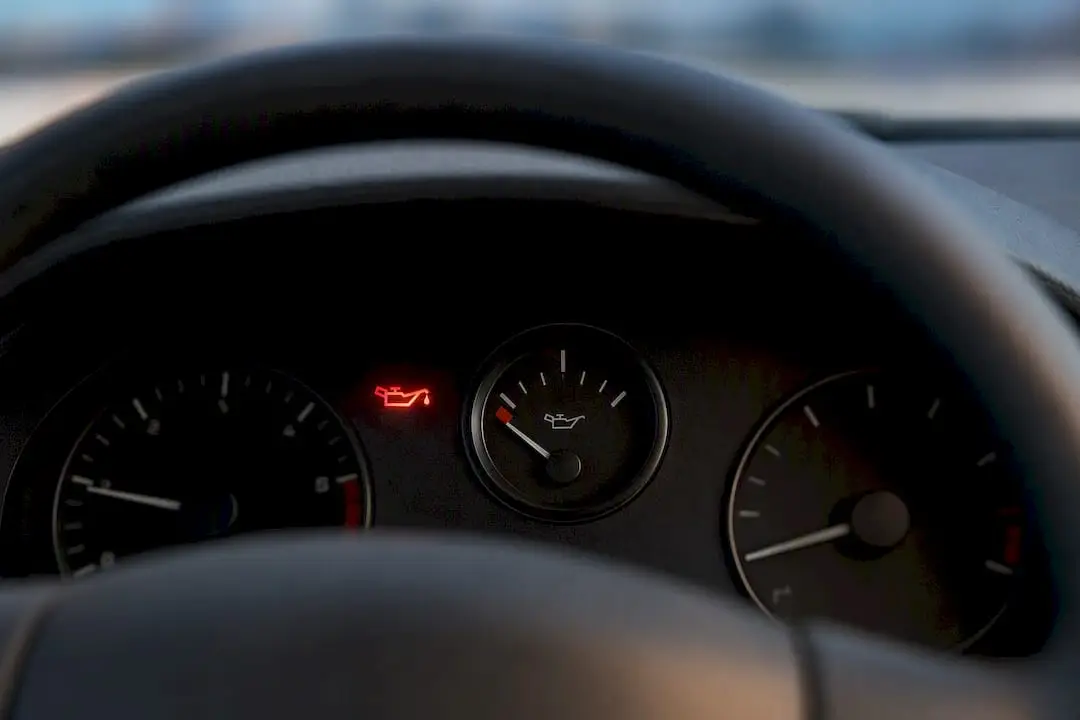
Not every dashboard flicker means disaster, but you need to know the difference fast. A steady low oil pressure light or a gauge that drops and stays low is urgent. A brief flicker at idle, especially right after startup on a cold morning, can point to something less severe, though it’s never something to ignore repeatedly.
Listen for engine ticking, lifter clatter, or a knocking sound that gets louder with rpm. Those noises usually mean metal parts are rubbing without enough oil film between them, which is exactly what low pressure allows to happen. A low oil pressure warning can range from a lazy sensor to a failing bearing, so the safest move is always to stop and check rather than guess and keep driving.
Here’s what to do the moment you see the light or hear the noise:
- Ease off the gas and get to a safe shoulder or parking lot.
- Shut the engine off completely. Don’t idle “just to see.”
- Wait a few minutes, then check the dipstick for oil level and color.
- Look under the car for fresh oil drips or a wet trail on the pavement.
- If the level is low and you have the correct oil on hand, you may add a small amount and restart briefly to get to a shop. If the level is normal or the light stays on after restart, don’t drive further. Call for a tow.
Pro Tip: Never trust a “quick top-off and drive home” plan if the light comes right back on after restarting. That’s your engine telling you the problem isn’t just volume, it’s pressure, and that’s a different conversation.
What Causes Low Oil Pressure in Your Engine?
Causes tend to run from simple to serious, and the fix depends entirely on which one you’re dealing with.
- Low oil level. Leaks from gaskets or seals, or an engine that’s quietly burning oil, will drop your level below what the pump needs to build pressure.
- Wrong or degraded oil viscosity. Oil that’s too thin, too old, or simply the wrong grade for your engine won’t build the pressure your bearings and cam are designed around.
- Clogged oil filter or pickup screen. Sludge and debris restrict flow before the oil ever reaches the pump, starving the system even when there’s plenty of oil in the pan.
- Oil pump wear or a stuck pressure relief valve. A worn pump or a relief valve stuck open lets pressure bleed off no matter how much oil you have.
- Worn engine bearings. This is the most serious cause on the list. Excessive bearing clearance lets oil leak past faster than the pump can replace it, and a higher-volume pump won’t fix that leakage on its own.
- Faulty oil pressure sensor or damaged wiring. Sometimes the engine is fine and the sensor is lying to you.
Modern engines complicate the picture a bit. Many vehicles now run variable-displacement or electronically controlled oil pumps that intentionally vary pressure and flow based on load and rpm. That means a gauge reading that looks low isn’t automatically a problem, and switching to a thicker oil to “fix” it is often the wrong move on these systems. Pressure and flow aren’t the same thing. Pressure is resistance, but lubrication depends on oil actually reaching your bearings in the right volume, not on how high the number climbs.
Worn pump clearances, a plugged pickup screen, or a bearing that’s letting oil escape too fast can all reduce pump efficiency even when the pump itself is technically still turning.
How Do Shops Diagnose Low Oil Pressure?
A good diagnostic sequence saves you money by ruling out the cheap fixes before anyone touches the pan.
Most shops move in this order: check oil level and viscosity, scan for related trouble codes, test the sensor and wiring, then confirm everything with a mechanical gauge before anyone talks about pulling the pan. That order matters, because skipping straight to a pump replacement based on a dash light alone leads to a lot of unnecessary teardowns.
- Check oil level and confirm the correct viscosity is installed.
- Look for visible leaks and consumption clues like blue exhaust smoke.
- Run an OBD-II scan for codes tied to the oil pressure circuit.
- Test the sender and wiring if the sensor is suspect.
- Attach a mechanical oil-pressure gauge directly to the engine.
- Cut open the oil filter and inspect the media for metal flakes.
- If needed, drop the pan to inspect the pickup screen and pump.
The mechanical gauge test is the step that matters most. Dash sensors and gauges can be wrong, and a calibrated mechanical gauge attached straight to the block tells you what’s actually happening inside the engine, not what a possibly faulty sensor is reporting. Expect typical mechanical gauge readings at hot idle and mid-range RPM to be within the engine manufacturer’s specified range, though exact numbers vary by manufacturer and engine design, which is exactly why the mechanical test matters more than any single “normal” number.
What the results usually mean: a normal mechanical gauge reading with a dash warning points to a sensor or wiring fault. A low mechanical reading paired with metal flakes in the filter usually means bearing damage. A low reading with sludge or debris in the filter often means a restricted pickup screen. A low reading with visibly worn pump components points to the pump or a deeper bottom-end problem.
An oil filter autopsy is one of the most underrated steps here. Brass or copper flakes usually mean bearing or gear wear, and that single finding can completely change the repair recommendation before anyone lifts the vehicle.
Diagnostic fees commonly run in the $100 to $250 range, and repair costs vary widely depending on the cause, from inexpensive sensor replacements to more involved repairs or rebuilds. Costs vary by vehicle and region, so costs can differ widely. For broader cost context on routine oil service, regional averages can help you gauge whether a quote feels reasonable.
Pro Tip: Ask your shop whether they ran a mechanical gauge test before recommending a pump replacement. If they didn’t, ask why not. It’s a five-minute test that can save you a thousand-dollar mistake.
How Can You Prevent Low Oil Pressure Problems?
Most low-pressure emergencies trace back to skipped basics, not bad luck.
- Use the oil viscosity your manufacturer specifies, and stick to recommended change intervals rather than stretching them.
- Choose a quality oil filter every time. A cheap filter is a poor place to save a few dollars.
- Check your oil level regularly between changes, and watch for blue smoke or frequent top-offs, both signs of consumption you shouldn’t ignore.
- If you run an older vehicle, drive in severe conditions, or manage a fleet, consider shortening intervals and using periodic oil analysis to catch wear trends early.
- Address any oil leak promptly rather than just topping off around it.
Switching to a high-mileage or thicker oil can mask symptoms temporarily on some older engines, but it’s rarely a real fix. On engines with variable-displacement pumps, it can actually mask a developing problem longer, which usually means a bigger repair bill down the road. Regular service through your oil change schedule does far more for long-term engine health than any thicker-oil workaround.
Kwik Kar’s Take: What We See on the Lift
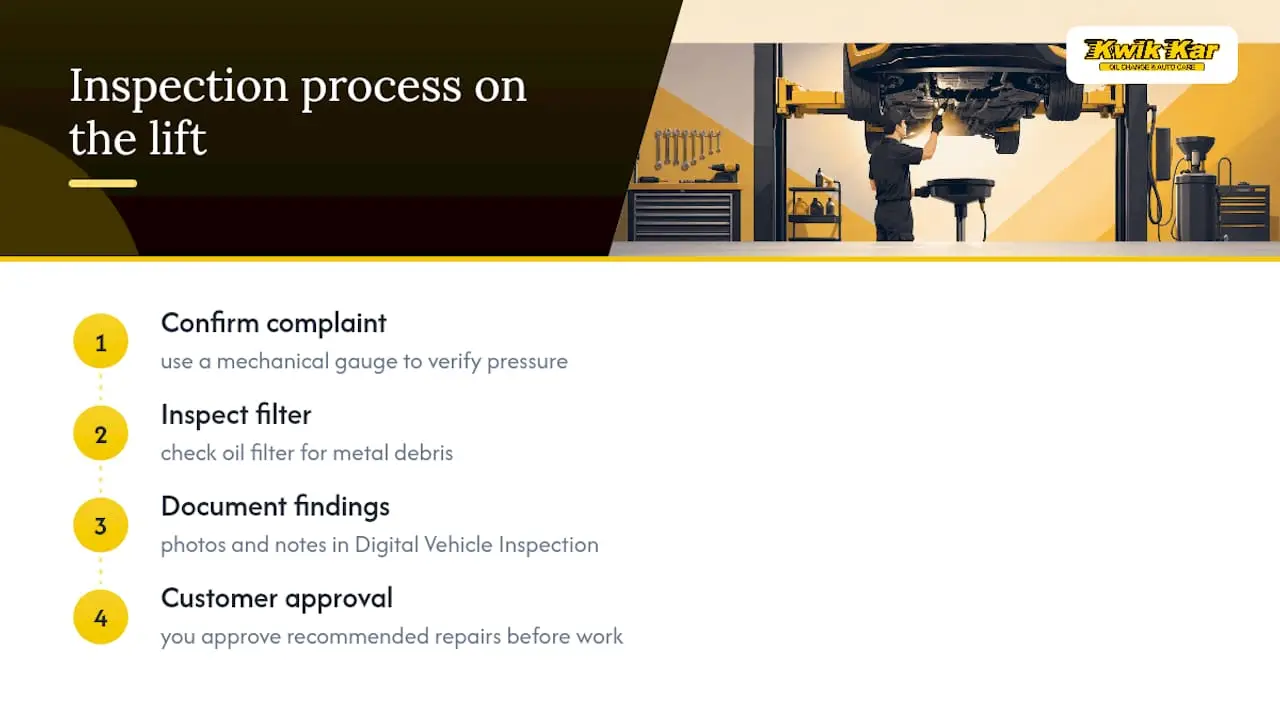
Our ASE-certified technicians see the full spectrum of low-pressure cases, from a fifteen-dollar sensor to bearings that need a real conversation about the vehicle’s future. We don’t guess. We confirm every low-pressure complaint with a mechanical gauge and inspect the oil filter for metal before we ever recommend pulling a pan.
Every finding gets documented in your Digital Vehicle Inspection, complete with photos and notes, so you see exactly what we saw and why we’re recommending it. You approve the work, not the other way around.
— Kwik Kar
Book a Low Oil Pressure Diagnosis at Kwik Kar
Kwik Kar Oil Change & Auto Care gives Irving drivers something a dash warning light can’t: a mechanical gauge test and an oil filter inspection before anyone recommends a pump replacement or teardown. That sequence alone can save you from paying for a repair you didn’t actually need.
When you bring your vehicle in for a low oil pressure diagnosis, our technicians start with the oil level and sensor, move to the mechanical gauge, and only open things up further if the evidence points that way. Every step is documented in your DVI with photos and video, so you know exactly what you’re paying for. A diagnostic fee applies, and it’s applied toward the repair if you move forward with the work. If your warning light comes back on and stays lit, don’t risk driving it in. Call for a tow instead. And if the fix turns out to be as simple as an overdue oil and filter service, you can take advantage of our oil change coupons to keep the cost down. Schedule your diagnostic appointment today and get a straight answer instead of a guess.
Sources
- Low oil pressure: What it means and what to do — Ricks Free Auto Repair Advice
- Causes of Low Oil Pressure in Engines — Machinery Lubrication
- AA1Car: Low oil pressure diagnosis and causes
FAQ
How Do You Fix Low Oil Pressure?
The fix depends on the cause: a low level gets topped off and any leak repaired, a bad sensor gets replaced, a clogged filter or pickup gets cleaned out, and worn bearings typically require a pump service or a deeper engine rebuild.
Can You Drive a Car With Low Oil Pressure?
No. Driving with a steady low-oil-pressure warning risks rapid bearing and internal engine damage, so the safer move is to stop, shut off the engine, and arrange a tow if the level and warning don’t resolve.
How Much Does It Cost to Fix Low Oil Pressure?
Diagnostic fees commonly run $100 to $250, and repair costs range from a relatively inexpensive sensor swap up through pickup or pump service, with a full bearing rebuild landing at the top of the range; your actual cost depends on the cause and your vehicle.
How Do You Get Oil Pressure Back Up?
Start with the basics: correct the oil level, confirm the right viscosity is installed, and replace a clogged filter. If pressure stays low after that, a mechanical gauge test will show whether the pump, pickup screen, or bearings need attention.
What Does a Flickering Low Oil Pressure Light Mean?
A flicker at idle can point to a marginal oil level or a sensor reacting to normal pressure swings, but if it returns or turns steady, treat it the same as a full warning and have it checked before driving further.