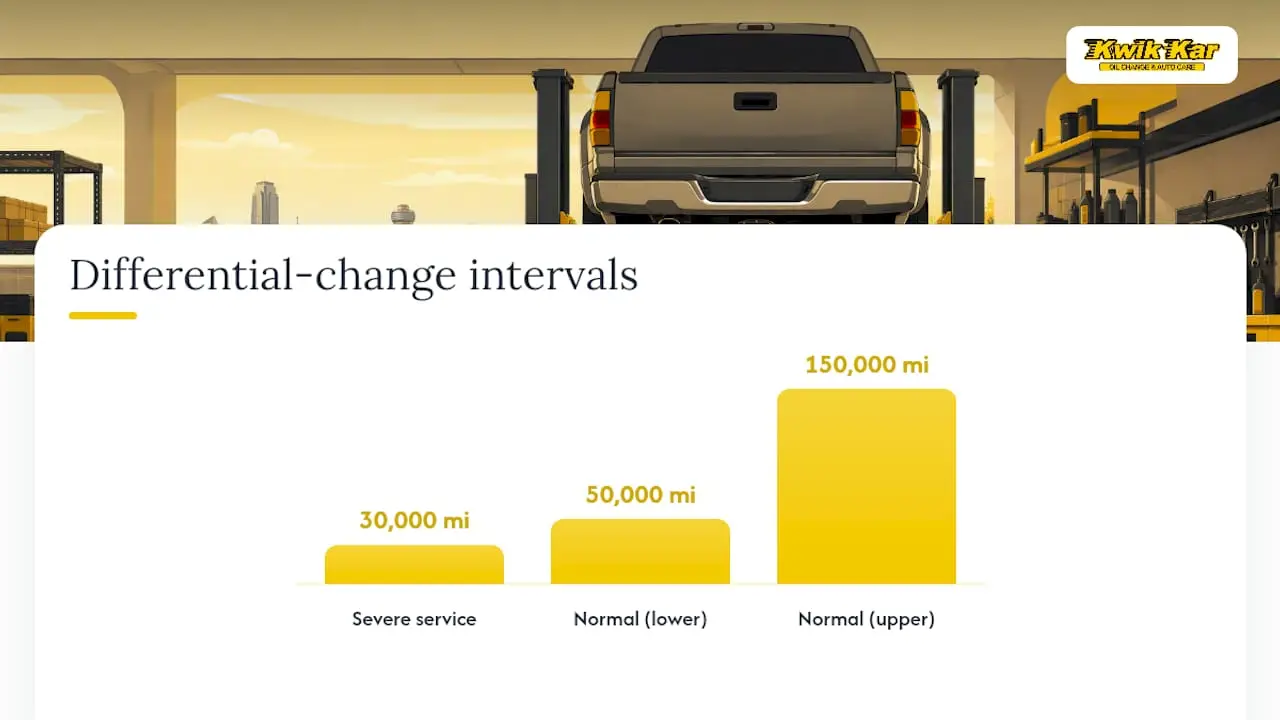
Change your differential’s gear oil on the schedule your owner’s manual sets, typically somewhere between 30,000 and 150,000 miles depending on the vehicle and how you drive it. Severe service, meaning frequent towing, off-roading, or sustained heat, pushes that number down toward the 30,000 mile mark. Rear and four-wheel-drive vehicles almost always need this service; many front-wheel-drive cars with a transaxle don’t, since the fluid gets handled during transmission service instead. If you hear whining, feel grinding, or spot a leak under the axle, don’t wait for the calendar. That’s a job for a shop, now.
TL;DR:
- Severe service, such as towing or off-road driving, typically requires differential fluid changes every 30,000 miles, compared to 50,000 to 150,000 miles under normal conditions.
- Whining, grinding, leaks, or metal shavings on the magnetic plug indicate urgent differential service is needed to prevent gear damage.
- DIYers should loosen the filler plug first, drain the old fluid, inspect the magnetic plug, and refill until the level reaches the filler hole, using appropriate gear oil.
- Use GL-5 rated synthetic gear oil with friction modifiers if you have a limited-slip differential, and always follow the manufacturer’s specific interval and fluid specifications.
- Professional service is recommended if the filler plug is seized, metal contamination is heavy, or cover removal and gasket work are required, ensuring proper reassembly and diagnostics.
Table of Contents
- What Is Differential Fluid and Why Does It Matter?
- How Often Should You Change Differential Fluid?
- What Are the Signs Your Differential Needs Service?
- How Do You Change Differential Fluid Yourself?
- How Do You Choose the Right Differential Fluid?
- When Should You Let a Professional Handle It?
- What Should You Expect for Time and Cost?
- What Do Kwik Kar Technicians Watch For?
- Why Kwik Kar Treats Differential Maintenance as Preventive, Not Optional
- Get Your Differential Serviced Right in Irving
- Sources
- FAQ
What Is Differential Fluid and Why Does It Matter?
Differential fluid, also called gear oil, is the lubricant that keeps your differential’s gears from tearing themselves apart under load. It does three jobs at once: it lubricates the meshing gears, carries away heat generated by that friction, and protects metal surfaces from corrosion. That’s a different mission than what motor oil or transmission fluid handles, and the specs reflect it.
- Gear oil is thicker and formulated for extreme pressure between hypoid gear teeth.
- Engine oil and ATF are built for different friction and cooling demands entirely.
- Some FWD vehicles skip a separate differential service because their transaxle shares fluid with the transmission.
Heat is the real enemy here. As gear oil ages, it loses viscosity under sustained thermal stress, and that thinner fluid can’t maintain the protective film between gear teeth the way fresh oil can. Lubrication experts note that high-temperature conditions accelerate this viscosity loss, which is exactly why towing and heavy loads shorten the useful life of the fluid faster than daily commuting does.
How Often Should You Change Differential Fluid?
Interval guidance varies more than most drivers expect, and the range depends heavily on the vehicle, the fluid, and how the vehicle gets used. Many manufacturers and lubrication specialists set normal-service intervals that can be very long under ideal conditions, but that number assumes light-duty, moderate-climate driving. Push the vehicle into tougher conditions and the math changes fast.
- Normal service: roughly 50,000 to 150,000 miles, depending on OEM specification and fluid type.
- Severe service: closer to 30,000 miles when towing, hauling heavy loads, or running in sustained high heat.
- Off-road use and frequent low-speed, high-load driving both count as severe service, even if you never tow a trailer.
Statistic to know: Severe-service intervals can be as short as about 30,000 miles, less than a quarter of the 150,000-mile ceiling some manufacturers allow under ideal conditions. That’s not a small gap. It’s the difference between changing fluid once during a vehicle’s life and changing it five times.
None of these ranges override your owner’s manual. Manufacturers publish specific mileage and time intervals for a reason, and those specs account for your exact axle design, gear ratio, and factory fluid fill. When in doubt, follow the book, not a blog post.
What Are the Signs Your Differential Needs Service?
A differential rarely fails without warning. It usually tells you first, if you know what to listen for.
- Whining or howling that changes with speed often points to worn gears or fluid that’s broken down and can no longer maintain proper lubrication.
- Grinding or clunking, especially on turns, can mean metal-on-metal contact from severely degraded fluid or worn components.
- Vibration from underneath the vehicle, particularly at highway speeds, sometimes traces back to differential wear rather than a driveline or transmission mount issue. If the noise pattern is unclear, engine and drivetrain diagnostics can help pinpoint the source.
- Chatter or shudder in limited-slip differentials, especially during tight turns, usually signals the friction modifier in the fluid has worn out.
- Visible leaks, low fluid smell, or metallic-looking fluid at the filler plug are physical confirmations worth checking directly, along with the magnetic drain plug for metal shavings.
Noise and vibration during normal driving deserve a diagnostic appointment soon. A leak or metal fragments on the plug are more urgent; those point toward active wear that gets worse the longer you drive on it.
How Do You Change Differential Fluid Yourself?
DIYers can absolutely handle a straightforward drain-plug differential with basic tools and a little patience. Here’s the sequence that keeps the job safe and clean.
- Set up safely. Chock the wheels, raise the vehicle on a jack, and support it on jack stands rated for the weight. Wear gloves and eye protection.
- Loosen the filler plug first, before you drain anything. This is the single most important safety step in the whole process. If that plug is seized, you don’t want to discover it after the case is already empty. This check is standard across nearly every technical how-to on the subject.
- Drain the old fluid. If your differential has a drain plug, open it over a catch pan and let it fully empty. If there’s no drain plug, you’ll need to remove the cover instead, which means cleaning old gasket material and typically applying new RTV sealant or a gasket on reassembly.
- Inspect the magnetic drain plug. A light coating of fine metal dust is normal wear. Larger chunks or heavy metallic buildup mean it’s time to stop the DIY job and get a professional inspection before refilling.
- Watch for trapped fluid in axle tubes. On some drive-axle designs, simply draining the center section or pulling the cover won’t purge fluid sitting in the axle tubes themselves. Jacking each side independently can help that trapped oil drain fully instead of diluting your fresh fill.
- Refill using a pump. Gear oil is thick, so a hand pump or squeeze bottle makes this far easier than trying to pour it in. Fill until the level reaches the bottom of the filler hole, not a drop more.
- Torque the plugs to spec, clean up drips, and take a short test drive. Listen for any noise changes and recheck for leaks once the vehicle’s back on the ground.
Pro Tip: Keep a small notebook or phone note of your mileage and the fluid brand/spec you used. Differential service happens infrequently enough that most people forget what went in last time, and that detail matters if you ever switch to a limited-slip-rated fluid down the line.
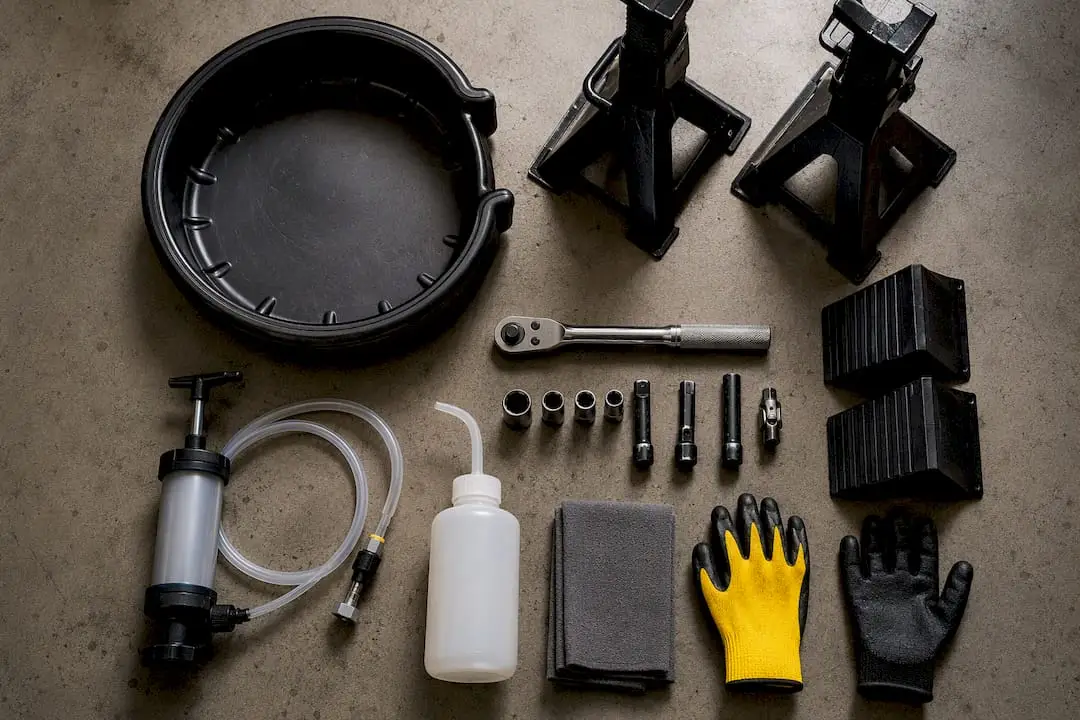
Tools checklist: jack and jack stands, wheel chocks, ratchet and sockets sized for your plugs, a drain pan, a gear oil pump or squeeze bottle, RTV sealant or a cover gasket (if your differential requires cover removal), shop rags, and gloves.
How Do You Choose the Right Differential Fluid?
Your owner’s manual lists both a viscosity grade and an API service classification, and both matter. Most hypoid gear differentials, the kind found in the vast majority of RWD and 4WD vehicles, call for GL-5 rated fluid, since hypoid gears create sliding contact loads that GL-4 fluids aren’t formulated to handle.
- Check whether your differential is limited-slip. LSDs need fluid with friction modifiers, and using the wrong spec can damage clutch packs or gear surfaces over time.
- Synthetic gear oil holds up better under sustained heat than conventional mineral oil, which matters if you tow or haul regularly.
- Consider access when buying: some differentials sit in tight spots where a bottle with a long nozzle or pump attachment saves real frustration.
Get this wrong and you’re not just wasting money. A GL-4/GL-5 mismatch or a missing friction modifier in an LSD can accelerate the exact wear you’re trying to prevent.
When Should You Let a Professional Handle It?
Some differential jobs are simple enough for a Saturday afternoon. Others aren’t, and knowing the difference saves you from turning a fluid change into an expensive repair.
- A seized or stripped filler plug that won’t budge without specialty tools.
- Heavy metal contamination on the magnetic drain plug, which usually means internal wear needs diagnosis first.
- No drain plug at all, requiring full cover removal, gasket work, and careful cleaning most DIYers aren’t equipped for.
- Limited time, tools, or a lift, especially for cover-style differentials that take real effort to access.
A trustworthy shop follows a consistent process: inspect the differential, drain or remove the cover, check the magnetic plug for debris, clean and reseal as needed, refill to the correct spec, torque everything properly, and confirm the fix with a test drive. At Kwik Kar Oil Change & Auto Care, that inspection comes with a Digital Vehicle Inspection, complete photos, video, and technician notes sent straight to your phone, so you see exactly what your differential service involved before you approve any work.
What Should You Expect for Time and Cost?
A drain-plug differential is usually a quick job. Shops commonly complete these services in well under an hour when a drain plug is present, while cover-removal jobs run longer because of gasket cleanup and resealing. Expect somewhere in the 30 to 90 minute range depending on your setup.
Cost scales with fluid volume and type (synthetic runs higher than conventional), whether cover removal and a new gasket are involved, and whether your differential needs a friction-modifier additive for limited-slip service.
- Skipping the filler-plug check first is the single most common DIY mistake, and it can leave you stuck with an empty case and no way to refill it.
- Failing to drain trapped fluid from axle tubes dilutes your fresh fill with old, degraded oil.
- Overfilling past the filler hole can cause seal leaks; underfilling starves the gears of lubrication.
What Do Kwik Kar Technicians Watch For?
A few habits separate a clean differential service from a comeback repair. Our ASE-certified technicians treat these as non-negotiable steps every time.
- Always confirm the filler plug loosens before draining anything.
- Check the magnetic drain plug for metal debris, then decide if the job is a routine fluid change or something bigger.
- Recommend synthetic gear oil for vehicles that tow or haul regularly, given its stronger resistance to heat breakdown.
- Recheck the fill level after 50 to 100 miles and listen for any change in noise or vibration.
Pro Tip: Keep your Digital Vehicle Inspection photos after any differential service. If a noise returns months later, having a dated record of the fluid color, magnetic plug condition, and fill level makes diagnosing the new issue much faster.
Why Kwik Kar Treats Differential Maintenance as Preventive, Not Optional
Too many drivers treat the differential like it’s sealed for life and forget about it entirely, right up until a rebuild is the only option left. We’d rather catch the early signs, a little metal on the plug, fluid that’s starting to darken, a faint whine on turns, than send you home with a bigger bill later. If you’re not sure where your vehicle stands, schedule a drivetrain inspection and let an ASE-certified technician and a full Digital Vehicle Inspection tell you exactly what’s going on underneath.
— Kwik Kar
Get Your Differential Serviced Right in Irving
You could tackle this in your driveway with a jack and a catch pan, or you could hand it to a shop that documents every step so you’re never guessing what happened under your vehicle. Kwik Kar Oil Change & Auto Care runs differential service the way it should be done: ASE-certified technicians inspect the fluid and magnetic plug, recommend the correct gear oil for your specific vehicle, and send you a Digital Vehicle Inspection with photos and notes before any work moves forward.
If your differential is due, overdue, or just making a noise you can’t explain, book a full-service auto repair appointment at our Irving shop. Check our current specials and coupons before you come in. You might save on the visit that keeps your drivetrain out of the repair bay for another 100,000 miles.
Sources
Interval and procedure guidance drew from AMSOIL’s lubrication research, Cars, Castrol’s how-to guide, and AutoZone’s fluid specification breakdown. For a deeper look at shop selection factors, see this professional service selection guide.
- How Often Should I Change Differential Fluid? – AMSOIL Blog
- What is differential fluid? – AutoZone DIY
FAQ
How Often Should You Change Differential Fluid?
Normal service ranges from about 50,000 to 150,000 miles depending on the vehicle, but severe service like towing or off-roading can shorten that to around 30,000 miles. Always check your owner’s manual for the exact interval.
Is a Differential Fluid Change a DIY-Friendly Job?
Yes, if your differential has a drain plug and you follow the safety sequence of loosening the filler plug before draining. Cover-removal differentials involve gasket work and cleaning that make a shop visit worth considering.
Do Limited-Slip Differentials Need Special Fluid?
Yes. Limited-slip differentials require gear oil with friction modifiers, and using the wrong fluid specification can damage the clutch packs or gear surfaces over time.
How Do You Check Differential Fluid Level Without Draining It?
Remove the filler plug and check that fluid sits at or near the bottom of the filler hole opening. If it’s low, top it off with the correct viscosity and API-rated fluid before reinstalling the plug.
Does Kwik Kar Offer Differential Fluid Service in Irving?
Yes. Kwik Kar Oil Change & Auto Care performs differential fluid service with ASE-certified technicians and a Digital Vehicle Inspection so you can see the fluid condition and recommendations before approving work.