P0455 means a large EVAP system leak and P0456 means a very small leak. In both cases, the first thing to check is the gas cap. Most drivers can clear the code just by tightening or replacing a worn cap. If the light comes back after that, work through the ordered troubleshooting steps below before spending money on parts.
TL;DR:
- Most evap leak codes are caused by simple issues like a loose or damaged gas cap, which is the first and cheapest fix to try.
- Visual inspections of filler necks, hoses, and valves are crucial before considering more costly repairs or replacements.
- Smoke or pressure tests are effective, non-invasive methods to locate tiny leaks that visual checks often miss, especially after initial fixes fail.
- A diagnostic from a professional shop typically begins with basic checks and only relies on smoke testing if necessary, saving money and time.
- Driving with an evap leak code is usually safe short-term, but the vehicle will likely fail emissions testing until the leak is repaired and a drive cycle is completed.
Table of Contents
- What the codes mean and how OBD detects EVAP leaks
- Common causes of an evap leak code
- Step-by-step troubleshooting you can do now
- Smoke testing and pressure testing: professional diagnostics explained
- Is it safe to drive with an evap leak code?
- When to bring the car to a shop and what a professional diagnosis includes
- Why trust Kwik Kar with an evap leak diagnosis
- What most advice on evap codes gets wrong
- Schedule an evap diagnostic and smoke test at Kwik Kar Irving
- Sources
- FAQ
What the codes mean and how OBD detects EVAP leaks
Your vehicle’s evaporative emissions (EVAP) system is sealed on purpose. It traps fuel vapor from the gas tank instead of letting it escape into the air. The onboard computer periodically closes off the system and watches for a change in pressure or vacuum. If the change happens too fast, the computer assumes vapor is escaping somewhere and sets a code.
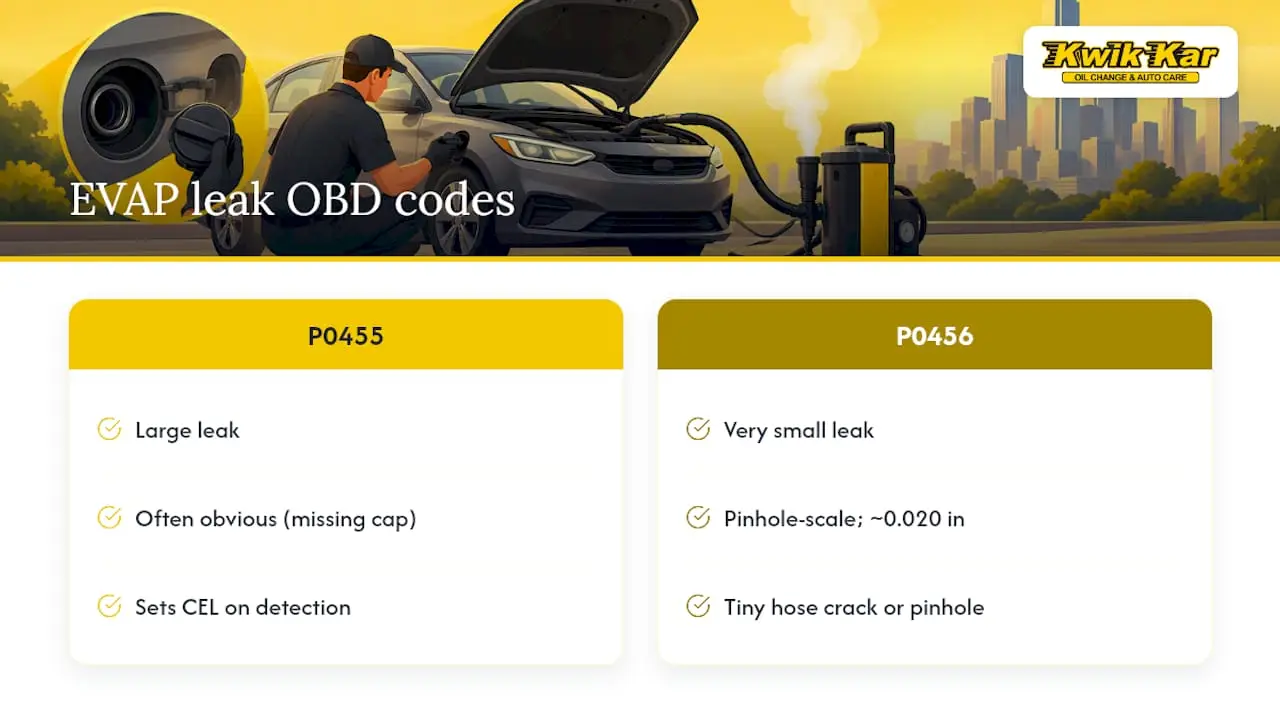
The number after the code tells you how big the problem is. P0455 flags a large leak, something like a missing gas cap or a disconnected hose. P0456 flags a very small leak, often no bigger than a pinhole. That distinction exists because modern OBD systems are built to catch tiny leaks, not just obvious ones. Federal monitoring standards call for systems to detect leaks down to very small equivalent orifice sizes, commonly cited around 0.020 inches. That sensitivity is why a hose crack too small to see can still trigger a check engine light even though the car drives normally.
Common causes of an evap leak code
Most EVAP codes trace back to something simple, so it pays to rule out the cheap fixes before touching anything expensive. Shop guides generally recommend working through these causes in order:
- Gas cap problems: a loose cap, a cracked O-ring, or a cap left off after fueling is the most common quick cause of both P0455 and P0456.
- Filler neck damage: a dented or corroded filler neck can prevent the cap from sealing even when the cap itself is fine.
- Cracked or chewed hoses: EVAP hoses run along the frame rail and near the fuel tank, where they can crack with age or get chewed by rodents.
- A stuck purge or vent valve: a purge valve that will not close, or a vent valve that will not seal, can mimic a leak even when the hoses are intact.
- Charcoal canister damage: less common, but a cracked canister or a rare tank or filler leak can also set the code.
Replacing the charcoal canister is rarely the right first move. It is usually the last part on the list, and most shops will not swap it without confirming the leak location with a smoke test first.
Step-by-step troubleshooting you can do now
Before you buy any parts, work through these steps in order. Each one rules something out cheaply.
- Confirm the exact code. Plug in an OBD-II reader and note whether it says P0455 or P0456, along with any other codes and the EVAP monitor’s readiness status.
- Check the gas cap first. Remove it and listen for the usual multiple clicks as you tighten it back on. Inspect the rubber O-ring for cracks, flattening, or dirt, and replace the cap with an OEM-matched part if it looks worn.
- Inspect the filler neck. Look for dents, rust, or a sealing surface that no longer sits flush with the cap.
- Trace the hoses. Follow the EVAP lines from the filler neck back along the frame rail toward the charcoal canister, checking for cracks, soft spots, or chew marks from rodents.
- Test the purge valve. With the engine off, attach a hand vacuum pump to the purge valve and confirm it holds vacuum. A valve that will not hold pressure is likely stuck open.
- Check the vent valve. Listen for it clicking open and closed during a drive cycle, or have a scan tool command it and watch for a response.
- Move to a smoke test if the code returns. Once the visual and functional checks come up empty, a smoke or pressure test is usually the only way to find a leak that small.
Pro Tip: Replace the gas cap before anything else. It costs far less than a canister and fixes the problem more often than any other single repair.
Smoke testing and pressure testing: professional diagnostics explained
A smoke test fills the sealed EVAP system with a visible, non-toxic smoke and watches for where it escapes. It is built to find pinholes, cracked canisters, and filler-neck leaks that a visual inspection alone will miss. Technicians commonly find that the canister vent solenoid is a frequent culprit on trucks and SUVs, where it sits exposed to road grime and moisture.
A pressure or nitrogen test works on a similar principle but measures how quickly pressure drops instead of showing smoke escaping. Shops tend to reach for it when a smoke machine is not practical for the vehicle’s design or when they need a numeric leak rate rather than a visual location.
Either test typically takes less time than replacing a part on a guess. EPA technical analysis also notes that OBD monitoring alone will not catch every leak, including some liquid fuel leaks, which is exactly why a smoke test matters for the leaks that OBD misses.
Is it safe to drive with an evap leak code?
Short-term driving is usually fine with an EVAP code. The system deals with fuel vapor, not the fuel supply itself, so engine performance rarely suffers. Stop and get the car checked if you smell strong gasoline, hear a hissing sound near the tank, or see liquid fuel anywhere.
EVAP codes will typically fail a state emissions test, and simply clearing the code with a scanner will not pass it. The vehicle’s computer needs to complete a verified drive cycle after the actual repair before the readiness monitor shows the system is fixed, so plan for the repair to happen before inspection day, not the same afternoon.
When to bring the car to a shop and what a professional diagnosis includes
If the gas cap, hoses, and valve checks do not solve it, a shop visit saves more time than continuing to guess. A typical diagnostic visit confirms the stored codes, rechecks the cap and hoses, then moves to a smoke or pressure test to pinpoint the exact leak. From there, the shop can quote the repair, usually starting with the cheapest likely fix before considering something like a canister replacement.
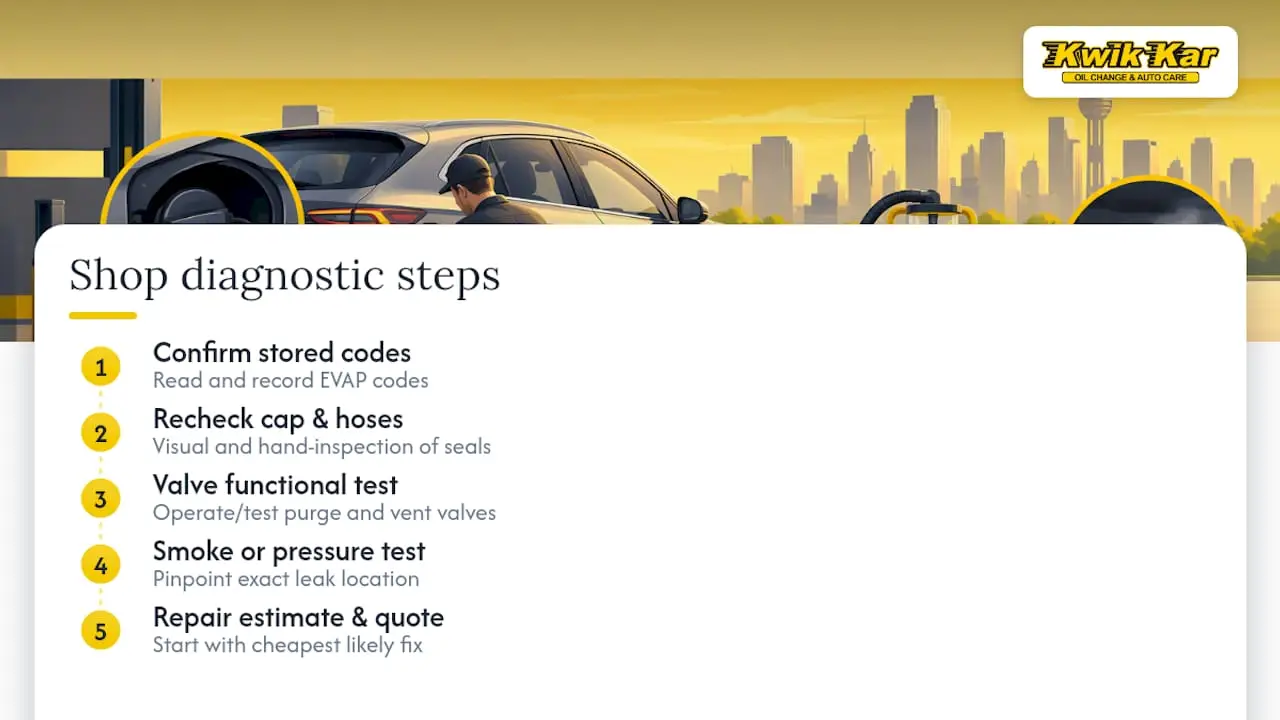
That sequencing matters because EVAP leaks are notoriously hard to eyeball. A technician-led workflow that moves from visual inspection to functional valve testing to smoke testing avoids paying for parts that were never the problem. Kwik Kar documents each step of an engine diagnostic with a Digital Vehicle Inspection, so you get photos and video of exactly where the leak was found and a written estimate before any repair begins.
Why trust Kwik Kar with an evap leak diagnosis
Experienced technicians can effectively diagnose EVAP codes on various vehicles. Diagnostics typically include a Digital Vehicle Inspection with photos and video showing the leak point. The process usually starts with inexpensive checks such as the gas cap, hoses, and valve function, escalating to smoke testing only if needed.
What most advice on evap codes gets wrong
Most online guides jump straight to naming parts: canister, purge valve, vent solenoid. That skips the step that actually saves money. The gas cap fixes a large share of these codes, and it is the cheapest single thing you can check. The second mistake is treating a smoke test as a last resort instead of a normal part of the process. It is not an admission that the easy fixes failed. It is often the fastest way to find a leak too small to see, and skipping straight to a canister swap without one is how people end up paying twice.
The reader’s real priority should be sequence, not speed. Check the cap, walk the hoses, test the valves, then let a smoke test do the rest. Skipping steps costs more than following them.
— Kwik Kar
Schedule an evap diagnostic and smoke test at Kwik Kar Irving
If you have checked the gas cap and the light keeps coming back, an engine diagnostic at Kwik Kar Irving gets you a definitive answer instead of another guess.
A visit includes a full code read, smoke or pressure testing to pinpoint the leak, a Digital Vehicle Inspection with photos and video, and a written estimate before any repair starts.
- Same-day diagnostic appointments are typically available.
- You will see exactly where the leak was found, not just a part number on an invoice.
- Call ahead or book online to get on the schedule.
Sources
For more on how EVAP leaks affect an odor complaint, this odor diagnosis guide covers related symptoms. For background on your check engine light in general, see our check engine light guide.
- EPA — Tier 3 evap/OBD summary
- CarParts: P0455 Code — EVAP System Large Leak Detected
- ServiceSage Auto: P0455 — EVAP System Large Leak Detected
- EPA technical report on OBD evap monitoring and detection limits
FAQ
Is it expensive to fix an evap leak?
The cost depends entirely on the cause: a gas cap replacement is inexpensive, while a cracked charcoal canister costs more. Most repairs start with the cheapest likely fix, so ask for a written estimate before agreeing to any parts replacement.
Can I still drive with an evap leak?
Yes, short-term driving is generally safe since an EVAP leak affects fuel vapor containment, not engine performance. Stop driving and get the car checked if you smell strong gasoline, hear hissing near the tank, or see liquid fuel.
How serious is a small evap system leak?
A small leak, P0456, will not hurt your engine or your ability to drive, but it will usually fail an emissions test until it is repaired and the computer completes a verified drive cycle. It often traces back to something as minor as a worn gas cap seal or a small hose crack.
Is an evap leak hard to fix?
Many EVAP leaks are easy fixes, starting with the gas cap, which resolves a large share of cases. The ones that are hard to fix are usually pinhole leaks too small to see, which is why a smoke test is often the fastest way to locate them.