
There is no single mileage that fits every car. Most modern vehicles go much longer than the old 12,000-mile habit, and the right interval is the one in your owner’s manual or maintenance display, whichever comes first by miles or months. Spark plugs on many newer engines are rated for 60,000 to 100,000 miles, while fluids, filters and belts follow their own, shorter clocks. Here is how to work out your schedule and what to do when the car tells you it can’t wait.
TL;DR
- “Tune-up” is no longer one service. On a modern car it means the scheduled maintenance your manufacturer lists, plus a check of whatever is wearing.
- Follow the owner’s manual or the maintenance display. Whichever limit you hit first, miles or months, is the one that counts.
- Spark plugs often last 60,000 to 100,000 miles depending on the plug type, but oil, filters, tires and fluids come due far sooner.
- Rough idle, hard starts, hesitation, poor fuel economy or a flashing check engine light mean the car needs a diagnosis now, not at the next interval.
- Hot Texas summers, stop-and-go traffic on I-35E and towing count as severe use and can shorten intervals.
Table of Contents
- What does “tune-up” mean on a car built today?
- How often should you get a tune-up?
- Which comes first: mileage or months?
- How do you find your car’s real schedule?
- Do Irving driving conditions shorten the interval?
- What signs say your car needs attention before the next interval?
- What does a tune-up cost, and what should be on the estimate?
- Does a tune-up have anything to do with Texas inspections?
- Our perspective on tune-up timing
- Get your schedule checked in Irving
- A practical example: two cars, two schedules
- FAQ
- Sources
What does “tune-up” mean on a car built today?
The classic tune-up meant adjusting ignition timing, swapping points and condenser, and setting the carburetor. Engines stopped needing that decades ago. Kelley Blue Book notes that the traditional tune-up is largely a thing of the past for newer cars and points drivers to the manufacturer’s maintenance schedule instead.
What people still call a tune-up today is a bundle of preventive work. It usually includes:
- Spark plug replacement when the schedule calls for it
- Engine air filter and cabin air filter replacement
- Fuel system service, where the manufacturer or condition calls for it
- Drive belt and hose inspection
- Fluid checks and replacements: coolant, brake fluid, transmission fluid, differential fluid
- A battery and charging system test
- A scan for stored trouble codes
For a deeper definition, see our post on what a tune-up means for your car today. The practical point: ask what is actually due on your car rather than asking for “a tune-up” and hoping the list matches.
How often should you get a tune-up?
The honest answer is “when your manufacturer says each item is due.” Search results range from every 12,000 miles to every 100,000, because they describe different eras of engines. Here is how the common ranges break down.
| Item | Typical interval | Why it varies |
|---|---|---|
| Engine oil and filter | 5,000, 7,500 or 10,000 miles, and at least once a year | Engine design, oil type, driving conditions |
| Tire rotation | Commonly every 5,000 to 7,500 miles | Drivetrain and tire type |
| Engine and cabin air filters | Often 15,000 to 30,000 miles | Dust, pollen, construction zones |
| Spark plugs | Up to 60,000 miles for some plug types, up to 100,000 for platinum and iridium | Plug material and engine |
| Brake fluid | Honda lists every three years on some models | Moisture absorption over time |
| Transmission fluid | Set by the manufacturer, shorter for towing or severe use | Transmission type, load |
The oil figures come from Consumer Reports, which also says the owner’s manual is the best source for maintenance intervals and lists tire rotation at commonly every 5,000 to 7,500 miles. The plug range comes from Ford’s Motorcraft spark plug document, which shows why the exact plug in your engine matters. The three-year brake fluid figure is from Honda’s Odyssey Maintenance Minder guide. Your own vehicle may differ, so treat the table as a map and your manual as the final word.
For oil specifically, our guide to correct oil change intervals explains why the old 3,000-mile rule no longer fits most cars.
Which comes first: mileage or months?
Both. Manufacturers often set a distance limit and a time limit, and the first one you reach applies, such as a mileage limit or a 12- or 24-month limit. AARP’s car maintenance guide gives the same kind of example: service every 10,000 miles or every two years.
This matters for people who don’t drive much. If you work from home in Irving and put 4,000 miles a year on your car, you will never reach a 30,000-mile milestone in two years, but rubber, fluids and filters still age. Honda’s CR-V manual, for example, says to change engine oil at least annually if no oil-service message appears within 12 months.
How do you find your car’s real schedule?
Use this order:
- Maintenance display or app. Many newer cars calculate service needs from how you drive and show a message or service code. Honda’s Maintenance Minder is one example: it tells the driver when service is due, and the codes map to specific jobs such as tire rotation, filters, spark plugs, coolant and brake fluid.
- Owner’s manual. The maintenance section lists what to do at each mileage and time milestone, usually with a separate “severe conditions” schedule.
- Manufacturer’s website. Most brands let you look up your schedule by VIN or model year.
- A shop that reads the schedule for your exact vehicle. If the manual is lost, a technician can pull the factory-scheduled maintenance list for your year, make and engine.
AAA’s David Bennett, quoted by AARP, says manufacturer timelines are based on careful testing of a vehicle’s capabilities, durability and tolerances. That is a good reason to trust the book over a generic number from a website, including this one.
Do Irving driving conditions shorten the interval?
Often, yes. Base schedules assume normal driving. Haynes explains that short trips, heavy city driving, towing and extreme temperatures count as severe use and shorten intervals. Several of those describe a typical week around Irving:
- Stop-and-go commutes on Highway 183, State Highway 114 and I-35E between Irving, Las Colinas and Dallas
- Short hops to school, work and errands, where the engine rarely reaches full operating temperature
- Triple-digit summer heat that works the battery, cooling system and A/C hard
- Towing a trailer or boat to Lake Grapevine or Lake Ray Hubbard
Honda’s CR-V manual gives concrete examples: the air-cleaner interval drops to 15,000 miles in dusty conditions, and transmission fluid to 25,000 miles for towing or regular mountainous low-speed driving. If your driving fits the severe list, follow the severe schedule in your manual.
What signs say your car needs attention before the next interval?
Intervals are a floor, not a promise. A part can fail early, and the car will usually tell you first. Watch for:
- Rough or shaky idle at a stoplight
- Hard starting or a long crank before the engine catches
- Hesitation or stumbling when you accelerate
- A drop in fuel economy you can’t explain by traffic or a different route
- A check engine light, especially one that flashes
- Unusual smells, noises or warning lights for the battery, temperature or oil pressure
These symptoms can come from worn spark plugs, but also from ignition coils, fuel injectors, vacuum leaks, sensors or a weak battery. Guessing at parts is how people spend money on the wrong fix. A diagnostic reads the stored codes and tests the system. A code such as P0300 for random misfires or P0420 for catalyst efficiency points to where to look, not to a part to replace. If you want to understand what you’re paying for, our post on engine diagnostic costs lists questions worth asking first.
A flashing check engine light usually signals an active misfire. Slow down, avoid hard acceleration and have the car inspected promptly, because unburned fuel can damage the catalytic converter. Any brake, steering or overheating warning is a stop-and-get-it-checked situation, not a wait-for-the-interval one.
What does a tune-up cost, and what should be on the estimate?
Cost depends entirely on what is due: a set of plugs on a four-cylinder is a different job from plugs on a V6 with hard-to-reach rear banks, plus filters and fluids. We don’t publish a flat tune-up price because we’d be guessing at your car’s needs. Ask for a written estimate that lists each item, why it’s due (schedule, inspection finding or symptom) and the part and labor for each. Our guide to spark plug replacement costs walks through what drives the number.
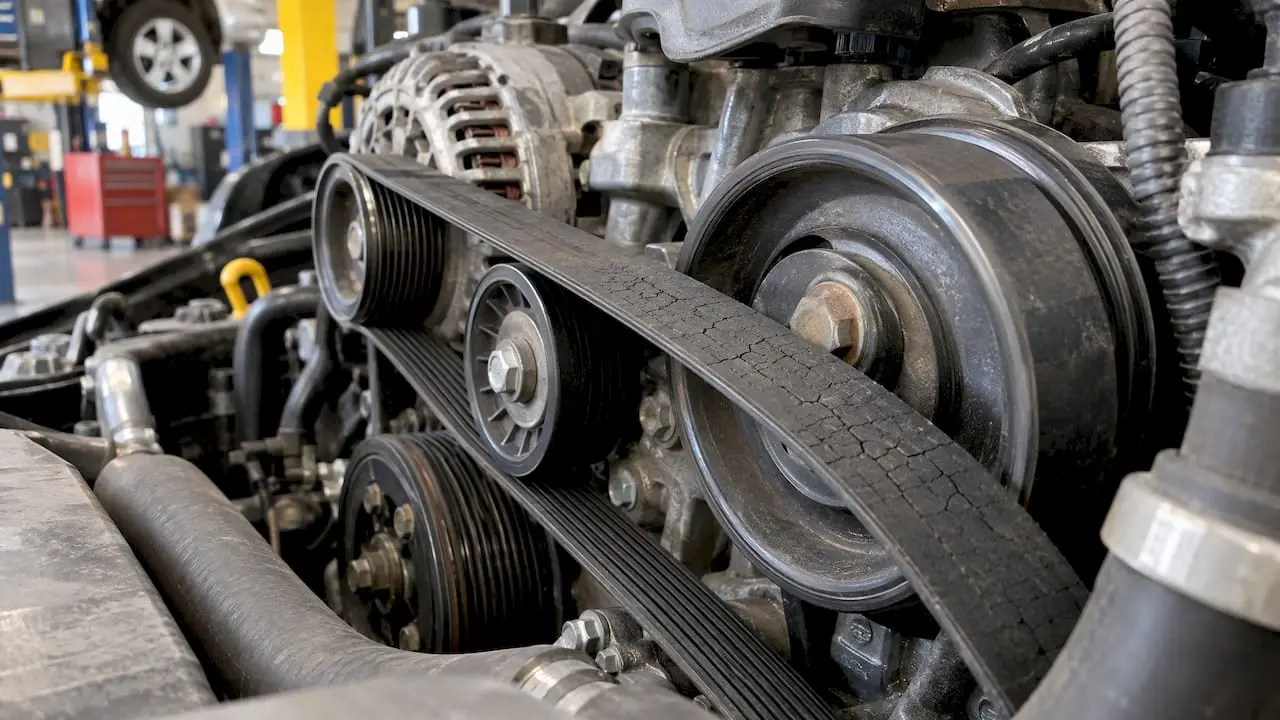
If the shop recommends something that isn’t on your manufacturer’s schedule, you should hear the reason. That is why we use Digital Vehicle Inspections: you receive photos, video and technician notes on your phone, so you can see the worn belt or dirty filter yourself before deciding.
Does a tune-up have anything to do with Texas inspections?
Not directly, but people mix them up. Since January 1, 2025, Texas no longer requires safety inspections for non-commercial vehicles before registration, under House Bill 3297. Drivers still pay a $7.50 inspection program replacement fee at registration, and vehicles registered in emissions counties, which include Dallas County, still need emissions tests. Qualifying commercial vehicles remain subject to applicable safety inspections.
Two takeaways:
- A check engine light can cause an emissions test failure, so fixing the cause before the test saves a repeat trip.
- Dropping the state safety inspection puts more weight on your own maintenance schedule. Brakes, tires, lights and steering still need to be right whether or not anyone stamps a sticker. Our Texas inspection checklist covers what changed and what to look at yourself.
For current rules and emissions requirements for your vehicle, check the Texas DPS page above before you register or renew.
Our perspective on tune-up timing
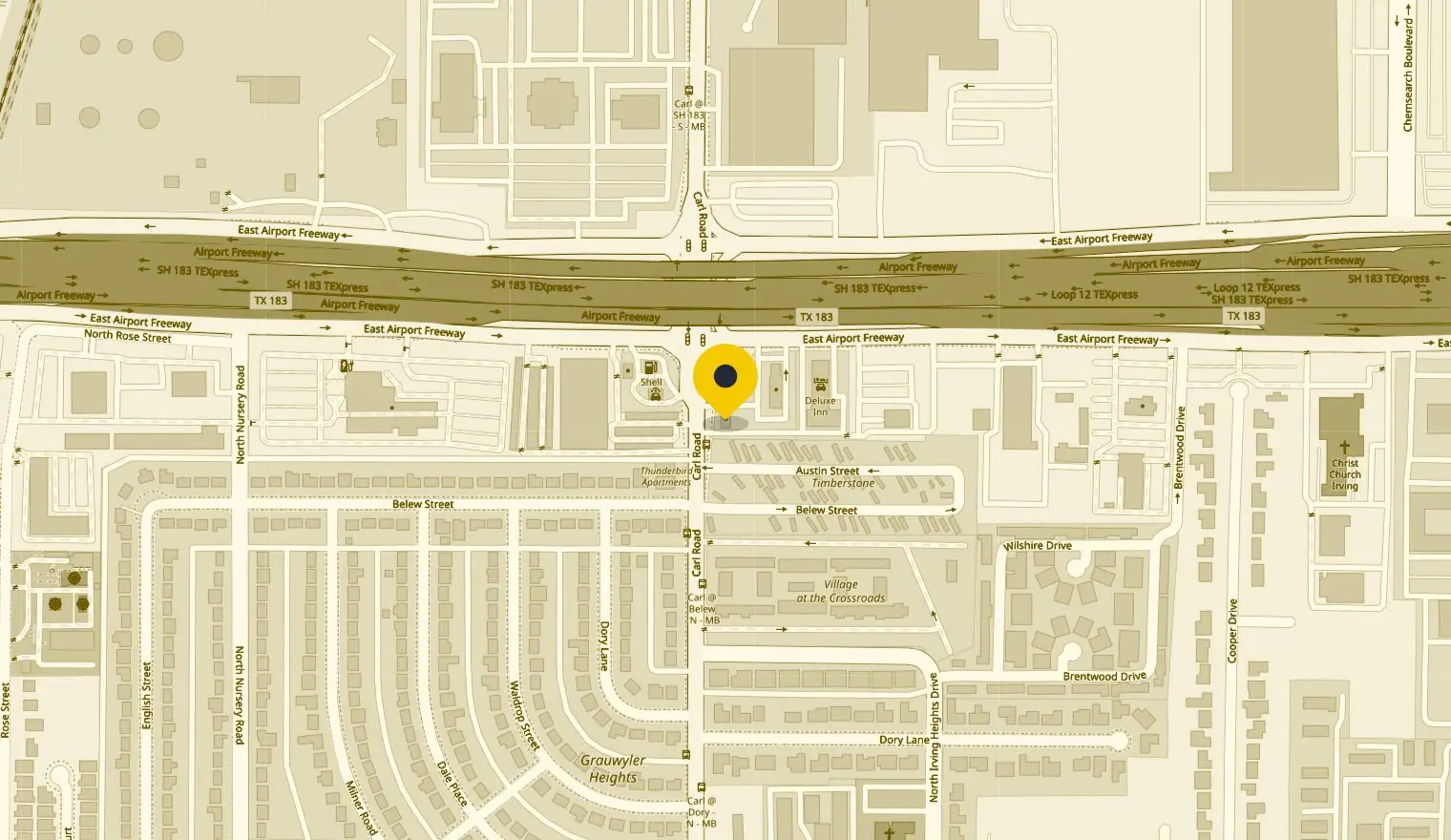
Most of the tune-up questions we hear at the shop on Carl Road come down to one worry: “Am I spending money too early, or waiting too long?” The best protection against both is a record. When a car comes in, we compare what the factory schedule says is due with what the inspection actually shows.
That is where our ASE-certified technicians and Digital Vehicle Inspections earn their keep. A photo of a clogged air filter or a video of a cracked belt turns a recommendation into something you can judge for yourself. We would rather you approve three items you understand than ten you don’t.
Our view is that intervals should be set by the manufacturer and adjusted by real conditions. Irving’s heat and traffic are real conditions, so we look at batteries, coolant, belts and fluids with that in mind. Repairs that qualify are backed by our 24-month/24,000-mile warranty, and we are RepairPal certified and CARFAX Top-Rated. Skipping scheduled maintenance is how small, cheap fixes become big, expensive ones.
Kwik Kar
Get your schedule checked in Irving
If you’re not sure what your car is due for, bring it in and we’ll compare your manufacturer’s schedule with what the vehicle shows. We handle factory-scheduled maintenance, tune-up services and engine diagnostics for drivers across Irving, and many customers also come from Las Colinas, Grand Prairie, Coppell, Euless, Grapevine and Dallas. Our oil change service is the easiest place to start, since the inspection that comes with it often shows what is next on the list.

Military members and first responders can ask about service discounts, and our Wednesday Ladies’ Day oil change offer and other current coupons change from time to time, so check the page for current terms. If you manage multiple vehicles, see our fleet maintenance program. If repairs come up, third-party financing options may be available, subject to provider approval and terms.
A practical example: two cars, two schedules
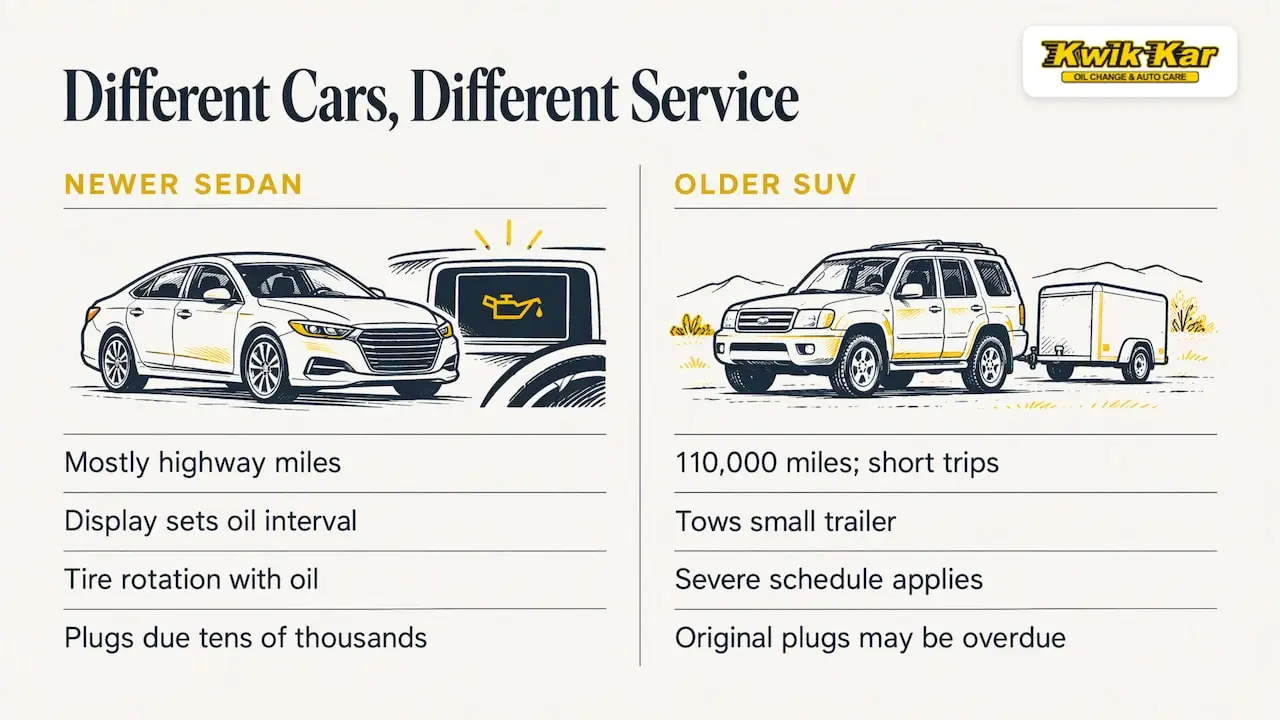
Consider two Irving drivers.
The first drives a newer sedan with a maintenance display, mostly highway miles between Las Colinas and Fort Worth. The display calls for oil at around the manufacturer’s stated interval, tire rotation with it, and spark plugs somewhere far off, in the tens of thousands of miles. For this driver, “tune-up” means following the display and checking filters and fluids along the way.
The second has an older SUV with 110,000 miles, takes short trips and tows a small trailer on weekends. The severe schedule applies, the original plugs may be overdue, and the transmission fluid and coolant history is unknown. Here a full inspection and a look at the service records make sense, and the diagnostic scan may turn up codes the driver never noticed.
Same word, different jobs. Neither needs a fixed “every 30,000 miles” visit. Both benefit from a shop that reads their actual schedule.
Tire wear is part of the picture too: uneven rotation shortens tire life and can mask suspension issues. Our tire rotation interval guide explains how to time it with oil service. Before a long drive, a quick road trip inspection covers the basics.
FAQ
How often should I get a tune-up?
Follow your owner’s manual or maintenance display rather than a fixed number. Most modern cars have no single tune-up. They have a schedule of items, each due by mileage or months, whichever comes first. Spark plugs may be 60,000 to 100,000 miles out, while oil and filters come around much sooner.
What mileage is a tune-up usually done at?
Older cars were commonly tuned up around every 12,000 to 30,000 miles, but modern engines often go well past 60,000 miles between plug changes. Your manufacturer’s milestones, such as 30,000, 60,000 and 90,000 miles, bundle different services. Check the schedule for your exact year and engine.
When should I get a tune-up even if I’m not due?
Get the car checked when you notice a rough idle, hard starting, hesitation, worse fuel economy or a check engine light. A flashing light needs prompt attention. These symptoms have several possible causes, so a diagnostic scan comes before any parts.
Does a car that is rarely driven need a tune-up?
Yes, time-based items still apply. Oil, brake fluid, coolant, belts and the battery age even when the odometer barely moves. Manuals often set both a mileage and a time limit, and the first one reached applies.
Do I need a tune-up for my Texas emissions test?
Not as a rule. Eligible vehicles registered in Dallas County still need emissions testing, and an active check engine light or misfire can cause a failure. Having the problem diagnosed and repaired before the test is the safer route. Call us at (469) 276-7337 or stop by 2100 Carl Rd, Irving, TX 75061 to schedule service.
Sources
- Kelley Blue Book: Car Maintenance Pricing & Service Schedules
- Consumer Reports: Guide to Car Maintenance
- AARP: Smart Guide to Car Maintenance
- Haynes Manuals North America: Maintenance Plans for Cars
- Honda: 2018 CR-V Maintenance Minder System
- Honda: 2018 Odyssey Maintenance Minder System
- Ford Motorcraft: Spark Plugs
- Texas DPS: Vehicle Safety Inspection Program Changes Now in Effect