A tune-up is a round of preventive maintenance meant to keep a car running the way it was built to run. The word comes from the carburetor era, when mechanics adjusted ignition and fuel settings by hand. On a modern car, a tune-up is a loose label for scheduled maintenance: fresh fluids and filters, spark plugs when they are due, and inspections of the parts that wear out. There is no single official checklist, so what you pay for depends on your vehicle, its mileage and what the shop finds.
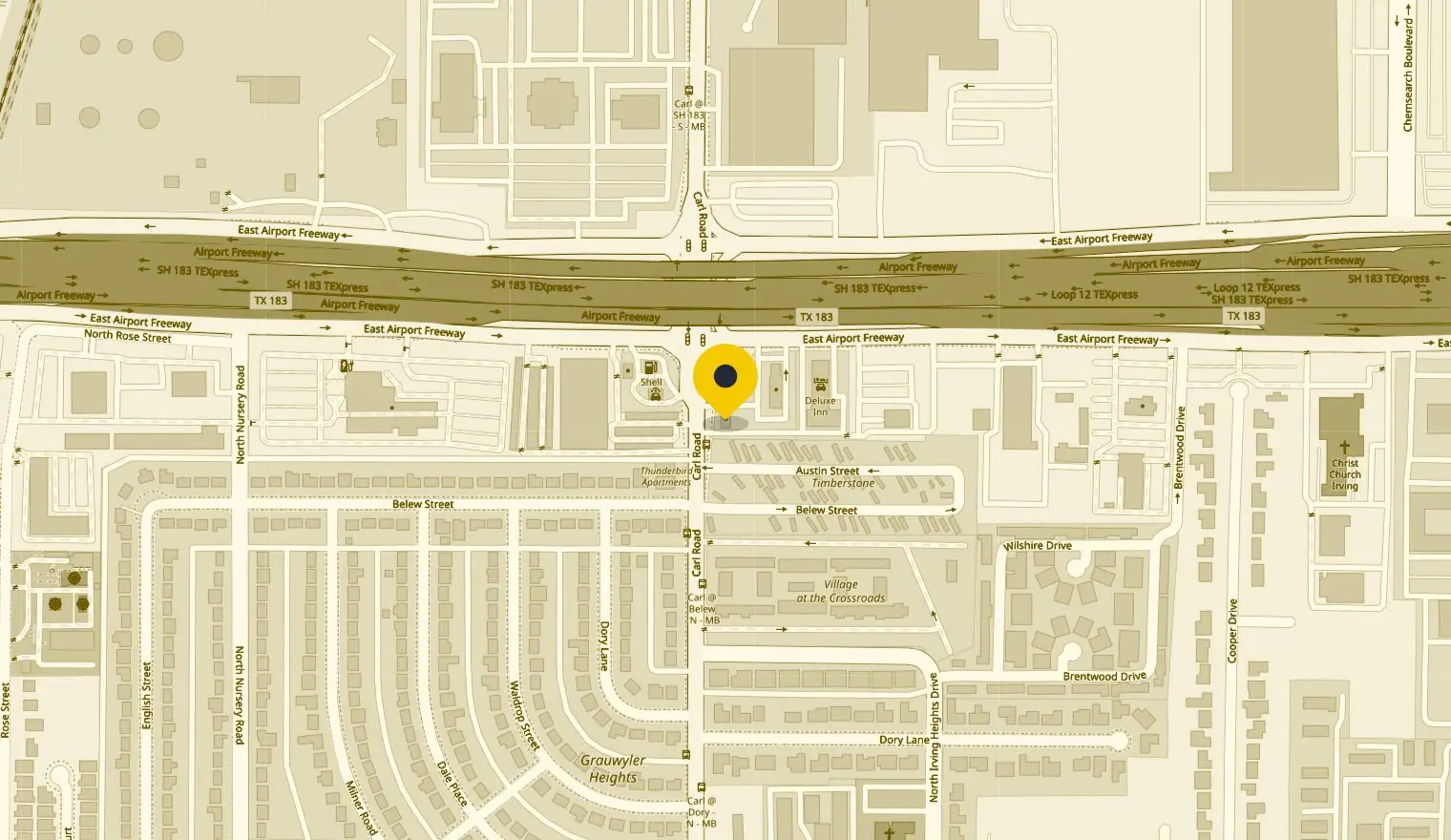
At Kwik Kar Oil Change & Auto Care at 2100 Carl Rd in Irving, we get this question often. Drivers ask for a tune-up because that is the word they grew up with, and our job is to translate it into what their car needs right now.
TL;DR
- A tune-up today means routine maintenance based on your vehicle’s schedule, not the hand adjustments of older cars.
- Typical items include oil and filter, spark plugs, air filters, fluid checks, belts and hoses, battery and brake inspections.
- Your owner’s manual sets the intervals. Be careful with shop menus that call for more frequent service than the manual does.
- A tune-up is planned maintenance. A warning light or a strange noise calls for a diagnosis, not a tune-up.
- We can build a service visit around your manual’s schedule and send a Digital Vehicle Inspection to your phone.
Table of Contents
- What does “tune-up” actually mean?
- Do modern cars still need tune-ups?
- What does a tune-up include on a modern car?
- How is a tune-up different from a repair?
- How often should you get a tune-up?
- Signs your car may need attention
- Texas inspections and tune-ups: what changed
- Our perspective: ask for a plan, not a package
- Tune-up and scheduled maintenance at Kwik Kar Irving
- Frequently asked questions
- Schedule your service in Irving
- Sources
What does “tune-up” actually mean?
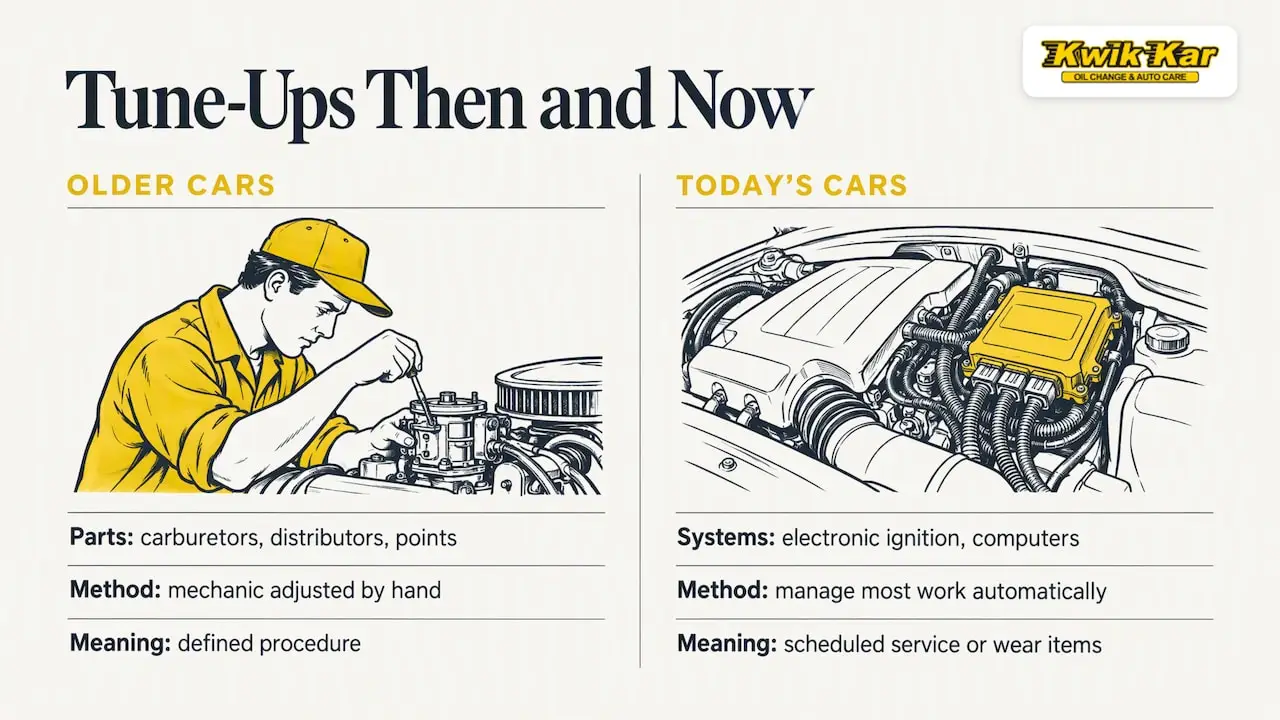
The term describes a set of services that keep an engine and its supporting systems performing well. For decades that meant very specific mechanical work. Cars had carburetors, distributors and ignition points, and those parts drifted out of adjustment as they wore. A mechanic had to set them back by hand so air, fuel and spark worked together.
That is why older sources describe a tune-up as valve adjustment, timing adjustment, carburetor cleaning and adjustment, spark plug replacement and points adjustment. It was a real procedure with a defined list.
Today’s vehicles manage most of that on their own. According to Kelley Blue Book, modern cars use electronic ignition and computer-controlled systems in place of many mechanical ignition components, which makes the traditional tune-up largely obsolete. The same article says the word now generally refers to performing the scheduled maintenance in the manufacturer’s manual, or addressing wear items that affect performance and safety.
So when someone asks for a tune-up now, they usually mean one of two things: “service my car according to its mileage,” or “something feels off, please look it over.” Those are different jobs, and we cover the difference below.
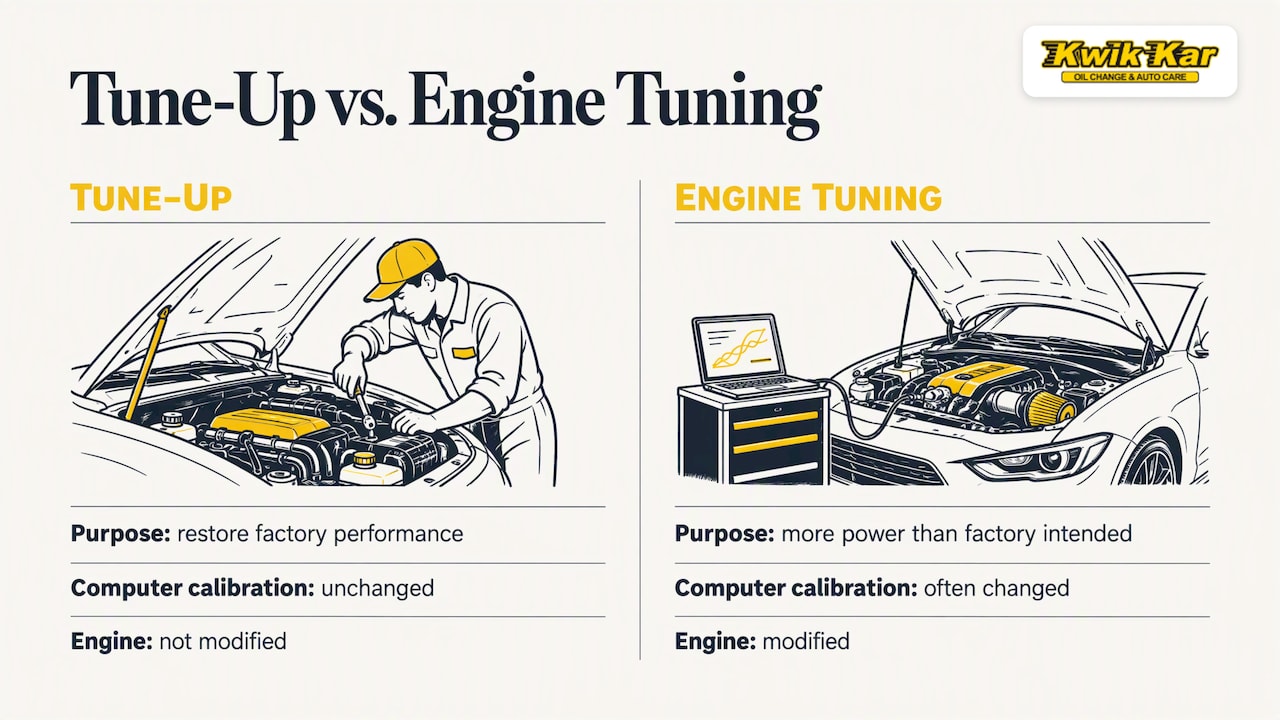
Tune-up versus engine tuning
Do not confuse the two. Engine tuning means modifying an engine, often with a new computer calibration, to get more power than the factory intended. A tune-up restores or maintains factory performance. Nothing in a routine tune-up changes what the engine was designed to do.
Do modern cars still need tune-ups?
They need maintenance, yes. They do not need the old-style tune-up.
The Federal Trade Commission says the old-fashioned tune-up may not be relevant to newer vehicles, where fewer parts beyond belts, spark plugs, hoses and filters need replacing. The EPA has said much the same for years: a computerized vehicle does not need a traditional tune-up because it has no carburetor or ignition points, and problems should be diagnosed by someone trained on computer-controlled vehicles.
That advice matters in practice. A car that hesitates, stalls or throws a warning light is not fixed by swapping a set of parts and hoping. The computer has usually stored a code, and the right first step is reading it and testing the system. Our engine diagnostic service is built for exactly that situation.
What does a tune-up include on a modern car?
There is no fixed list, but a tune-up-style visit commonly draws from the items below. Kelley Blue Book describes a visit that may include an oil change, spark plug service, engine and cabin air filter inspection or replacement, belt and hose inspection, fluid checks or service, battery and charging system testing, brake inspection, tire pressure monitoring and tire checks, rotation or balancing, alignment checks, and a diagnostic scan when there are warning lights or symptoms. Not every item is done at every visit. It depends on mileage, age and symptoms.
Here is how we would group those items for a typical driver.
| Area | What gets done | Why it matters |
|---|---|---|
| Engine oil | Oil and filter change | Keeps moving parts lubricated and carries heat and debris away |
| Ignition | Spark plug inspection or replacement when due | Worn plugs can cause misfires, rough running and wasted fuel |
| Air | Engine air filter and cabin air filter check | A clogged engine filter restricts airflow, a dirty cabin filter affects what you breathe |
| Fluids | Coolant, brake fluid, transmission fluid, power steering and washer fluid check | Low or old fluid is a common root of bigger repairs |
| Belts and hoses | Visual inspection for cracks, glazing, leaks | Failures tend to strand you without much warning |
| Electrical | Battery and charging system test | Catches a weak battery before a hot Texas afternoon does |
| Brakes | Pad and rotor inspection | A safety item that should never be guessed at |
| Tires | Pressure, tread, rotation, alignment check | Affects handling, wear and fuel economy |
| Computer | Scan for stored codes | Finds problems before they become breakdowns |
Oil changes are the anchor of most visits
The oil change is the one item almost every service visit includes. The old rule of 3,000 miles no longer applies to many cars. Kelley Blue Book notes that modern synthetic oils can often stretch intervals well beyond that old rule, sometimes to 7,500 or even 15,000 miles. Your own vehicle’s number comes from the owner’s manual. We break that down in our guide to oil change intervals, and our oil change service page explains conventional and synthetic options.
Spark plugs: the part most people mean
If someone says “tune-up” and means one specific part, it is usually spark plugs. They are one of the few ignition components still replaced on a schedule, and the interval varies a lot by engine and plug type. Our article on spark plug replacement covers when to do it and what drives the cost.
Fuel system cleaning is not automatic
Some menus bundle a fuel system cleaning into a tune-up. Whether that helps depends on the car and on symptoms. We generally recommend a diagnostic first, and we explain our thinking in our post on fuel system cleaning.
How is a tune-up different from a repair?
This is the distinction that saves drivers the most money and frustration.
Maintenance is planned. It follows the schedule in your owner’s manual and happens before anything fails. Consumer Reports describes routine maintenance as periodic, scheduled service listed in the manual, while repairs are usually unexpected and fix a problem such as an oil leak or worn-out shocks.
Repair responds to a symptom or a failure. A tune-up will not fix a failing alternator, a slipping transmission or a pulsing brake pedal. Those need diagnosis and a specific fix.
Here are three examples of how this plays out:
- Your car is at 60,000 miles and nothing is wrong. You are in maintenance territory. Check the manual for what is due at that mileage, such as fluids, filters, plugs or belts, and do those items.
- The check engine light is on and the engine runs rough. That is a repair question. Start with a scan and a proper diagnosis. Our guide to the check engine light explains what the light can mean and what to do.
- The engine cranks slowly on cold mornings. Start with a battery and charging system test. Our battery and electrical service covers that.
Brakes, steering and anything affecting control of the vehicle should never wait for a convenient tune-up. If you notice a soft pedal, grinding, pulling or a warning light for the brakes or ABS, have a professional inspect the car promptly. See our brake repair page or our guide to the ABS light.
How often should you get a tune-up?
There is no annual tune-up rule for modern cars. Kelley Blue Book explains that today’s schedules are based on time and mileage intervals set by the manufacturer, not a one-size-fits-all yearly service.
Find your schedule in three steps:
- Open the owner’s manual and look for the maintenance section. Many manuals split it into “normal” and “severe” service.
- Note your current mileage and the date of the last service of each type.
- List what is due or coming due in the next few thousand miles.
The FTC advises following the maintenance schedule in your owner’s manual, and it warns that some shops recommend schedules with more frequent service than the manufacturer does. That is worth knowing before you approve a long menu.
Does Irving driving count as severe service?
Many manuals define severe service to include stop-and-go traffic, short trips, towing, extreme heat and dusty conditions. Plenty of daily driving around Irving, Las Colinas and the Dallas area involves summer heat and heavy traffic on the interstates and tollways. Check whether your manual’s severe schedule fits how you drive. If it does, that schedule is the one to follow, and it still comes from the manufacturer, not from a shop menu.
Signs your car may need attention
A warning light or symptom is a reason to have the car looked at, not to schedule a tune-up and hope. Common signs include:
- A check engine light, steady or flashing
- Rough idle, hesitation or stalling
- Noticeably worse fuel economy
- Hard starting or a slow crank
- Unusual noises, smells or vibrations
- A dashboard light for the battery, brakes, ABS or temperature
A flashing check engine light usually signals an active misfire. Reduce driving and get it checked soon, since continued driving can damage the emissions equipment. Our write-up on diagnosing a P0300 misfire code shows what a shop looks at.
If the car fails an emissions test, the EPA advises seeking a technician with training and experience on modern computer-controlled vehicles, which describes the way we approach it: scan, test, then repair.
Texas inspections and tune-ups: what changed
People sometimes lump the state inspection in with a tune-up. They are separate things.
The Texas Department of Public Safety says that, under House Bill 3297, the Vehicle Safety Inspection Program for non-commercial vehicles ended on January 1, 2025. Most non-commercial vehicles no longer need an annual safety inspection before registration, though a $7.50 inspection program replacement fee is paid at registration.
Two points matter for Irving drivers:
- Emissions testing still applies in Dallas County. The DPS notes that emissions tests are different from safety inspections, and eligible vehicles registered in emissions counties still need them. Irving is in Dallas County. Check the DPS page and your registration notice for what applies to your vehicle.
- Qualifying commercial vehicles remain subject to applicable safety inspections. If you manage a work truck or fleet, confirm the current requirements for your vehicles. Our fleet maintenance program is designed to keep that kind of schedule organized.
A vehicle with a lit check engine light or incomplete readiness monitors can have trouble on an emissions test. Our guide on readiness monitors explains why a car can be “not ready” even after a repair.
Our perspective: ask for a plan, not a package
We stopped thinking of a tune-up as a product years ago. Customers come in asking for one, and the most useful thing we can do is ask three questions: what does the manual say is due, what symptoms are you seeing, and how do you drive?
From there we build a service list that fits the vehicle in front of us. Our ASE-certified technicians perform a Digital Vehicle Inspection, and you receive photos, video and technician notes on your phone. You see a worn belt or a weeping hose for yourself and decide what to approve now and what can wait. We would rather you leave with a short, justified list than a long one you do not trust.
We are also RepairPal certified and CARFAX Top-Rated, and qualifying repairs carry a 24-month/24,000-mile warranty. Ask us what the warranty covers on your specific repair before you approve it.
— Kwik Kar
Tune-up and scheduled maintenance at Kwik Kar Irving
We offer tune-up service and factory-scheduled maintenance for cars, SUVs and light trucks, along with oil changes, brakes, batteries, A/C and the rest of the repairs described above. Bring your owner’s manual if you have it, or tell us your mileage and we will look up what your manufacturer calls for. You can see what we offer on our main site.
Military members and first responders can ask about service discounts, and our Ladies’ Day offer on Wednesdays applies to oil changes. See the details on the Ladies’ Day oil change page. Offers can change, so confirm current terms when you book.
Frequently asked questions
What is included in a tune-up?
There is no standard list. A typical visit may include an oil and filter change, spark plugs when due, air filter checks, fluid checks, belt and hose inspection, and battery, brake and tire checks. The exact work depends on your mileage, your vehicle’s schedule and what the technician finds.
Do cars still need tune-ups?
Not the traditional kind, since modern cars have no carburetor or ignition points to adjust. They do need scheduled maintenance at the intervals in the owner’s manual. If a car is running poorly, it needs a diagnosis rather than a general tune-up.
How often should I get a tune-up?
Follow the time and mileage intervals in your owner’s manual instead of a yearly rule. Different items come due at different mileages, so one visit rarely covers everything. If you drive in heavy traffic, extreme heat or tow, check whether your manual’s severe-service schedule applies.
Is a tune-up the same as a state inspection?
No. A tune-up is maintenance you choose to do. Texas ended the safety inspection for most non-commercial vehicles on January 1, 2025, but eligible vehicles registered in Dallas County still need emissions testing, and qualifying commercial vehicles are still subject to safety inspections.
Can a tune-up fix my check engine light?
Usually not by itself. The light means the computer stored a fault, and the cause could be anything from a loose gas cap to a failing sensor or a misfire. A scan and diagnostic test identify the cause so the repair is targeted.
Schedule your service in Irving
If you are not sure what your car needs, we will help you sort it out. Call us at (469) 276-7337 or stop by 2100 Carl Rd, Irving, TX 75061 to schedule service. We serve drivers from Irving and nearby communities such as Las Colinas, Grand Prairie, Euless and Coppell. You can also visit kkirvingtx.com to get started.
Sources
- Kelley Blue Book: Car Tuneup, What They Mean and When You Need One
- FTC Consumer Advice: Auto Repair Basics
- EPA: Next Steps, Correcting Your Vehicle’s Emission Problems
- Consumer Reports: Best Car Repair Shop Buying Guide
- Texas DPS: Vehicle Safety Inspection Program Changes Now in Effect