Delayed engagement is the pause between moving the shifter into Drive or Reverse and the car actually taking up power. A brief pause is normal. Research on delayed engagement puts a healthy transmission at roughly 0.5 to 3 seconds, while a worn one can take 10 seconds or more. If your car now takes longer than it used to, or you feel a thump when it finally grabs, the cause is usually low or degraded fluid, a hydraulic control problem, or internal wear. All of those get worse with time, so get it looked at early.
TL;DR
- A pause of up to about 3 seconds is generally considered normal. Longer, or getting longer, is a warning sign.
- The usual suspects: low or old transmission fluid, a clogged filter, a faulty solenoid or valve body, worn internal seals and clutches.
- A delay that fades as the car warms up points one direction. A delay that stays hot or cold points another. Tell your technician which one you have.
- Don’t add fluid or flush the transmission on a guess. The wrong fluid or level can do real damage.
- A scan for trouble codes and a fluid inspection come first. We do both at Kwik Kar in Irving, with photos and notes sent to your phone.
Table of Contents
- What delayed engagement feels like
- Why the pause happens
- Common causes, from simplest to most serious
- Cold-start delay or constant delay: what the pattern tells us
- Is it safe to keep driving?
- What you can check yourself, and what to leave alone
- How a proper diagnosis works
- What the fix might be
- Our perspective: catch it while it’s still a small problem
- Staying on top of transmission care
- A note on Texas inspections
- Get it checked in Irving
- FAQ
- Sources
What delayed engagement feels like
You start the car, press the brake, and shift into Drive. Nothing happens for a second or two. Then the car either eases forward or lurches with a clunk. Reverse is often the first gear to show it, because it is used less and some owners notice it in a driveway or parking lot.
The most common ways drivers describe it:
- A lag after shifting from Park, then a bump when the gear finally applies.
- The engine revs up briefly before the car moves.
- A delay only on cold mornings, or only after the car has been sitting.
- A delay that shows up in Drive but not Reverse, or the other way around.
- Slow or hesitant shifting while driving, not only from a stop.
Mechanics sometimes call this a type of slip: the clutches or bands that move the car don’t apply instantly. Hesitation when changing gears, especially from Park to Drive, is also one of the signs AAA lists as a symptom of fluid breakdown.
Why the pause happens
An automatic transmission engages a gear by sending pressurized fluid to a clutch pack. The fluid has to fill the passages, move a piston, and clamp the clutches. When everything is healthy, that happens fast enough to feel instant.
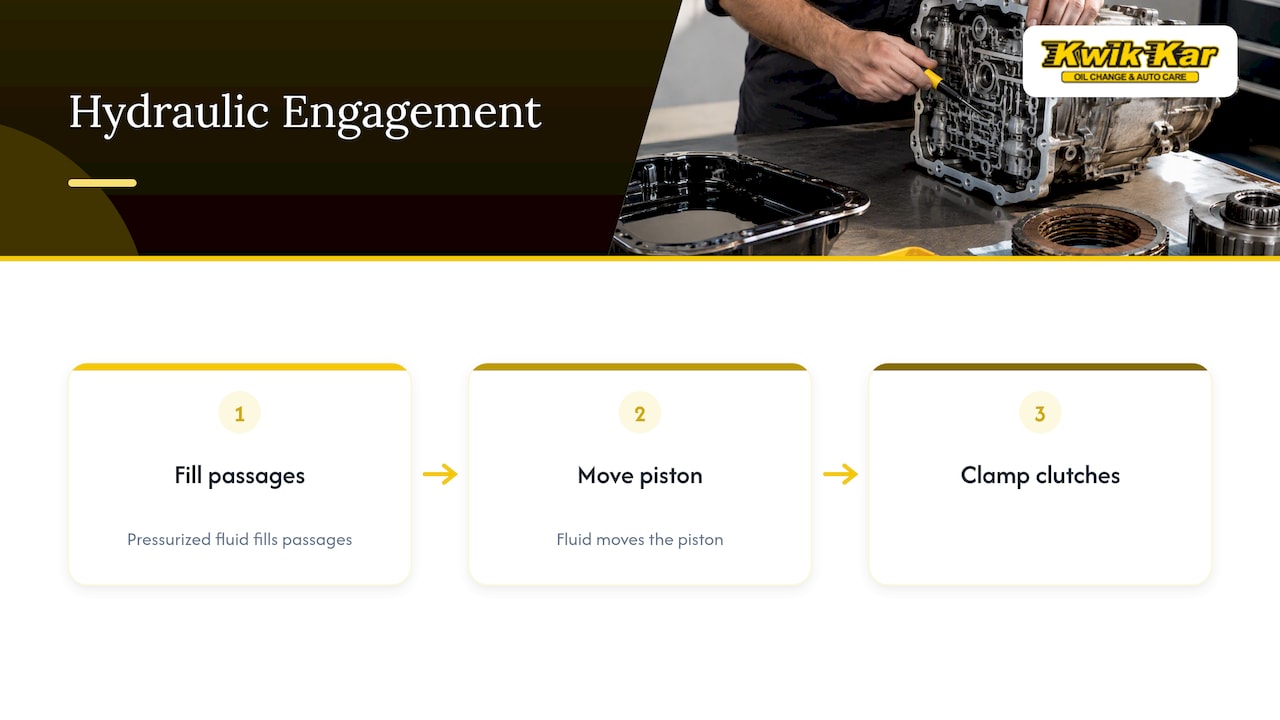
Anything that weakens that hydraulic pressure stretches out the pause. That’s why most causes come down to fluid supply, fluid pressure, or the parts that control it.
Common causes, from simplest to most serious
Low or incorrect fluid
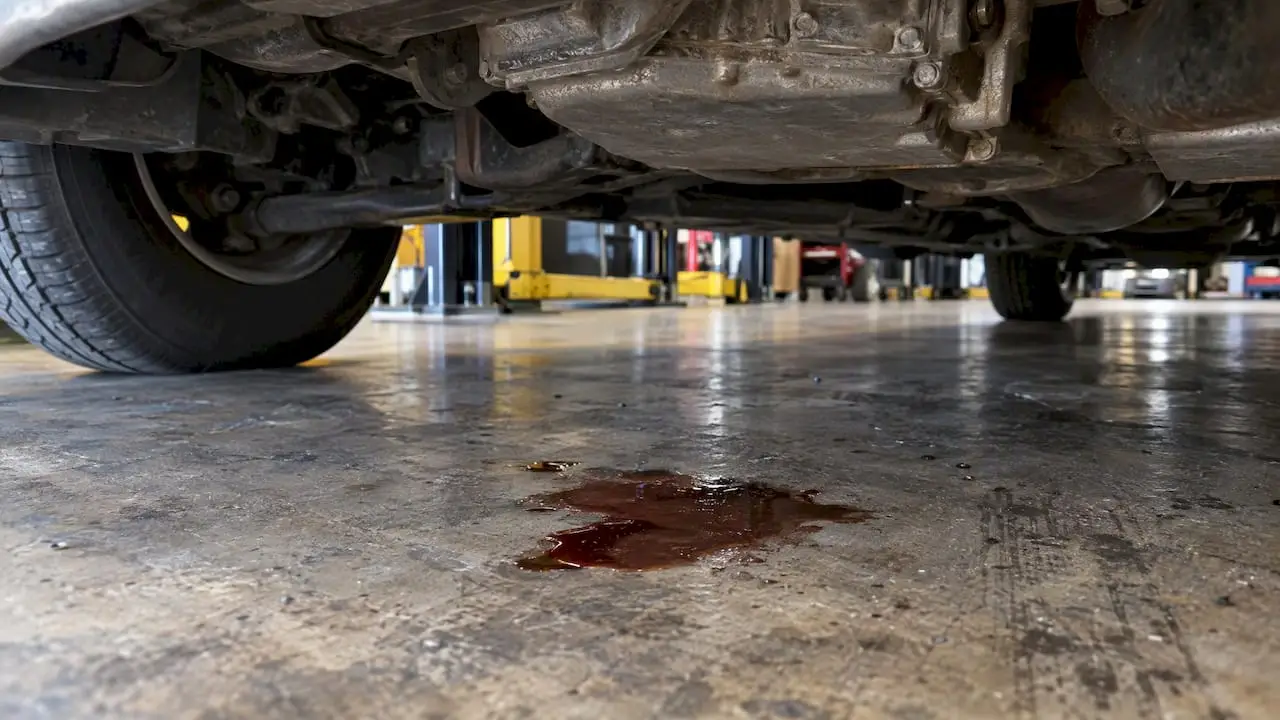
Low fluid means the pump can’t build pressure as quickly. Fluid that is the wrong type for your transmission can also change how it applies. AAA notes that an automatic transmission must be filled with a specific fluid kept at a precise level. A leak under the car, often reddish or brown, is a clue that the level may be dropping.
Old, burnt or contaminated fluid
Fluid does more than lubricate. It carries pressure, and it cools. Over time it breaks down and picks up clutch material. Dark, gritty or burnt-smelling fluid suggests wear has already begun. Our guide with photos of what burnt transmission fluid means shows what to look for.
A clogged filter
The filter protects the pump and valve body. When it’s restricted, the pump struggles to draw fluid and pressure builds slowly. This one tends to cause a delay that shows up whether the car is hot or cold.
Solenoid or valve body problems
Solenoids and the valve body direct fluid to the right clutch. If one sticks, wears or sends a weak signal, the gear can apply late. These often store a trouble code, which is why a scan matters so much.
Worn seals and clutches
Internal seals keep pressure where it belongs. When they harden or wear, pressure leaks away and the clutch takes longer to clamp. Worn clutch material needs more fluid travel to take up the slack. This is the more serious end of the list and usually means a transmission repair rather than a fluid service.
Problems that only look like transmission trouble
Not every delay starts inside the transmission. A rough idle, a failing sensor, or an engine running poorly can mimic the symptom. A good diagnosis rules these out before anyone talks about pulling a transmission apart. If your check engine light is also on, our write-up on reading a P0300 misfire code explains how we separate engine issues from drivetrain ones. A worn transmission mount can also cause a clunk that feels like late engagement; our transmission mount symptoms checklist covers that.
Cold-start delay or constant delay: what the pattern tells us
The pattern is one of the most useful things you can tell a technician.
| What you notice | What it often suggests |
|---|---|
| Delay on a cold start that clears after a few minutes | Fluid draining back, worn seals, or slow pressure buildup |
| Delay every time, hot or cold | Supply-side issues: fluid level, a clogged filter, a weak pump |
| Delay plus a check engine light | A stored code pointing to a solenoid, sensor or control fault |
| Delay plus a burnt smell or dark fluid | Internal wear that has already started |
| Delay in Reverse only | A specific clutch circuit or seal, worth a closer look |
This table is a guide, not a diagnosis. Several causes can overlap, and the same symptom can come from different faults in different transmissions.
Is it safe to keep driving?
A mild, steady delay is not an emergency, but it isn’t harmless either. Two safety points matter.
First, the pause itself can affect how the car behaves when it engages. The research cited above looked at delayed engagement as a contributor to sudden unintended acceleration: with a delay, the engine can rev before the gear catches, and the car can then move harder than you expected. Always keep your foot firmly on the brake while shifting, and be especially careful in a garage, a driveway, or a tight parking space.
Second, a delay that is growing, or comes with slipping, a burning smell, grinding or a warning light, means internal damage may be progressing. Driving on it can turn a repairable problem into a rebuild. If that describes your car, have it checked soon and avoid long highway trips until it has been inspected.
What you can check yourself, and what to leave alone
You can do a few safe things before you call us:
- Note the pattern. Does it happen cold, hot, or both? Drive, Reverse, or both? Write it down or take a short video of the shift.
- Look under the car. Check where you park for reddish or brown spots.
- Notice warning lights. A check engine light changes the diagnosis, and the stored codes help us.
- Check your owner’s manual for the fluid type and service interval for your model.
What we’d leave to a shop: adding fluid, pulling a dipstick on a hot engine, or ordering a flush because it worked for a friend. Many modern cars have sealed transmissions with no dipstick, so checks and top-offs need the right equipment and the exact fluid specification, and AAA warns that the wrong fluid or level can cause permanent damage. A flush is also not a guaranteed cure. When fluid is already dark and gritty, AAA’s advice is to have a professional evaluate it first. If you want to understand what a fluid service involves, read our transmission fluid change guide before you decide.
How a proper diagnosis works
A good diagnosis moves from cheapest and least invasive to most involved. At our Irving shop, it generally looks like this:
- Talk through the symptom. When does it happen, how long is the pause, has it changed?
- Scan for trouble codes. Stored or pending codes can point straight to a solenoid, a sensor or a control fault, and rule out a teardown. If you’ve wondered what a diagnostic should include, see our piece on questions to ask before an engine diagnostic.
- Inspect the fluid. Level, color, smell and condition, using the correct procedure for your transmission.
- Rule out look-alikes. Engine idle quality, sensors, mounts and leaks.
- Road test. Reproducing the delay, cold if possible, tells us a great deal.
- Explain the options. Whether it’s a fluid service, a control repair or something deeper, you hear it plainly and decide.
We run a Digital Vehicle Inspection on the car, so you get photos, videos and technician notes on your phone. You see what we see, and you aren’t asked to approve work on trust.
What the fix might be
The repair depends on the cause. We don’t publish a price for transmission work because it varies so much by vehicle and fault, so we quote after the inspection.
- Fluid-related: correcting the level, or a fluid and filter service when the condition supports it.
- Leaks: repairing the seal or gasket, then restoring the proper fluid level.
- Electrical or control faults: replacing a faulty sensor or solenoid, which can be much less costly than internal work.
- Internal wear: a larger transmission repair. Our transmission and clutch repair page describes what we handle.
In general, the sooner a delay is looked at, the more likely the fix stays on the smaller end of that list. No shop can promise an outcome before diagnosis, and we won’t.
Our perspective: catch it while it’s still a small problem
Most people who come in about delayed engagement have noticed it for weeks and kept driving. That’s understandable. The car still goes. But we see the same pattern: the delay is the first thing you feel, and by the time there’s slipping or a burning smell, the options are narrower.
We think the most useful thing a shop can do is show you the evidence. That’s why our ASE-certified technicians document the inspection with photos, video and notes. If the fluid is fine and the issue is a sensor, you’ll see that. If the fluid is burnt and there’s wear, you’ll see that too, and you can decide what makes sense for the vehicle you have. We’d rather earn a repeat visit with an honest recommendation than sell something the car doesn’t need.
If you drive in Irving traffic every day on routes like Highway 183, State Highway 114 or Belt Line Road, you already know stop-and-go driving is hard on a transmission. Regular fluid service on the schedule your manufacturer sets is the cheapest protection there is.
— Kwik Kar
Staying on top of transmission care
Prevention is mostly boring, and it works:
- Follow your manufacturer’s transmission service interval. Our factory-scheduled maintenance covers what your car needs and when.
- Have fluid condition checked during routine visits, not only when something feels wrong.
- Fix leaks early. A slow drip becomes a low-fluid problem.
- Address a check engine light promptly rather than waiting.
- If you tow or carry heavy loads, tell us. Heat is hard on fluid.
- Keep the cooling system healthy, since an overheating engine can raise transmission temperatures too.
For general reading on keeping a transmission healthy, this transmission care article covers fluid and maintenance habits from a luxury-vehicle angle.
A note on Texas inspections
A transmission problem won’t fail you at a state inspection station these days, but that’s not a reason to wait. Texas eliminated regular safety inspections for non-commercial vehicles, and emissions testing continues for vehicles registered in designated counties, including Dallas County, where Irving sits. If you need emissions or commercial inspection information, see our Texas emissions and commercial inspections page. A car that is slow to engage should be checked on its mechanical merits, not on inspection rules.
Get it checked in Irving
If your car pauses before it goes into gear, bring it to Kwik Kar Oil Change & Auto Care. We offer same-day service availability, ASE-certified technicians, a Digital Vehicle Inspection sent to your phone, and a 24-month/24,000-mile warranty. Military members and first responders can ask about service discounts.
Start with a look at our transmission and clutch services, or visit kkirvingtx.com to book. Tell us when the delay happens, and we’ll take it from there.
FAQ
How long of a delay is normal for an automatic transmission?
A delay of roughly 0.5 to 3 seconds is generally treated as normal for a healthy transmission, according to research on delayed engagement. A pause that is getting longer, or that ends in a hard clunk, deserves an inspection even if it is within that range.
Can low transmission fluid cause delayed gear engagement?
Yes. Low fluid reduces the hydraulic pressure that applies the clutches, so the gear takes longer to engage. Don’t top it off without knowing the correct fluid type and procedure for your car, because the wrong fluid or an overfilled transmission can cause harm.
Will a fluid change fix delayed engagement?
Sometimes, if the delay comes from old fluid or a clogged filter. If the fluid is already burnt or full of debris, a flush may not help and can stir up trouble, so fluid condition is best treated as a starting point for diagnosis. A technician should evaluate it first.
Why does my car only hesitate on cold mornings?
A delay that goes away as the car warms up often relates to fluid draining back or worn seals that need time to build pressure. It’s an early warning, not a clean bill of health, so mention it to your technician.
Is it safe to drive with a delayed transmission?
Short, careful trips are usually possible with a mild delay, but keep your foot on the brake when shifting and have it inspected soon. If you notice slipping, grinding, a burning smell or a warning light, stop driving it more than necessary and have it checked.
Sources
- Delayed Engagement as a Contributor to Sudden Unintended Acceleration
- How to Check and Maintain Your Transmission Fluid, AAA
- Automatic Transmission Fluid Service, AAA Automotive
- 88th Legislation, Texas Department of Public Safety