If your transmission fluid is dark brown or black and smells like scorched toast, it usually points to overheating or contamination inside the transmission. A fluid change helps only when there is no metal debris and no slipping. If it’s more than discoloration, an ASE-certified technician should run a diagnostic before you drive further, backed by a detailed inspection that helps you understand the vehicle’s condition.
TL;DR:
- Dark brown or black transmission fluid with a burnt smell indicates overheating or contamination, requiring immediate diagnosis if accompanied by symptoms like slipping or harsh shifts.
- Inspecting the fluid’s texture and color, along with symptoms such as delayed engagement or warning lights, helps determine if a simple fluid change will suffice or if internal damage is likely.
- A proper diagnosis involves checking fluid condition, inspecting the pan and magnet for debris, and testing the cooler and lines to identify the root cause before any repair.
- Metal contamination in the fluid or persistent slipping after service suggests advanced internal wear, often requiring a rebuild or replacement rather than a simple fluid change.
- Used transmission fluid must be disposed of properly at recycling centers or via professional disposal to prevent environmental harm.
Table of Contents
- How to identify burnt transmission fluid by sight, smell, and driving symptoms
- Immediate, safety-first steps if you suspect burnt fluid
- Why transmission fluid becomes burnt or degraded
- What a technician checks during a transmission diagnostic
- Repair options and what to realistically expect
- Routine maintenance that prevents burnt fluid in the first place
- How Kwik Kar documents and diagnoses burnt-fluid cases
- How to dispose of burnt transmission fluid properly
- Our approach to diagnosing transmission problems
- Get your transmission checked with real diagnostic evidence
- Sources
- FAQ
How to identify burnt transmission fluid by sight, smell, and driving symptoms
Healthy automatic transmission fluid runs bright red or pink in most vehicles, though some manufacturers specify green, yellow, purple, or blue fluid. Color alone does not tell the whole story: check your owner’s manual for the correct fluid specification before assuming a problem, since normal fluid varies by vehicle. Brown or black fluid combined with a sharp, burnt odor is the combination that actually signals trouble.
The smell is the giveaway most owners miss. Burnt transmission fluid smells acrid, almost like scorched toast or overheated electrical insulation, which is distinct from the sweeter smell of burning engine oil or the sulfur-like odor of burning brake pads. If you’re having trouble telling automotive smells apart, a breakdown of common car odors can help narrow down whether the smell is coming from the transmission at all.
Texture matters too. Fluid that looks sludgy or contains visible metallic grit suggests internal wear, while a thin, watery consistency can point to contamination from coolant or the wrong fluid type entirely.
Watch for these driving symptoms alongside discolored or foul-smelling fluid:
- Slipping between gears or a delay before the transmission engages
- Harsh or jerky shifts that weren’t there before
- A whining or humming noise that changes with engine speed
- A transmission or check engine warning light on the dashboard
Pro Tip: Before you drive anywhere, take photos of the fluid on the dipstick, the drain pan if you check it, and any puddles under the car. That documentation speeds up diagnosis and gives a shop something concrete to compare against.
Overheated or degraded fluid can lose its cooling and lubrication properties, which is what produces slipping, delayed engagement, and harsh shifting. Left unaddressed, leaks or overheating can progress to full transmission failure.
Immediate, safety-first steps if you suspect burnt fluid
Not every dark-fluid situation is an emergency, but some signs mean you should stop driving and arrange a tow rather than continue to a shop under your own power.
- Pull over and stop driving if you see smoke, smell burning strongly enough to notice inside the cabin, or the transmission refuses to engage a gear.
- If the vehicle is slipping aggressively or lurching between gears, treat it the same way: get it towed rather than risk stranding yourself or damaging the transmission further.
- Once parked safely, let the engine and transmission cool before checking anything underneath, and look for puddles or drips without touching hot components.
- Check the fluid level using the procedure in your owner’s manual. Many newer vehicles use sealed transmissions with no dipstick, or require the engine running and the transmission in a specific gear to get an accurate reading.
- Avoid topping off with whatever fluid is on hand. Using the wrong type can cause damage that a technician cannot always reverse.
- Write down your mileage, any recent towing or heavy hauling, and roughly when the smell or symptoms started. Bring that timeline, along with your photos, to your appointment.
Pro Tip: If you recently towed a trailer or hauled a heavy load, mention it specifically. Technicians often trace rapid fluid breakdown back to a single overheating event, and that detail can shortcut the diagnosis.
If your symptoms started alongside visible smoke or exhaust changes, it’s worth ruling out a related engine issue. Our guide on what to do when an engine overheats covers steps that overlap with transmission cooling problems.
Why transmission fluid becomes burnt or degraded
Burnt fluid is a symptom, not a diagnosis. Several distinct mechanical problems can produce the same dark, acrid fluid, and figuring out which one you’re dealing with determines whether a fluid service will actually fix anything.
- Overheating from towing, heavy loads, a blocked transmission cooler, or failing internal components breaks down fluid chemically long before it would wear out under normal use.
- Low fluid from a leak at a seal, gasket, or cooler line reduces the transmission’s ability to shed heat, which accelerates the same breakdown process.
- Internal wear, including slipping clutches and friction material shedding into the fluid, introduces debris that shows up as grit or metallic flakes.
- Contamination, whether from coolant crossing into the transmission through a failed cooler or from someone using the wrong fluid type, can cause foaming and rapid degradation that looks similar to ordinary overheating.
Transmission fluid does not typically “burn off” the way engine oil does. If your level is low, the more likely explanation is a leak somewhere in the system, not evaporation. Topping off without finding that leak just delays the real fix and lets the underlying overheating continue. Vibration or a failing transmission mount can sometimes mimic these symptoms too, so it’s worth ruling that out; our transmission mount symptom checklist walks through the difference.
What a technician checks during a transmission diagnostic
A proper diagnostic goes well beyond looking at the fluid color. Technicians work through a sequence of checks designed to separate a simple fluid problem from a mechanical one.
- Fluid inspection: color, smell, viscosity, and whether metallic grit or larger particles are present.
- Pan and magnet inspection: fine metallic dust on the magnet is common and often normal wear, but larger flakes or chunks point toward a failing clutch pack or gear.
- Filter condition: a clogged or sludge-coated filter reveals how long contamination has been building, even if the current fluid looks relatively clean.
- Cooler and line checks: pressure testing the cooling circuit and lines rules out a blocked or leaking cooler as the source of overheating.
- Fluid analysis: in some cases a lab sample checks for iron, copper, or other particulates at levels that indicate internal component failure.
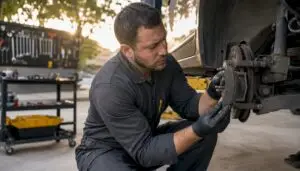
A pan and magnet inspection is a low-cost, high-value step that quickly reveals metal contamination and helps decide whether further teardown is warranted.
This staged approach matters because a fluid analysis showing elevated iron or copper is a strong predictor that internal parts are already failing, which changes the conversation from “change the fluid” to “plan for a bigger repair.”
Repair options and what to realistically expect
Once the diagnostic is done, repair options depend on the inspection findings.
Drain-and-refill replaces most of the fluid in the pan and torque converter with fresh fluid of the correct specification. It works well when there’s no metal contamination and no slipping, essentially catching fluid breakdown before it caused mechanical damage. This is the option technicians reach for first in most cases.
Filter and pan service goes a step further by removing the pan entirely, inspecting the magnet and filter for debris, and replacing both along with the fluid. This gives a technician a direct look at how much wear has actually occurred rather than relying on the fluid alone.
Power flushing pushes fluid through the entire system under pressure rather than simply draining the pan. Consumer Reports cautions against power flushing high-mileage transmissions, since it can dislodge accumulated sludge and cause that debris to clog narrow passages elsewhere in the system. Most technicians prefer a drain-and-refill plus filter change over a full flush unless lab results suggest a flush is genuinely needed.
Some cases point toward something more serious than a fluid service:
- Large metal particles or chunks in the pan rather than fine dust
- Slipping that persists after a fluid change and filter service
- Visible friction material loss from the clutch packs
When those signs show up, the realistic conversation shifts toward a rebuild or replacement rather than a simple fluid change. A burnt transmission may require more than a fluid change if internal wear is significant. That’s the core reason a diagnostic should come before any promise of a fix. If you want to understand the fluid change process itself in more detail, our transmission fluid change guide covers procedures and what to expect on the bill. For internal repairs, our transmission and clutch repair page outlines what that work involves.
Routine maintenance that prevents burnt fluid in the first place
Most burnt-fluid cases trace back to a maintenance gap rather than bad luck. A handful of habits keep the fluid, and the transmission around it, in working order for years longer.
- Use the exact fluid type specified in your owner’s manual. The wrong fluid can cause damage that isn’t always repairable, since different transmissions rely on different friction modifiers and viscosity properties.
- Follow your manufacturer’s service interval rather than a generic number. Recommended intervals vary widely by vehicle, so check your manual rather than assuming a one-size-fits-all mileage.
- Check fluid level periodically using the correct procedure for your vehicle, and avoid overfilling, which can cause foaming and its own set of problems.
- Limit towing and heavy loads when possible, and keep your cooling system and external transmission cooler lines in good condition since they’re doing double duty on hot days.
- Inspect seals and gaskets for early leak signs before a slow leak becomes a low-fluid, overheating problem.
Pro Tip: Keep a simple record of every transmission service, including mileage and what was found in the pan. A pattern of recurring metal debris across visits is worth flagging to your technician even if each individual visit looked fine.
Request a digital inspection with photos whenever a shop services your transmission. Seeing the actual condition of the pan and fluid, rather than taking someone’s word for it, makes it much easier to trust the recommendation that follows.
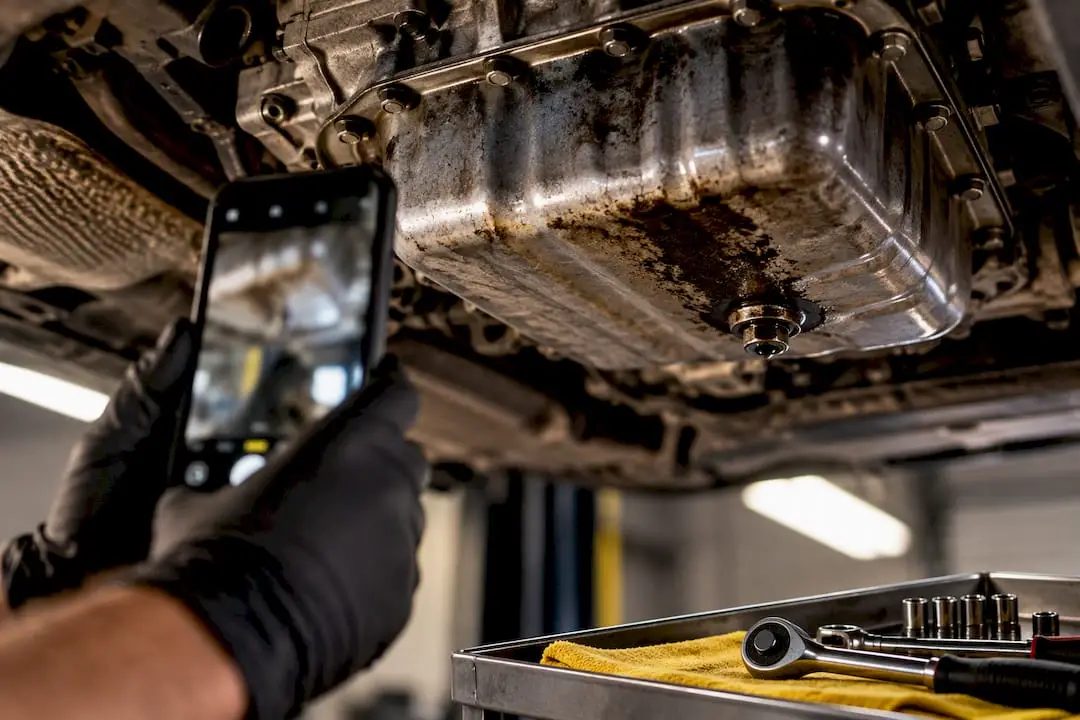
How Kwik Kar documents and diagnoses burnt-fluid cases
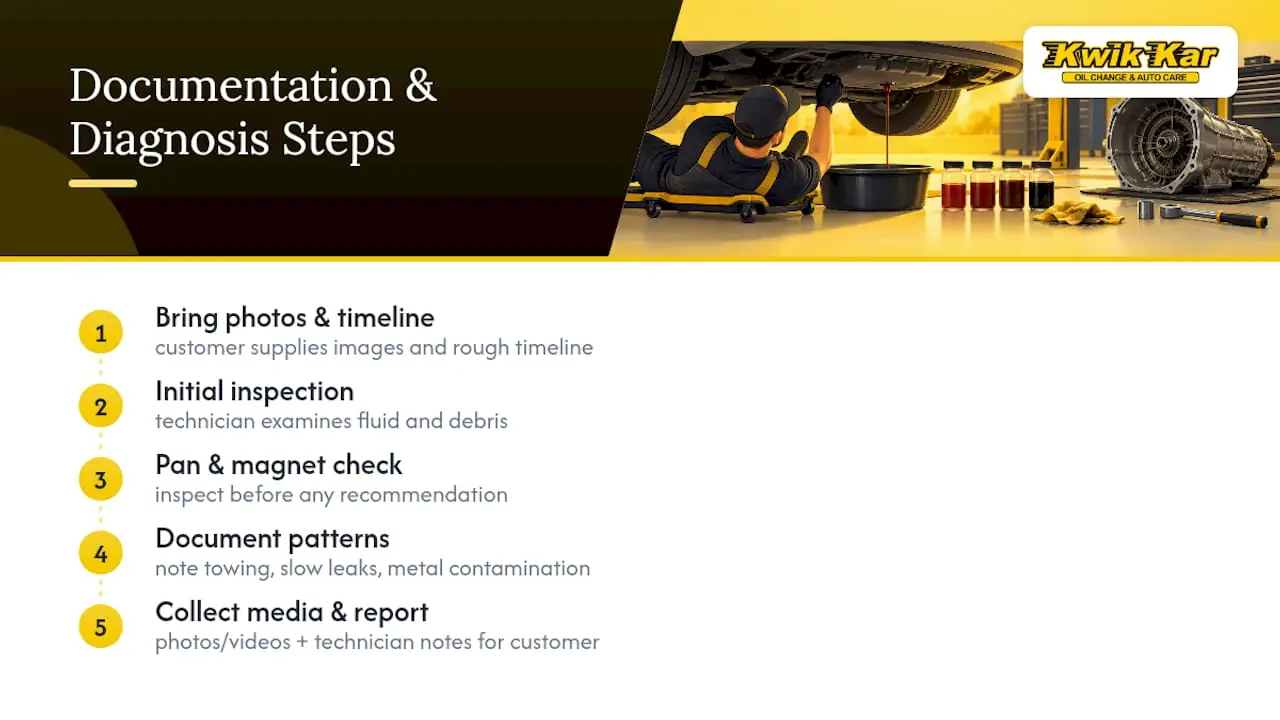
Their transmission inspections include detailed reporting with technician notes to inform customers before work begins. That way you’re looking at your own fluid and debris, not taking a verbal description on faith.
Patterns our technicians commonly document include overheating after towing events, slow external leaks that gradually starved the system of fluid, and metal contamination that ranges from harmless fine dust to flakes that indicate real wear. That range is exactly why the pan and magnet inspection happens before any recommendation.
Documenting symptoms and collecting photo and video evidence during an inspection improves both diagnostic accuracy and the customer’s confidence in the recommendation.
If you’ve noticed a burnt smell, dark fluid, or any of the driving symptoms above, bring your photos and a rough timeline of when they started. That information, combined with a thorough inspection, helps technicians make informed service recommendations.
How to dispose of burnt transmission fluid properly
Used transmission fluid is considered hazardous waste, and pouring it down a drain, into the yard, or into regular trash is illegal in most places and harmful to soil and groundwater. If you drain fluid yourself during a DIY check or service, collect it in a sealed, labeled container rather than mixing it with other automotive fluids.
Most auto parts stores and repair shops accept used transmission fluid for recycling at no charge, since it can be re-refined rather than discarded. Many municipal household hazardous waste collection sites also take it, along with used motor oil and antifreeze. If you’re not sure where your nearest drop-off point is, your local waste management authority’s website typically lists accepted household hazardous waste sites.
When you have a shop handle your transmission service, disposal is already taken care of as part of the visit, which is one less thing to manage on top of diagnosing the actual problem.
Our approach to diagnosing transmission problems
They approach burnt-fluid complaints diagnostically, ensuring safety and clear communication before recommending repairs. If you’ve got photos or a symptom timeline already, bring them in. It gives us a head start on an honest answer.
— Kwik Kar
Get your transmission checked with real diagnostic evidence
If your fluid looks or smells off, a proper diagnostic beats guessing every time. Our ASE-certified technicians inspect the pan, magnet, and filter, then send you photos and video through our Digital Vehicle Inspection so you can see exactly what’s going on before agreeing to any repair.
Depending on what we find, that might mean:
- A straightforward fluid and filter service if there’s no metal contamination or slipping
- Further diagnostics if the pan shows debris or the fluid analysis flags a concern
- A conversation about internal repair options if the wear is already advanced
Schedule a transmission diagnostic with our Irving, Texas shop, or call ahead if you’re dealing with a vehicle that shouldn’t be driven and need towing guidance first.
Sources
- How to Check and Maintain Your Transmission Fluid (AAA ACG)
- Leaking transmission fluid? 3 sure-fire signs (AAA Club Alliance)
- Maintain your car’s transmission and avoid costly repairs (Consumer Reports)
- Don’t believe these transmission fluid myths (AAA Via / MWG)
FAQ
What happens if you have burnt transmission fluid?
Burnt fluid loses its ability to lubricate and transfer hydraulic pressure properly, which can cause slipping, delayed engagement, and harsh shifting. Left unaddressed, overheating or leaks can progress toward full transmission failure, so it’s worth getting a diagnostic rather than waiting to see if symptoms worsen.
Can a burnt transmission be fixed?
Sometimes, but it depends on what’s causing the burnt fluid. If the fluid is black, contains metal contamination, or comes with slipping and harsh engagement, fresh fluid alone often can’t restore already-worn clutches or damaged parts, so a diagnostic should come before assuming a simple fix.
What does burnt automatic transmission fluid look like?
Healthy fluid is usually bright red or pink, though some vehicles specify other colors. Burnt fluid typically turns brown or black and carries a sharp, acrid smell, often described as scorched toast, rather than just looking dark on its own.
How fast does transmission fluid burn?
There’s no fixed timeline: fluid breakdown speeds up dramatically during a single overheating event, such as towing a heavy load or a blocked cooler restricting flow. Transmission fluid doesn’t typically burn off gradually the way engine oil does, so a sudden drop in level usually points to a leak rather than slow evaporation.