High mileage oil is motor oil with an extra additive package built for engines that have passed about 75,000 miles. It is worth considering once your odometer crosses that mark, or sooner if the engine starts burning oil or leaving spots on the driveway. It is not a replacement for the oil grade in your owner’s manual. It is a version of that grade with added help for aging seals and worn parts.
We change oil on high-mileage cars, SUVs and light trucks every day at our shop at 2100 Carl Rd in Irving. This guide covers what is in the bottle, when the switch makes sense, how it compares with synthetic, and what else an older car needs to stay dependable.
TL;DR
- High mileage oil is usually aimed at engines past 75,000 miles. It adds seal conditioners, extra detergents and anti-wear additives to the base oil.
- It is not the opposite of synthetic. Many high mileage formulas are sold as conventional, synthetic blend or full synthetic, so you choose the oil type and the high mileage formula together.
- Always match the viscosity (such as 5W-30) and performance standard in your owner’s manual. Manufacturers do not list “high mileage” as a requirement.
- A high mileage formula does not stretch your oil-change interval. Follow the manufacturer’s schedule.
- A fast-dropping dipstick, new leaks or a rough start are reasons to have a technician look at the engine, not just change the oil.
Table of Contents
- What is in high mileage oil?
- When should you switch to high mileage oil?
- High mileage oil vs. synthetic: which is better for an older engine?
- How do you choose the right oil for a high-mileage engine?
- What does high mileage oil actually do for you?
- Maintenance for high-mileage cars beyond the oil
- Perspective: how we approach oil on a high-mileage car
- Book a high mileage oil change in Irving
- FAQ
- Sources
What is in high mileage oil?
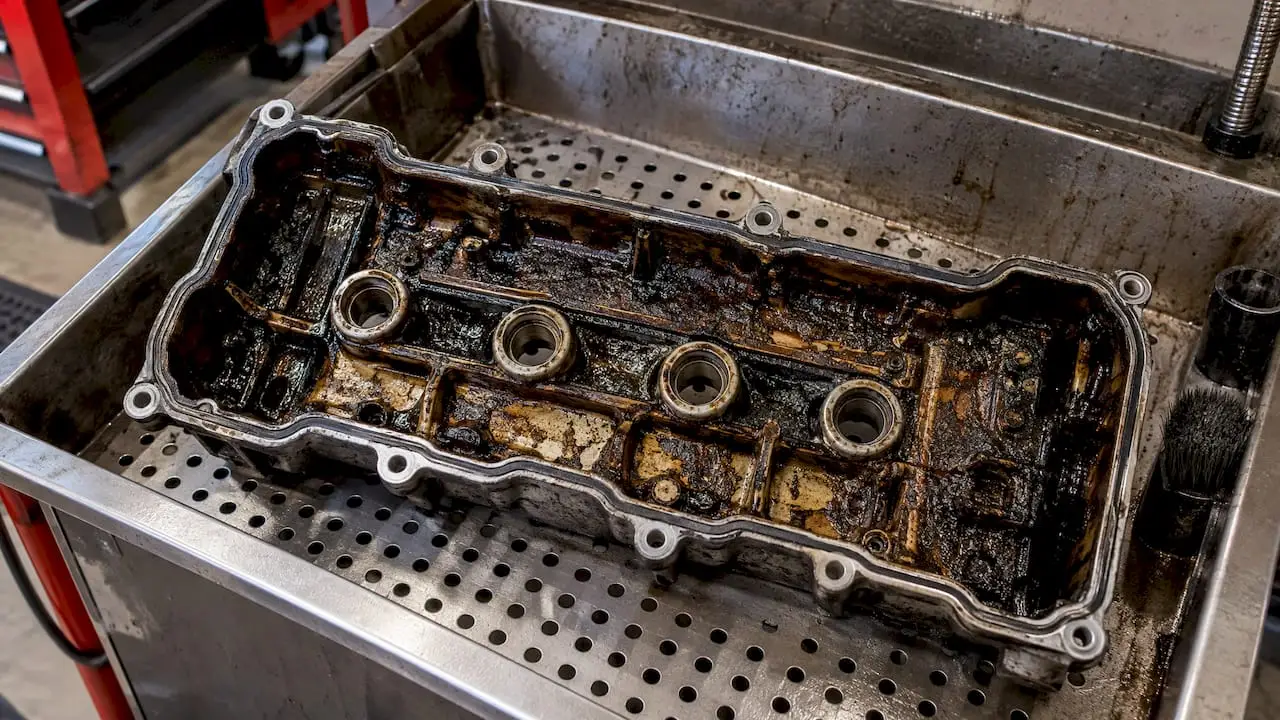
High mileage oil starts with the same kind of base oil as any other motor oil. The difference is in the additives. Chevron says high-mileage oils differ from standard lubricants through additive packages that can include seal conditioners, anti-wear additives, detergents and dispersants, and corrosion inhibitors. Castrol describes improved burn-off control, higher detergent levels and seal conditioners that help protect aging seals and gaskets, while still meeting current industry standards.
Here is what each part does in plain terms:
- Seal conditioners help rubber seals stay flexible. Over years of heat cycles, seals can harden and shrink, which is a common source of slow seepage.
- Detergents and dispersants keep deposits and sludge from building up and hold contaminants in suspension until the oil is drained.
- Anti-wear additives add a protective layer on metal surfaces that have developed more clearance over time.
- Burn-off control means the oil is formulated to evaporate less in hot conditions, so the level drops more slowly.
- Higher base-oil viscosity in some products. Mobil notes that some high-mileage oils use a higher base-oil viscosity to help reduce leaks and give better high-temperature protection.
The goal is modest and practical: slower oil loss, cleaner internals and softer seals. It does not rebuild worn parts.
When should you switch to high mileage oil?
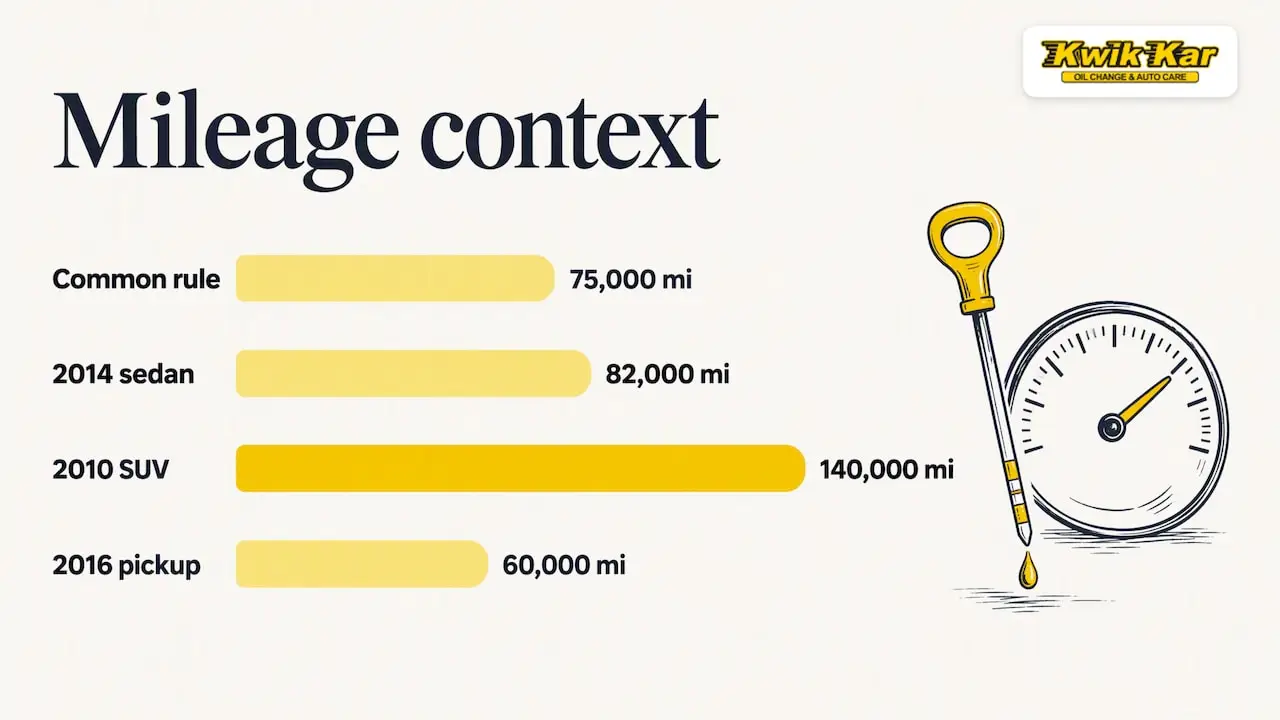
The common rule is 75,000 miles. Castrol says the commonly adopted definition of high mileage is more than 75,000 miles. Chevron adds that you can consider the switch at that point or when you notice sluggish performance, startup trouble, unusual noises or the oil level dropping faster than normal.
Mileage is a starting point, not a switch. Maintenance history matters just as much. Mobil’s position is that a well-maintained engine may not need the high-mileage-specific benefits, while a vehicle that previously ran on conventional oil may gain from switching.
A few practical examples show how this plays out:
- A 2014 sedan at 82,000 miles, changed on schedule with synthetic its whole life. It may run fine on the standard oil. Switching is reasonable, and it will not hurt, but you may see little difference.
- A 2010 SUV at 140,000 miles with a history of long gaps between changes. This is the classic candidate. Deposits and tired seals are more likely, and a high mileage formula is a sensible step.
- A 2016 pickup at 60,000 miles that is adding a quart between changes. Mileage says no, symptoms say yes. Before you change oil types, measure how much oil it is actually using. Our guide to engine oil consumption explains a simple 1,000-mile test.
Does a high mileage formula change how often you change oil?
No. Castrol is clear that high-mileage oils are not necessarily longer-drain oils, and the manufacturer’s interval still applies. Our article on correct oil change intervals covers how to read your manual and when driving conditions call for the shorter end.
High mileage oil vs. synthetic: which is better for an older engine?
This comparison trips up a lot of drivers because the two terms describe different things. “Synthetic” describes the type of base oil. “High mileage” describes the additive package and the engine it targets. The two overlap. Shelves carry high mileage oil in conventional, synthetic blend and full synthetic versions, so you are rarely choosing one over the other. You are choosing a base oil type, then deciding whether to buy the high mileage version of it.
| Conventional | Full synthetic | High mileage (any base) | |
|---|---|---|---|
| What it describes | Base oil refined from crude | Engineered base oil | Added seal conditioners and detergents |
| Best fit | Engines whose manual allows it | Engines that require it, or hard use like heat and towing | Engines past about 75,000 miles, or with seepage or oil loss |
| Main trade-off | Needs the manual’s interval, no extra additives | Typically costs more per change | Typically costs more than the standard version of the same oil |
How to decide:
- If your manual requires synthetic, stay with synthetic. Choose a synthetic high mileage formula so you get both.
- If your manual allows conventional and the engine is leaking or burning oil, a conventional or blend high mileage oil is a budget-friendly step.
- If the engine is healthy and has always had good synthetic, the standard synthetic may be all it needs.
- Heavy Texas heat, stop-and-go traffic on I-35E and 114, and towing are all reasons to lean toward synthetic regardless of mileage. Ask us about your driving pattern and we will recommend a fit.
For details on how our services differ by oil type, see our conventional and synthetic oil change service.
Can you go back to regular oil after using high mileage oil?
Yes. Nothing in a high mileage formula locks you in. The practical catch is that the benefits you noticed, such as a slower drop on the dipstick, may fade once you return to a standard formula, especially if the leak came from a hardened seal. If you went back and the level starts dropping again, that is useful information. It tells you the seals were getting help from the additives, and it is a reason to have a technician inspect for the source of the leak.

How do you choose the right oil for a high-mileage engine?
Start with the manual, not the label that says “high mileage.” Castrol notes that manufacturers do not call out “high mileage” in their oil recommendations, so the job is to match the viscosity grade and performance spec, then pick the high mileage version that meets them. The American Petroleum Institute’s motor oil guide says the same thing: follow the vehicle manufacturer’s recommended SAE viscosity and API or ILSAC performance standard.
A simple checklist:
- Find the viscosity in the owner’s manual or on the oil filler cap (for example 0W-20 or 5W-30).
- Find the spec the manual calls for, such as an API service category or ILSAC rating, and look for the same marking on the bottle.
- Note whether synthetic is required. Many newer-design engines specify it.
- Then choose the high mileage version if the engine is past 75,000 miles or shows symptoms.
- Do not jump to a thicker grade on a hunch. A heavier oil than the manual specifies can affect how the engine is designed to flow and protect at startup. Talk to a technician first.
Past oil changes also shape the decision. If you bought the car used and have no records, a fresh oil change with a quality high mileage formula and a fresh look at the engine is a reasonable reset. Cleaning the outside matters too: if you clean your engine bay with safe methods, fresh oil seepage is much easier to spot on a dry, clean surface than under a layer of old grime.
What if the engine has sludge or heavy deposits?
Mobil recommends shorter 3,000-mile oil-change intervals during cleanup in severe cases involving sludge or heavy deposits. That is a case for a technician to evaluate, not a guess. Have the engine inspected, and let us tell you whether a shorter cycle makes sense for your vehicle.
What does high mileage oil actually do for you?
Chevron says high-mileage oil can help lower oil consumption, reduce the risk of wear on engine parts, and minimize maintenance and repair costs. Those are realistic, incremental benefits. What you can reasonably expect:
- A slower rate of oil loss through seals and gaskets that are starting to weep.
- Less sludge forming between changes.
- A little extra protection on parts that have more wear.
What you should not expect: it will not fix a failing head gasket, a worn timing chain, or a pressure problem. Chevron also lists the conditions that can show up in older engines, including increased oil consumption, worn components, corrosion, overheating, low compression and knocking. Oil helps with the early signs. The later ones need a repair.
Maintenance for high-mileage cars beyond the oil
Oil is the cheapest part of keeping an older car on the road. Everything else on this list tends to show up between 75,000 and 150,000 miles, and the manufacturer’s schedule for your model is the guide to timing. We do not use a one-size mileage chart, because a Camry and a diesel pickup are not the same animal.
- Oil and filter changes on the manufacturer’s interval, using the right grade and spec. Our post on oil change cost helps you budget.
- Brake inspection. Pads, rotors and fluid wear quietly. Squeals or a soft pedal are a reason to book a brake repair visit promptly, because brakes are a safety system.
- Battery and charging system. Heat shortens battery life, and Irving summers are hard on them. A battery and electrical test catches a weak battery before it strands you.
- Cooling system. Hoses, the radiator and coolant condition protect the engine from overheating, which is one of the high-mileage issues Chevron lists.
- Transmission and differential fluids. Ask what your manual says about fluid service. Our guide to transmission fluid changes explains when to bring in a professional.
- Timing belt, if your engine has one. This is a mileage-based item on many engines, and a failure can be expensive. Read about timing belt symptoms and service.
- Suspension and steering. Shocks, struts and tires wear gradually, so the car drifts into a worse state without you noticing.
- Fuel system. Before you pay for a cleaning on a long-mileage engine, read why we recommend a diagnostic first after 60,000 miles.
A few symptoms deserve a professional look instead of a different oil: a rough idle, a dashboard oil light, or readings that point to low oil pressure. A low oil light means stop driving and check the level. Do not drive on it hoping the new oil will help.
Do you still need an inspection in Irving?
Most non-commercial Texas vehicles no longer need an annual safety inspection. The TxDMV explains that, beginning January 1, 2025, House Bill 3297 abolished the safety inspection program for non-commercial vehicles. Emissions testing remains required in certain counties, and Dallas County is on that list, so eligible vehicles registered there still need it before registration. Qualifying commercial vehicles remain subject to applicable safety inspections. Rules can change, so confirm your situation with the TxDMV before you register.
A safety inspection is no longer a deadline, but a high-mileage car still benefits from one. That is why we pair services with a Digital Vehicle Inspection. If an emissions test fails because of a monitor that is not ready, see our article on fixing readiness monitors.
Perspective: how we approach oil on a high-mileage car
We see a lot of vehicles in Irving that have crossed 100,000 miles and are still the family’s main car. In our experience, the oil decision is rarely the whole story. The better question is what the engine has been through: how often it was changed, what grade went in, and whether it is losing oil.
That is why we do not hand a customer a high mileage upgrade by default. Our ASE-certified technicians look at the vehicle, and our Digital Vehicle Inspection sends photos, video and technician notes to your phone, so you can see a seep, a worn belt or a weak battery for yourself and decide what to do first.
Our approach is to match the oil to your manual, recommend the high mileage formula when the mileage or symptoms support it, and tell you plainly when something needs a repair and not just a different bottle. Qualifying repairs are backed by our 24-month/24,000-mile warranty, and we are RepairPal certified and CARFAX Top-Rated.
Kwik Kar
Book a high mileage oil change in Irving
If your car has passed 75,000 miles, or it is adding oil between changes, our oil change service is the place to start. We will confirm the viscosity and specification your manual calls for, talk through conventional, blend and synthetic options, and include a Digital Vehicle Inspection so you can see what is going on under the car. Ladies get a Wednesday oil change discount, and we offer discounts for military and first responders.
We serve drivers across Irving and nearby communities including Las Colinas, Grand Prairie, Euless, Coppell, Grapevine and Dallas from one location at 2100 Carl Rd, Irving, TX 75061.
FAQ
Is high mileage oil worth it?
It can be, when the engine is past about 75,000 miles, is leaking or burning oil, or has a history of stretched oil changes. A well-maintained engine may see little difference. The extra cost per change is usually modest compared with what a leaking seal can cost to repair, but it only helps with early wear and cannot replace a needed repair.
What viscosity should I use for a high-mileage engine?
Use the viscosity grade in your owner’s manual, such as 5W-30 or 0W-20, and look for the performance standard it lists. A high mileage oil is available in most common grades, so you do not have to change grades to get the additives. If you are unsure, our technicians can check the spec for your exact vehicle.
Can I mix high mileage oil with regular oil?
If you are topping off between changes, adding a quart of the correct grade is better than driving low. For a full change, we recommend using one oil consistently so you get the additive benefits. Always match the viscosity and spec in your manual.
Does high mileage oil stop leaks?
It can slow minor seepage from hardened seals by conditioning them, but it will not stop a leak from a failed gasket or cracked part. A spot that grows, or a level that keeps dropping, is a reason to have a technician find the source. Our oil consumption guide explains how to measure it first.
Can I use high mileage oil in a newer car?
Yes, as long as it meets the viscosity and specification in your manual. It is mainly designed for older engines, so a newer car with low mileage may not benefit much.
Sources
- Keeping Your Vehicle Longer or Driving it More, Chevron Lubricants
- High Mileage Engine Oils for Extended Life, Castrol USA
- High mileage oils FAQs, Mobil
- Motor oil guide, American Petroleum Institute
- Texas vehicle inspection changes, TxDMV
- Clean engine bay: safe steps and ceramic protection