A rough idle almost always comes from one of four areas: ignition (spark plugs and coils), air (vacuum leaks or a dirty throttle body), fuel (injectors or fuel delivery), or the sensors that tell the engine computer how to balance them. Mechanical problems like worn engine mounts or low compression are less common, but they happen. The pattern of the shake, and whether the check engine light is on, usually points to which area to look at first.
This guide walks through each cause in plain language, shows how the symptoms differ, and explains what a shop does to find the real problem instead of swapping parts.
TL;DR
- A rough idle is usually an ignition, air, fuel, or sensor problem. Worn spark plugs, failing coils, vacuum leaks, and carbon on the throttle body are the usual suspects.
- A flashing check engine light means a severe misfire. Slow down and get service as soon as possible, because continued misfiring can damage the catalytic converter.
- Shaking only at a stop, only when warm, or only with stalling each narrows the list. Notes on when it happens help the technician.
- A scan for trouble codes is the starting point, not the answer. Good diagnosis confirms the cause before parts are replaced.
- In Dallas County, an unresolved check engine light can also affect your emissions test.
Table of Contents
- What does a rough idle actually mean?
- The most common rough idle causes
- Match your symptom to the likely cause
- Why does my car idle rough only when warm?
- Why does my car shake at a stop but smooth out when I drive?
- Rough idle and stalling: when to stop driving
- How a shop finds the cause of a rough idle
- Does a rough idle affect your Texas emissions test?
- Our perspective: fix the cause, show the proof
- Get your rough idle checked in Irving
- FAQ
- Sources
What does a rough idle actually mean?
At idle, your engine runs at its lowest speed, usually somewhere around 600 to 900 rpm depending on the vehicle. Each cylinder has to burn the same amount of air and fuel at the right moment. When one cylinder burns less, burns late, or doesn’t fire, the engine loses its rhythm. You feel that as shaking in the seat, a wobbling steering wheel, a tach needle that bounces, or a sound like the engine is “stumbling.”
Idle is where problems show up first because the engine has little momentum to hide them. That’s why a car can shake at a red light and feel smooth at 40 mph. It’s also why a rough idle is often an early warning, not just an annoyance.
The most common rough idle causes
Worn spark plugs
Spark plugs wear a little with every mile. As the gap widens, the spark gets weaker and the mixture burns less completely. The result is a light misfire at idle, sometimes with poor fuel economy or slow acceleration. Plug life depends on the type and your manufacturer’s schedule, so check your owner’s manual instead of guessing by mileage.
Failing ignition coils
Each spark plug gets its voltage from a coil, either one per cylinder or a coil pack. A weak coil produces a misfire on that cylinder only. The engine may idle fine for a while, then shake when it’s hot, because heat makes a marginal coil break down. A trouble code in the P0301 to P0308 range usually names the cylinder. If the code is P0300, the misfire is random or on several cylinders, and our P0300 live scan counter checks show how a technician narrows it down.
Vacuum leaks
The engine computer measures the air it expects to be coming in through the throttle. A cracked hose, a split intake boot, or a leaking gasket lets extra, unmeasured air in. The mixture goes lean, and the idle may surge, hunt up and down, or sit too high. You may hear a hiss under the hood. Rubber and plastic parts in the engine bay age in Texas heat, so cracked hoses are a regular find on higher-mileage cars.
The PCV (positive crankcase ventilation) system is a related source. A stuck or leaking PCV valve acts like a vacuum leak, and we cover the warning signs in our guide to bad PCV valve symptoms.
Dirty throttle body or idle control parts
Carbon and oil residue build up around the throttle plate. At idle the plate is barely open, so even a thin layer of deposits changes how much air gets through. The symptom is typically an idle that dips or nearly stalls when you come to a stop, then recovers. If that sounds like your car, read about throttle body cleaning and how it restores idle and throttle response.
Dirty or failing fuel injectors
Injectors spray fuel in a fine pattern. When one clogs or leaks, that cylinder runs lean or rich and the engine idles unevenly. The roughness often feels like it comes from one spot, and a scan tool’s misfire counters can show which cylinder it is. Before paying for a chemical treatment, it helps to know whether the injector is really the issue. Our note on fuel system cleaning and why a diagnostic comes first explains the reasoning. If an injector or the fuel pump is at fault, see our fuel injector pump repair service.
Faulty sensors
The computer adjusts fuel based on sensor readings. Three matter most for idle:
- Mass airflow (MAF) sensor: reports how much air enters the engine. A dirty or failing one causes a wrong fuel mix.
- MAP sensor: reports intake pressure, which tells the computer engine load. Signs of a failing one are in our MAP sensor symptoms guide.
- Oxygen sensors: read the oxygen left in the exhaust so the computer can fine-tune the mixture. Once the engine is warm and in closed loop operation, the computer uses the oxygen sensor signal to correct fuel delivery. A bad sensor can push the mixture off and cause a rough idle, though it’s rarely the only possibility, so it shouldn’t be replaced on a hunch.
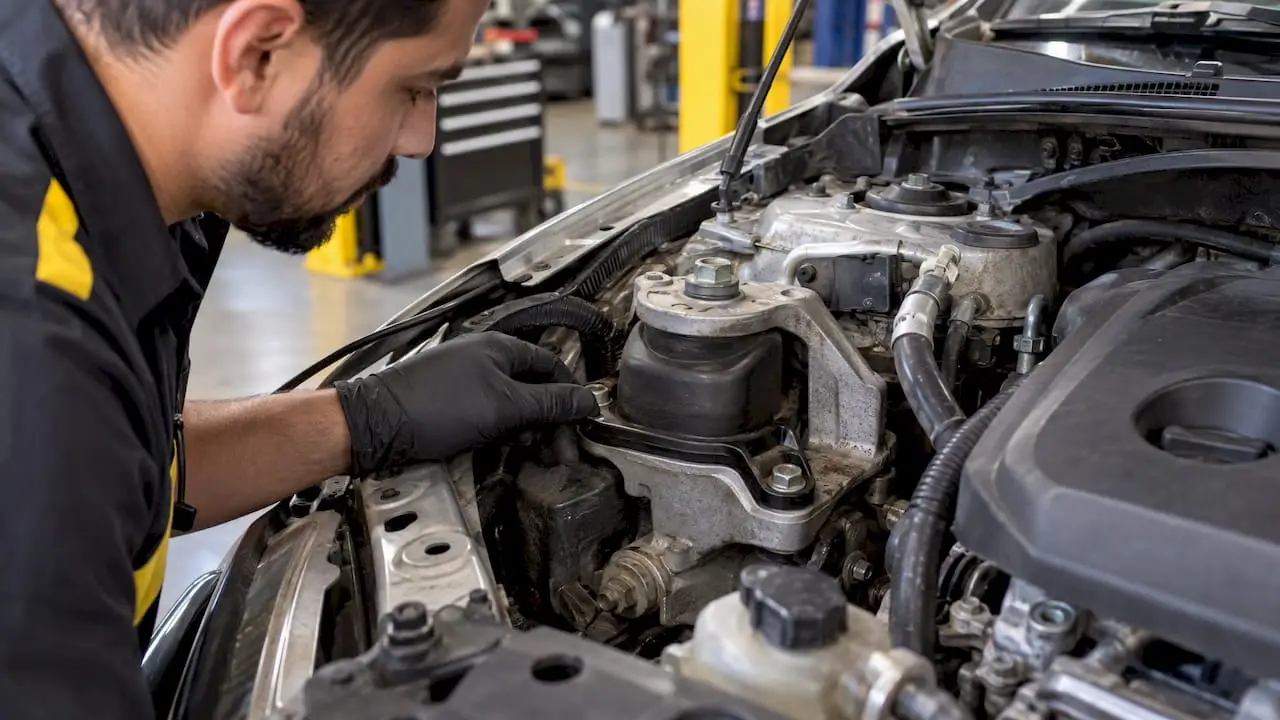
Worn engine or transmission mounts
Sometimes the engine runs fine and the vibration comes from the rubber mounts that hold it. If the rpm needle stays steady but the cabin shakes, especially when you shift into Drive and the vibration gets worse, mounts are a good suspect. Our list of transmission mount symptoms has quick checks.
Internal engine problems
Low compression from worn rings, burned valves, or a failing head gasket can make a cylinder unable to contribute. Technicians confirm engine condition with checks such as knocking, smoke, and compression readings, the kind of items that appear on a standard diagnostic data form used by California’s Bureau of Automotive Repair. This is the less common, more expensive end of the list, which is exactly why you rule out the simpler causes first.
Match your symptom to the likely cause
The table below is a starting point, not a diagnosis. Several causes can overlap.
| What you notice | Likely area | Worth checking first |
|---|---|---|
| Shaking plus check engine light with a P030x code | Ignition | Spark plugs, coil on the named cylinder |
| Surging or high idle, hissing sound | Air leak | Vacuum hoses, intake boot, PCV valve |
| RPM dips or nearly stalls at stops | Air control | Throttle body deposits, idle control |
| Roughness from one cylinder, fuel smell | Fuel | Injector, fuel pressure |
| Steady rpm but cabin vibration | Mechanical | Engine and transmission mounts |
| Rough idle with poor mileage and no codes | Sensors | MAF, MAP, oxygen sensor data |
Why does my car idle rough only when warm?
Heat exposes marginal parts. Coils and wiring with weak insulation can work cold and fail hot. A coolant temperature sensor that reads wrong can make the computer run the wrong mixture once the engine reaches operating temperature. Hot engines also make vacuum leaks in aging hoses and gaskets more pronounced as materials expand. The opposite pattern, rough only on a cold start that smooths out, often points to the mixture or a sticking throttle component. In both cases, tell the technician when it happens. That detail shortens the diagnosis.
Why does my car shake at a stop but smooth out when I drive?
At idle the engine has low rpm and little load, so it is most sensitive to small mixture or ignition faults. Driving raises rpm and airflow, which can mask a mild misfire or a dirty throttle. If the shake is strongest in Drive at a stop with your foot on the brake, it could also be a worn mount, because the engine torque pushes against it. If you feel vibration at highway speeds instead, that’s a different problem, such as tires or wheel balance. See our piece on steering wheel vibration at 55 to 75 mph.
Rough idle and stalling: when to stop driving
Some rough idles can wait for a scheduled visit. Others can’t.
- Flashing check engine light: this indicates a severe misfire. The EPA’s on-board diagnostics fact sheet says to reduce speed and seek service as soon as possible. Unburned fuel entering the exhaust can overheat the catalytic converter.
- Stalling in traffic or at intersections: a car that dies when you slow down is a safety risk, since you lose power steering assist and brake booster help once the engine quits. Have it inspected before relying on it for daily driving.
- Temperature gauge climbing, steam, or a burning smell: pull over safely and shut it off.
- Strong fuel or exhaust smells: these can point to leaks or a rich mixture. Finding where an odor comes from before treating it makes sense in the cabin too, as this guide to diagnosing the source of a car smell argues for interior odors.
If the car stalls, runs rough under load, or has a flashing light, a professional inspection is the safe move. A steady check engine light with a mild shake can usually wait a few days, but not for months.
How a shop finds the cause of a rough idle
A parts-swapping approach gets expensive fast. A methodical diagnosis follows a sequence:
- Interview. When does it happen: cold, warm, at stops, with A/C on? Any recent work, fuel fill-ups, or warning lights?
- Scan for codes and freeze-frame data. This shows what the computer saw when it set the fault. Codes point to a system, not necessarily a failed part.
- Live data review. Misfire counters, fuel trims, and sensor readings reveal whether the engine is running lean, rich, or missing on one cylinder.
- Physical inspection. Hoses, intake boots, wiring, plugs, coils, and mounts get a look.
- Targeted tests. Smoke testing for vacuum leaks, fuel pressure checks, or a compression test if the simpler causes come up clean.
- Repair and verify. Fix the confirmed cause, clear the codes, and confirm the idle is stable on a road test.
Our page on what to ask before an engine diagnostic can help you understand what the fee covers and what to expect.
Does a rough idle affect your Texas emissions test?
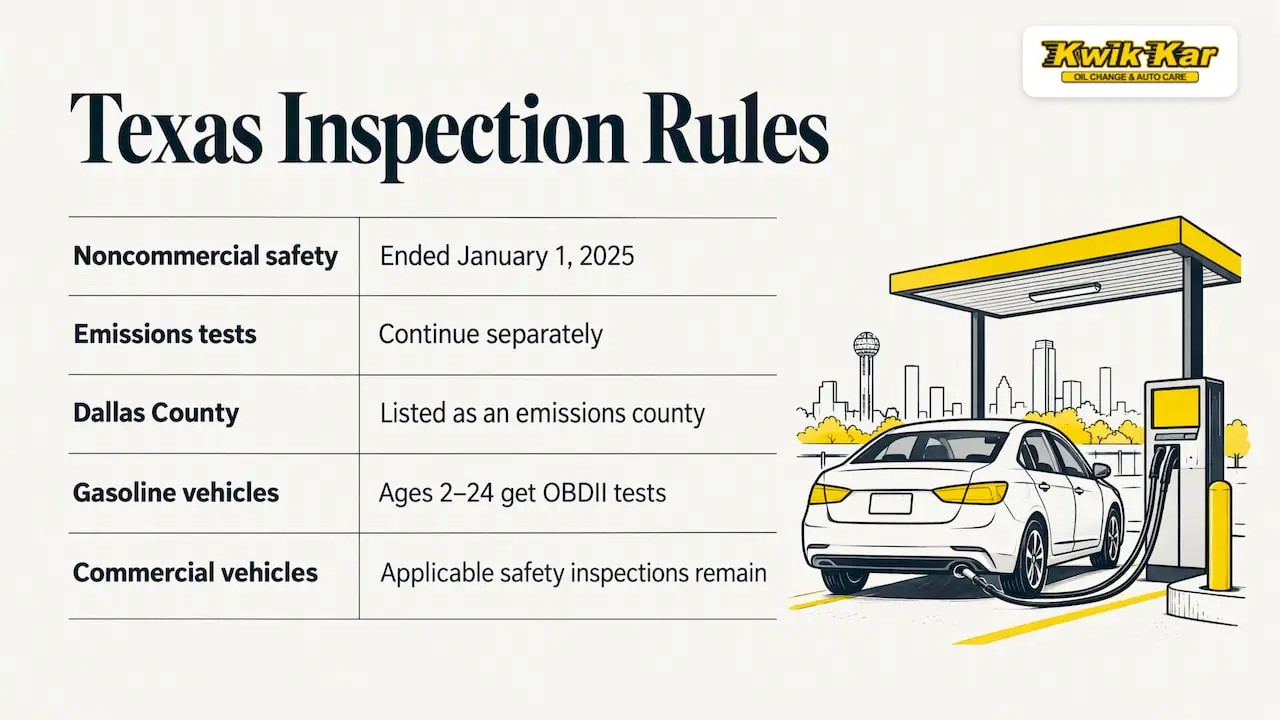
It can. Texas dropped the safety inspection for non-commercial vehicles on January 1, 2025, under House Bill 3297, according to the Texas DMV. Emissions testing is separate and continues. Dallas County is on the Texas DPS list of emissions counties, where gasoline vehicles from 2 through 24 years old get an on-board diagnostic (OBDII) test. Qualifying commercial vehicles remain subject to applicable safety inspections.
A persistent misfire or active check engine light is the kind of thing that can cause a failed emissions test. If you’ve recently cleared codes, your car’s readiness monitors may also show “not ready.” Our guide to fixing readiness monitors so you can pass explains that situation. Check the current rules for your vehicle and county on the DPS site before your registration renewal.
Our perspective: fix the cause, show the proof
The most common mistake we see with a rough idle is treating the code as the repair. A misfire code tells us a cylinder isn’t burning properly. It doesn’t tell us whether the plug, coil, injector, or a vacuum leak is to blame. Replacing the cheapest part first sometimes works, but it often means a second visit.
That’s why we diagnose before we recommend. Our ASE-certified technicians check the data and the engine, and we send a Digital Vehicle Inspection to your phone with photos, video, and technician notes. You see the cracked hose or the fouled plug yourself and decide with the facts in hand. We’re RepairPal certified, and qualifying repairs carry our 24-month/24,000-mile warranty.
One more thing we tell drivers around Irving: don’t ignore a rough idle because the car still runs. A small misfire is easier and cheaper to fix than the damage it can cause later.
— Kwik Kar
Get your rough idle checked in Irving
If your car shakes at stops, hesitates, or stalls, our engine diagnostic service is the place to start. We serve drivers across Irving and nearby communities such as Las Colinas, Grand Prairie, Euless, and Coppell. Same-day service may be available, so call ahead. Military members, first responders, and ladies on Wednesdays can ask about our current discounts.
Call us at (469) 276-7337 or visit 2100 Carl Rd, Irving, TX 75061. You can also see more at kkirvingtx.com.
FAQ
Can a bad O2 sensor cause a rough idle?
Yes, it can. The computer relies on the oxygen sensor to trim fuel once the engine is warm, so a failing sensor can make the mixture too rich or too lean. It is only one of several possible causes, though. A technician should check live sensor data and rule out spark plugs and vacuum leaks before replacing it.
Is it safe to drive with a rough idle?
It depends on the severity. A mild shake with a steady check engine light can usually be driven short-term to a shop. A flashing check engine light, stalling, overheating, or loss of power means you should stop driving and have it inspected, since a severe misfire can damage the catalytic converter.
What is a misfire, and is it the same as a rough idle?
A misfire happens when a cylinder fails to burn its air and fuel properly. A rough idle is the symptom you feel, and a misfire is one of its most common causes. The computer can often detect misfires and store a P030x code.
Can low oil or old oil cause a rough idle?
It’s rarely the direct cause, but neglected maintenance can contribute through sludge, sticking variable valve timing parts, or a clogged PCV system. Following your manufacturer’s service schedule with timely oil changes helps prevent those secondary problems.
Why does my car idle rough after a fill-up?
Bad or contaminated fuel is possible but uncommon. More often the timing is a coincidence, or the fuel level change just made you notice an existing problem. If it started right after a fill-up and a check engine light appeared, note the station and tell your technician.
Sources
- EPA: Frequently asked questions about on-board diagnostics
- Texas DMV: Reminder on vehicle inspection changes
- Texas DPS: Inspection criteria for emission inspection
- Closed loop feedback control system (Toyota technical paper)
- California BAR: Diagnostic data form
- Diamondbrite: diagnosing the source of a car smell