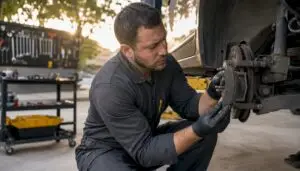
The most common head gasket symptoms are an engine that keeps overheating, thick white exhaust smoke that lingers after warm-up, coolant that disappears with no puddle, and oil that looks milky. Any one of them can have a cheaper cause, so the right move is a proper diagnosis before anyone replaces parts. At Kwik Kar Oil Change & Auto Care in Irving, our ASE-certified technicians run engine diagnostics and send you a Digital Vehicle Inspection with photos, videos and notes, so you see what they see before you decide on a repair.
TL;DR
- The classic signs are overheating, persistent white exhaust smoke, unexplained coolant loss, milky oil, bubbling in the coolant, and misfires or power loss.
- White smoke on a cold morning is often just condensation. Smoke that stays thick after the engine is warm is the one to take seriously.
- A bad hose, thermostat, radiator cap, fan or water pump can look just like a head gasket failure, so confirm before you pay for a major repair.
- If the temperature gauge climbs, pull over and shut the engine off. Driving on a failing gasket can turn a repair into a new engine.
- Confirming a head gasket takes testing, and sometimes pulling the head. That is a job for a shop with diagnostic equipment.
Table of Contents
- What does a head gasket do, and why does its failure matter?
- What are the main head gasket symptoms?
- How do head gasket symptoms differ from a cracked cylinder head?
- What can be mistaken for a blown head gasket?
- Can you keep driving with a blown head gasket?
- How do technicians confirm a head gasket problem?
- What does a head gasket repair cost?
- What should an Irving driver do when symptoms appear?
- Promo: a clear look under the hood, not a guess
- Our perspective on head gasket trouble
- FAQ
- Sources
What does a head gasket do, and why does its failure matter?
The head gasket is a thin seal between the engine block and the cylinder head, the metal cover that sits on top of the cylinders. It has to hold in the pressure of combustion while also keeping oil and coolant in their own passages. When it fails, one of three things usually happens: combustion gas gets into the cooling system, coolant gets into a cylinder, or oil and coolant mix. Each one produces its own set of symptoms, and that is why the list below looks long. Haynes describes the same range: leaks to the outside, fluids crossing between passages and gas escaping into the cooling system.
The repair is serious because the gasket sits deep in the engine. The part is cheap, but reaching it means taking the top of the engine apart. That is also why catching symptoms early matters: the sooner you stop driving, the smaller the damage tends to be.
What are the main head gasket symptoms?
1. An engine that overheats again and again
Overheating is the most common first sign. A leaking gasket can push hot combustion gas into the coolant, which displaces liquid and stops the system from carrying heat away. You may see the temperature gauge creep up in traffic, the cooling fans running more than usual, or a warning light. A single overheating event after a hose failure is a different story from an engine that keeps heating up after the cooling system has been refilled. Our guide to what to do the moment an engine overheats walks through the immediate steps.
2. Thick white smoke from the tailpipe
When coolant enters a cylinder, it burns off as white, sweet-smelling smoke. A little thin vapor right after a cold start, especially on a humid or cool morning, is normal condensation. Smoke that stays thick after the engine is fully warm points toward coolant burning in the cylinders, as this guide on telling gasket trouble from other causes also notes about condensation and milky residue. We cover the other causes in white smoke from your exhaust. Blue smoke is different: that usually means oil is burning, and it can show up alongside a falling oil level.
3. Coolant disappearing with no visible leak
If you keep topping off the reservoir and never find a puddle, the coolant may be going somewhere you cannot see: into a cylinder and out the exhaust, or into the oil. An external seep can leave dribbles or crusty staining along the engine, but coolant can also evaporate off hot parts or leak only while the engine is running, so a dry driveway proves little. Before an appointment, our list of six coolant loss checks shows what we look at first.
4. Milky or sludgy oil
A tan, milkshake-like residue on the underside of the oil filler cap or on the dipstick suggests coolant and oil are mixing. Check it with the engine off and cool. Do not read too much into a small amount of residue on the cap alone: short trips that never fully warm the engine create condensation that can look similar, and a failing oil cooler or transmission cooler can also contaminate fluids. Oil that looks like chocolate milk on the dipstick is a much stronger signal.
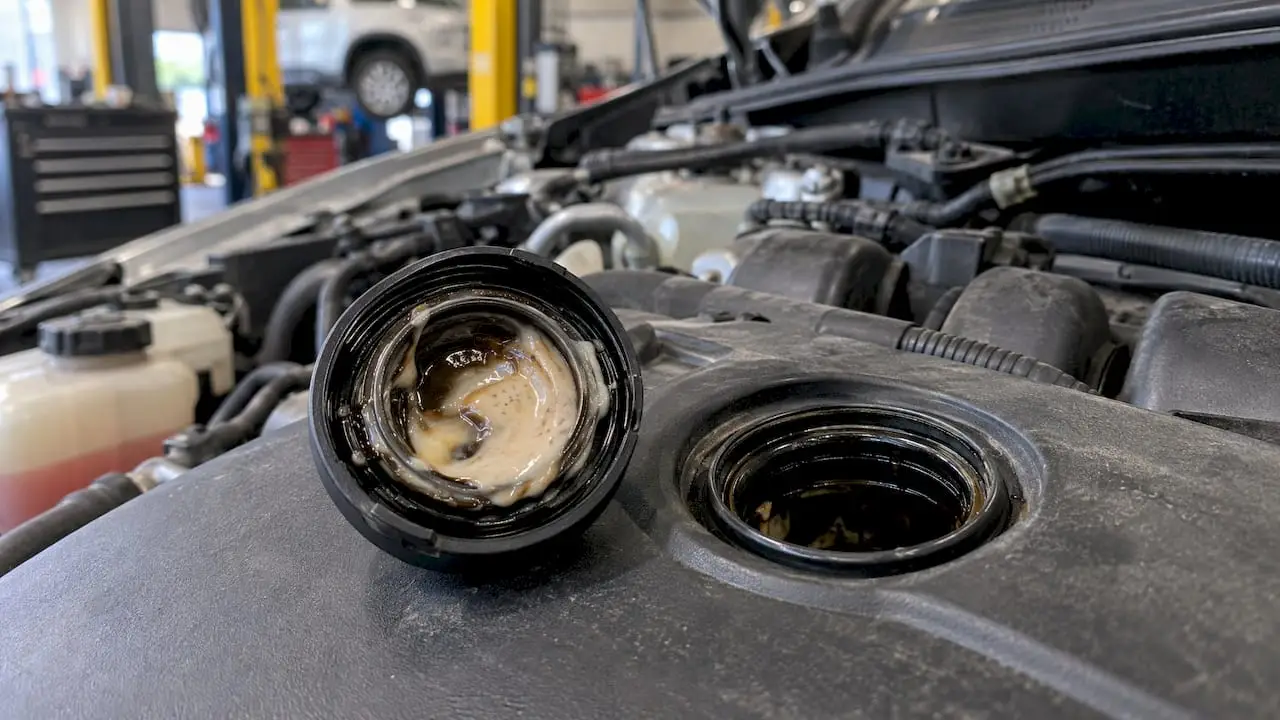
If you notice oil and coolant mixing, keep the mess under control while you wait for service. A guide on cleaning an engine bay safely is useful once the engine is repaired, because a clean bay makes new seepage easy to spot.
5. Bubbles in the radiator or coolant reservoir
Bubbling in the coolant with the engine running, especially when the cap is off and the engine is cool enough to open safely, can mean combustion gas is being forced into the cooling system. Never open a hot radiator cap. The system is pressurized and the coolant can scald. A cooling system that feels abnormally pressurized, with a swollen upper hose after a short run, is another clue.
6. Misfires, rough idle and loss of power
When a cylinder loses compression or takes in coolant, it cannot burn fuel properly. You may feel a shudder at idle, hesitation under acceleration, or a flashing check engine light. Misfires have many causes, including worn plugs and failing coils (see our guide to ignition coil failure symptoms and the P0300 code checks), so a head gasket is only one possibility. If the engine keeps cutting out, read what to do when an engine loses power while driving.
7. A sweet smell
Heated coolant smells sweet and syrupy. You may notice it from the vents, near the hood after a drive, or at the tailpipe. It is worth acting on even before other symptoms show up.
8. Ticking or knocking
Haynes lists ticking among the possible warning signs. If you hear new knocking along with overheating or smoke, shut the engine off. Knocking can mean liquid is entering a cylinder or the engine is already being damaged.
9. Oil or coolant seeping where the head meets the block
Some failures leak to the outside only. You may see streaks of oil or coolant running down the side of the engine along the seam between the head and the block. This is generally the least urgent type of failure, but it still drains fluids and should be repaired soon rather than left alone.
How do head gasket symptoms differ from a cracked cylinder head?
They overlap heavily. A cracked head can cause overheating, coolant loss without a visible leak, bubbling coolant, milky oil, misfires and sweet-smelling white exhaust. Hagerty’s mechanic columnist points out that the two can be hard to tell apart, that a small crack may show few signs, and that the white exhaust from a cracked head may fade as the engine warms. Telling them apart for certain often means removing the head and having it inspected and pressure-tested at a machine shop.
Fel-Pro, a gasket manufacturer, adds that overheating is usually what damages the gasket or cracks the head in the first place, and that causes of overheating include low coolant from a hose or water pump failure, a broken belt or an electric fan failure. In practice that means the cause of the overheating matters as much as the gasket itself. If the original cooling problem is not fixed, a new gasket can fail too.
What can be mistaken for a blown head gasket?
Many cheaper problems copy these symptoms. Before anyone condemns the gasket, a technician should rule out:
| Symptom you see | Possible cheaper cause |
|---|---|
| Overheating | Low coolant, leaking hose, weak radiator cap, stuck thermostat, worn water pump, blocked radiator, failed cooling fan, trapped air in the system |
| Milky residue under the oil cap | Condensation from short trips, a leaking oil cooler or transmission cooler |
| White smoke | Normal cold-start condensation |
| Coolant in the oil | A leaking intake gasket rather than the head gasket |
| Misfire | Plugs, coils, fuel delivery |
The gasket maker Victor Reinz lists faults in the water pump, radiator, thermostat or hoses, insufficient coolant and poor venting of the cooling system as other causes of engine overheating. Motor1 reports that even a popular chemical combustion-leak test can give misleading results if the thermostat is not working or coolant is not circulating properly. A radiator fan that does not come on is a frequent culprit in Texas heat, and our article on four things that stop a radiator fan explains how to spot it.
Can you keep driving with a blown head gasket?
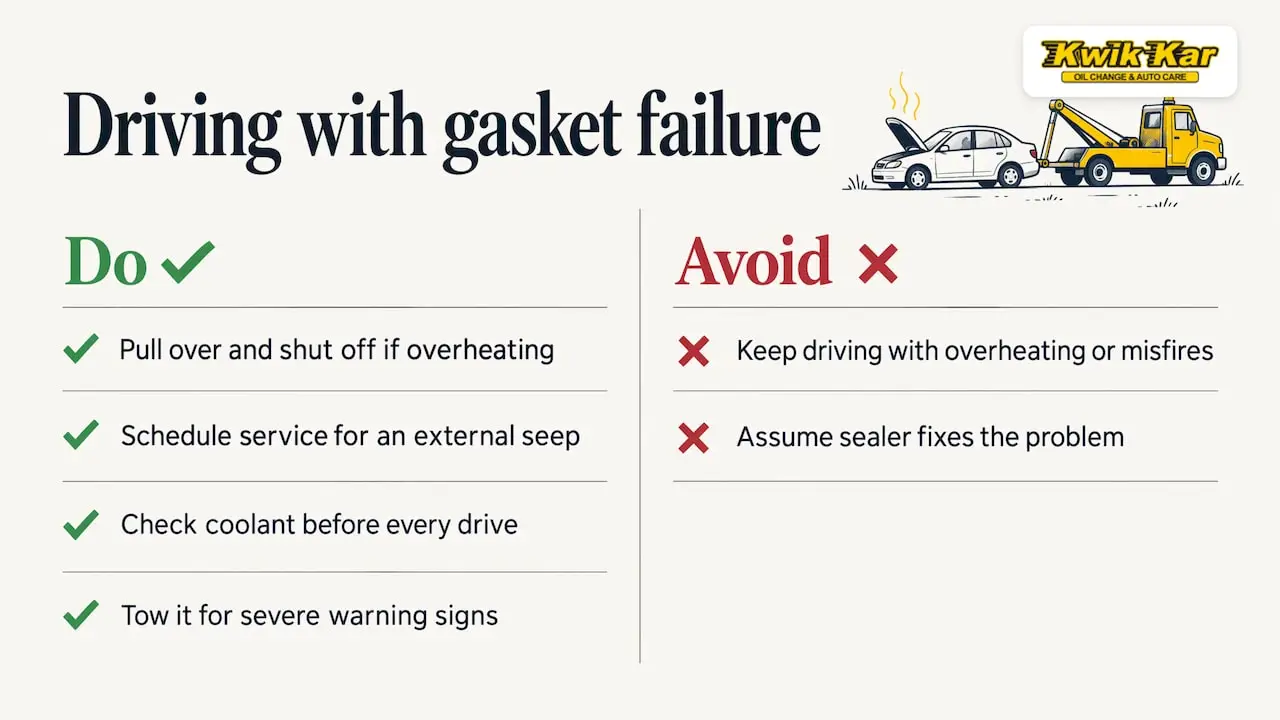
Park it. If the gauge climbs past normal, pull over when it is safe and shut the engine off. Driving on a failing gasket can let coolant into the cylinders, where it corrodes parts and, in a severe case, can fill the cylinder with liquid that does not compress, which can bend internal parts. Combustion gas in the coolant also makes overheating worse. The same applies if the engine is misfiring or you see fluids mixing.
An external seep with no overheating is the mildest case, but it still drains coolant, so schedule service soon and check the level before every drive until then. If the temperature gauge is climbing, a rough-running engine is flashing the check engine light, or you smell hot coolant, have the car towed or at least driven the shortest possible distance to a shop. Do not add a bottle of sealer and assume the problem is solved.
How do technicians confirm a head gasket problem?
A good diagnosis is a sequence, not a guess. Typical steps include:
- Visual and fluid checks. Coolant level and condition, oil condition, signs of external seepage, belts, hoses and fans.
- Cooling system pressure test. This checks whether the system holds pressure, which finds many ordinary leaks and can show gas being forced in.
- Combustion gas test. A chemical tester checks coolant for exhaust gases, bearing in mind the Motor1 caution above about thermostat and circulation.
- Compression and leak-down tests. These measure how well each cylinder holds pressure and where it escapes. Hagerty notes that leak-down testing may show bubbles in the radiator.
- Head removal and inspection. For a definitive answer between a gasket failure and a cracked head, the head often has to come off and be checked for cracks and flatness.
The Engine Diagnostic page explains how we approach this. Diagnostic fees vary by vehicle and by how much testing the problem needs, and our article on questions to ask before an engine diagnostic helps you know what you are paying for.
What does a head gasket repair cost?
The gasket is the small part of the bill. Most of the cost is labor, since the engine has to be partly disassembled, and the cylinder head may need machine-shop work. If the head itself is cracked, the numbers climb: SoFi puts the average for replacing a cylinder head at a repair shop at roughly $4,100 to $4,900 (2025), with the job taking 6 to 15 hours. Costs vary by engine, so ask for a written estimate that separates parts, machine work and labor. Our estimates arrive on your phone with photos and technician notes, so you can compare each line to what the inspection showed.
It also helps to weigh the repair against the car’s overall condition. If the rest of the vehicle is in good shape, a proper repair can return it to dependable service. If you are unsure, ask your technician what else is likely to need attention in the next year.
What should an Irving driver do when symptoms appear?
- Stop safely. Turn off the engine when the gauge rises. Let it cool before opening anything under the hood.
- Write down what you noticed. Note when the smoke appears (cold start or fully warm), how often you add coolant, and any smell. These details speed up diagnosis.
- Check fluids only when cool. Look at coolant level and the oil on the dipstick and under the filler cap.
- Avoid sealer additives and long drives. Neither addresses the cause.
- Schedule an inspection. Whether you live near Las Colinas, Grand Prairie, Euless or Coppell, the sooner the engine is looked at, the more options you have.
One more Texas note, since drivers often ask. As of January 1, 2025, non-commercial vehicles no longer need a safety inspection before registration, according to the Texas Department of Public Safety. Vehicles registered in emissions counties, which includes Dallas County, still need emissions testing, and qualifying commercial vehicles remain subject to applicable safety inspections. A head gasket leak can affect emissions results, so address it before your test, and confirm your own requirements with the DPS before registering.
Promo: a clear look under the hood, not a guess
If your car is overheating, losing coolant or smoking at the tailpipe, bring it to Kwik Kar Oil Change & Auto Care at 2100 Carl Rd, Irving, TX 75061, or call (469) 276-7337. We perform Digital Vehicle Inspections, so photos, videos and technician notes go straight to your phone. You see the condition of the vehicle and can decide on any recommended repair with the facts in front of you. Our technicians are ASE-certified, and we are RepairPal and CARFAX Top-Rated certified. Qualifying repairs carry a 24-month/24,000-mile warranty. Details on our engine diagnostic service and cooling and A/C service are on our site, and you can find us at kkirvingtx.com.

If the repair is larger than expected, third-party financing options may be available, subject to provider approval and terms.
Our perspective on head gasket trouble
Most head gasket failures we are asked about began as a cooling problem that went unnoticed: a low reservoir, a tired fan, a thermostat that stopped opening. The gasket is often where the damage shows up, not where the trouble began.
That is why we start with a Digital Vehicle Inspection and engine diagnostics before talking about big repairs. Photos, video and technician notes let you see the same evidence we do, so the recommendation is transparent and you stay in control of the decision.
Our advice for Irving drivers is simple. Check coolant when the engine is cool, treat any climbing temperature gauge as a stop sign, and get new symptoms looked at early. Catching a failing hose or fan is far easier than repairing an overheated engine.
Kwik Kar
FAQ
What are the first signs of a blown head gasket?
Usually overheating, coolant that drops without a visible leak, and white smoke that lingers after the engine is warm. Some drivers first notice a sweet smell or milky residue under the oil cap. Because other cooling problems share these signs, a diagnosis is the only way to be sure.
Can a car run with a blown head gasket?
Sometimes for a short time, but it is risky. Coolant or combustion gas in the wrong place can overheat the engine and cause damage that is far more expensive than the gasket. If the gauge climbs, the engine misfires or fluids mix, park the car and arrange service.
Is white smoke from the exhaust always a head gasket?
No. Thin white vapor on a cold start is normal condensation. Thick, sweet-smelling smoke that continues after warm-up is the pattern that suggests coolant is burning in a cylinder. Our article on white smoke from the exhaust covers the other causes.
What are the symptoms of a cracked cylinder head?
They look much like gasket failure: overheating, unexplained coolant loss, bubbling coolant, milky oil, misfires and sweet-smelling white exhaust. A small crack may cause few signs. Confirming it usually requires removing the head for inspection and testing.
Will Dallas County emissions testing catch a head gasket problem?
It may. An engine burning coolant or oil, or running rough, can struggle on an emissions test. Eligible vehicles registered in Dallas County still require emissions testing, so fixing an engine problem before your test saves a second trip.
Sources
- Texas DPS: Vehicle Safety Inspection Program Changes Now in Effect
- Haynes: Blown Head Gasket Symptoms, Causes & How to Fix It
- Haynes UK: Head gasket guide
- Hagerty: Identifying cracked heads and blown head gaskets
- Fel-Pro: Identifying Blown Head Gaskets & Cracked Heads
- Victor Reinz: Composite Cylinder-Head Gaskets
- Motor1: Head Gasket Test: How Does It Work?
- SoFi: Guide to Cylinder Head Replacement Cost