A drive cycle is a stretch of driving that lets your car’s computer finish the self-checks it needs before an emissions inspection. For most vehicles, a few days of ordinary city and highway driving does it. There is no single routine that works for every make and model, so the surest route is to have a technician read your monitor status with a scan tool before you go to the station.
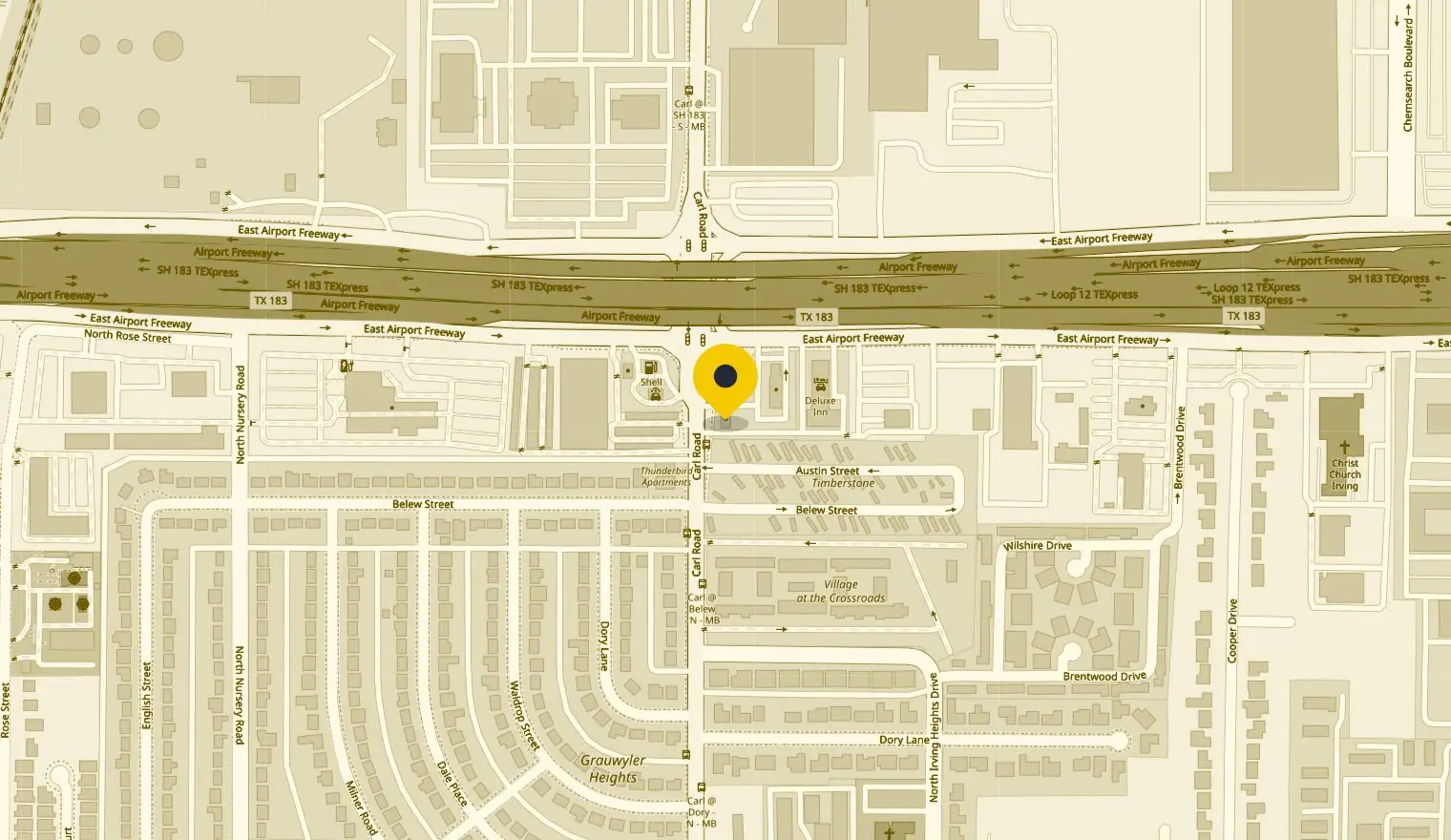
This guide is for drivers in Irving and the rest of Dallas County who have just replaced a battery, cleared a check engine light, or had a repair done, and now need to pass. We are Kwik Kar Oil Change & Auto Care at 2100 Carl Rd, Irving, TX 75061, and we check readiness status for local drivers every week.
TL;DR
- A drive cycle is the driving the computer needs to run its emissions self-tests, called readiness monitors. Until they finish, the car shows “Not Ready” and can fail inspection even if nothing is broken.
- Disconnecting the battery, replacing it, or clearing codes after a repair resets the monitors. Plan for extra driving time before your test.
- Texas allows a limited number of “Not Ready” monitors, depending on model year. Three continuous monitors must always be ready.
- Drive cycles differ by manufacturer, and some monitors set faster than others. A scan tool check tells you where you stand.
- Since January 1, 2025, most non-commercial vehicles no longer need a safety inspection, but Dallas County vehicles that are eligible still need an emissions test to register.
Table of Contents
- What is a drive cycle, and why does inspection depend on it?
- What resets your monitors?
- How many “Not Ready” monitors does Texas allow?
- How do you complete a drive cycle?
- How do you know your drive cycle is complete?
- Do you need an emissions test in Irving?
- Worked examples from the shop floor
- Our perspective: check first, drive second
- When driving isn’t enough
- Get a readiness check before your emissions test
- FAQ
- Sources
What is a drive cycle, and why does inspection depend on it?
Your car runs a set of internal tests on its emissions equipment: the oxygen sensors, the catalytic converter, the fuel vapor (EVAP) system and others. Each test is called a readiness monitor. The Texas Department of Public Safety explains that “Ready” means the OBD-II system has checked that emissions control system, while “Not Ready” means it has not.
A drive cycle is the combination of starting, idling, accelerating, cruising and slowing down that gives each monitor the conditions it needs to run. The computer cannot run these tests in a parking lot. It waits until it sees the right engine temperature, speed and load.
That is why a car that runs perfectly can still be turned away. Readiness is not the same thing as a fault. DPS states that readiness status is not the same as diagnostic trouble codes: a trouble code points to a problem the computer found, while “Not Ready” only says a check has not happened yet.
Does “Not Ready” mean my car is broken?
No. According to the DPS emissions testing guidance, the inspection also includes a check of the check engine light, which has to come on with the ignition on and then go off when the engine runs. A “Not Ready” result is different. It usually means you need more driving, not a major repair. If the check engine light is on with stored codes, though, that is a repair job, and driving around will not fix it.
What resets your monitors?
The computer’s memory of its completed tests is wiped whenever its power or its codes are cleared. DPS lists disconnecting the battery as the most common reason monitors read “Not Ready”, with these common triggers:
- Tune-ups and other engine repairs
- Replacing a dead battery
- Car radio installations
- Car alarm installations
Clearing a check engine light with a scan tool does the same thing. If you want a deeper look at how cleared codes and a disconnected battery leave the computer with unfinished business, this check engine light diagnosis checklist walks through the logic owners can follow.
This matters for timing. If you replace your battery on Monday and your registration expires Friday, the monitors will probably not be ready by the time you reach the station. Do the repair early.
How many “Not Ready” monitors does Texas allow?
Texas does not demand that every monitor be ready on every vehicle. Per the DPS, one “Not Ready” non-continuous monitor is allowed on model year 2001 and newer vehicles, and two on model years 1996 to 2000. More than that is an automatic failure. The three continuous monitors (misfire, fuel system and comprehensive components) must always read “Ready.”
| Vehicle | Not Ready monitors allowed | Continuous monitors |
|---|---|---|
| Model year 2001 and newer | 1 | Must all be Ready |
| Model years 1996 to 2000 | 2 | Must all be Ready |
In practice, the monitor that hangs on longest is usually the EVAP monitor. An EPA study of OBD systems notes that some monitors, such as the oxygen sensor, set much faster than the evaporative system because the conditions to test the oxygen sensor come up more often in normal driving. If the EVAP monitor is the last one open, that single allowed “Not Ready” slot may still get you through on a 2001 or newer vehicle. We would not count on it without checking.
How do you complete a drive cycle?
Here is the honest answer: it depends on your vehicle. Manufacturers write their own test conditions, and the published routines are long and precise. What works for one brand will not match another. The owner’s manual or a technician’s service information gives the exact steps for your car.
For most drivers, the practical approach looks like this:
- Fix first. Make sure the check engine light is off and no codes are stored. A monitor can’t finish while a related fault is active.
- Start cold. Let the car sit for several hours, ideally overnight, then start it and drive without a long warm-up idle. Many monitors need a cold start to begin.
- Mix your driving. Combine stop-and-go city streets with steady highway cruising. In Irving, that can mean surface streets around Carl Road and a steady run on State Highway 183 or Loop 12 when traffic allows.
- Repeat over several days. Routine commuting for a few days sets most monitors. Some vehicles need more.
- Verify with a scan tool. Stop guessing and read the status.
Keep every part of the drive legal and safe. Do not speed or drive aggressively to chase a monitor. The conditions the computer wants are ordinary ones, repeated.
How long does a drive cycle take?
There is no fixed time. The EPA study above makes clear that time to reach “Ready” varies by vehicle and by monitor, and older 1996 to 2000 vehicles often take longer. A single 10 to 20 minute trip rarely completes everything. A few days of regular commuting is a more realistic expectation, and some stubborn cases need longer.
How many miles is a complete drive cycle?
Mileage is a poor yardstick, because the computer cares about conditions, not distance. Two hundred miles of steady highway driving may leave a monitor open that ten minutes of mixed driving would have set. If you are tracking miles and the status isn’t moving, the missing ingredient is usually a condition you haven’t met, such as a cold start or a particular speed range, or there may be a fault preventing the test from running.
How do you know your drive cycle is complete?
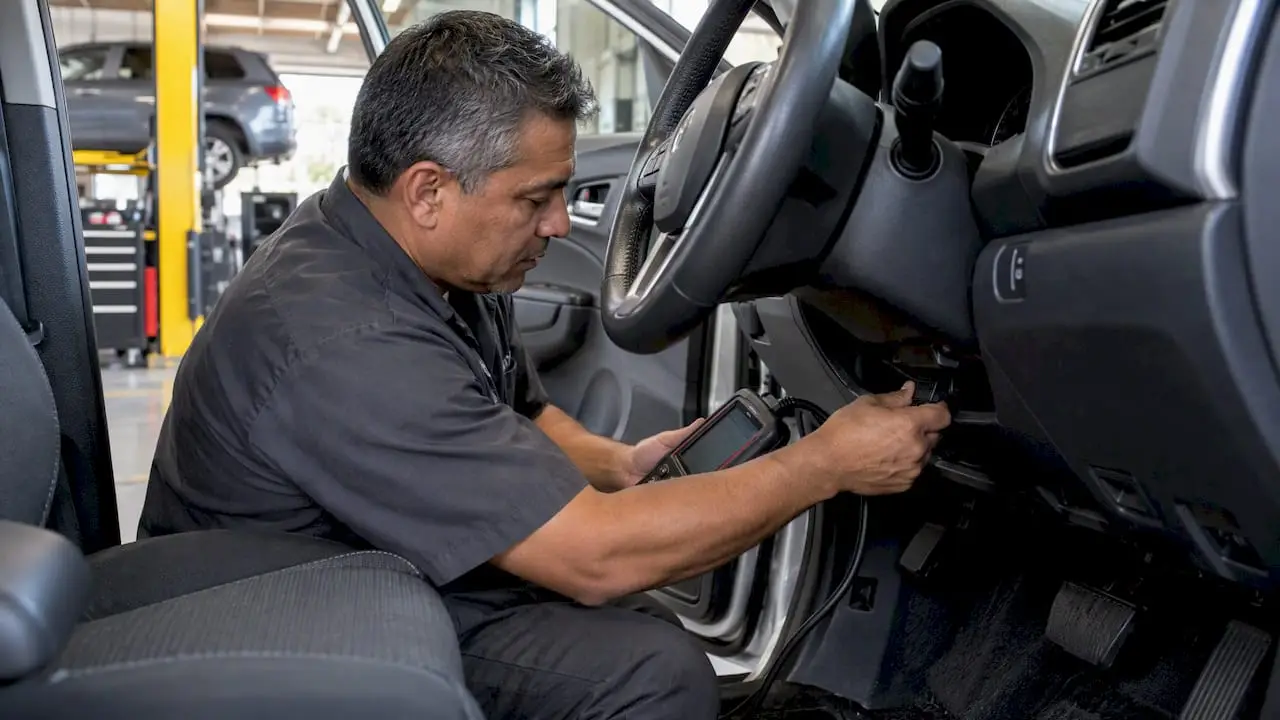
You read the monitor status. A scan tool connected to the OBD-II port shows each monitor as Ready, Not Ready, or not applicable. DPS recommends that you know your status before heading to the station, because a failed visit means returning after more driving.
Some cars also give a hint: if the check engine light blinks or stays lit on startup after you have cleared codes, the system is not finished or a problem was found. The dashboard alone cannot tell you which monitors are ready, though.
Do you need an emissions test in Irving?
Irving sits in Dallas County, which is one of Texas’s emissions counties. The TxDMV states that non-commercial vehicles no longer need a safety inspection to register as of January 1, 2025, but vehicles registered in the 17 designated counties, Dallas among them, still need a passing emissions inspection. Neighboring Tarrant, Collin and Denton counties are also on the list, so drivers in Grand Prairie, Euless, Coppell and Grapevine face the same requirement depending on where the car is registered.
Two things to know:
- Newer, low-mileage vehicles: TxDMV release notes say 1996 or newer vehicles with less than 50,000 miles are exempt from the emissions requirement.
- Commercial vehicles: Qualifying commercial vehicles remain subject to the applicable inspections. If you run a fleet, confirm which of your vehicles qualify before the registration date.
For the full picture on the rules, see our guides on the Texas emissions test and what changed with state inspection.
Worked examples from the shop floor
These are typical situations, described in general terms rather than as specific customer cases.
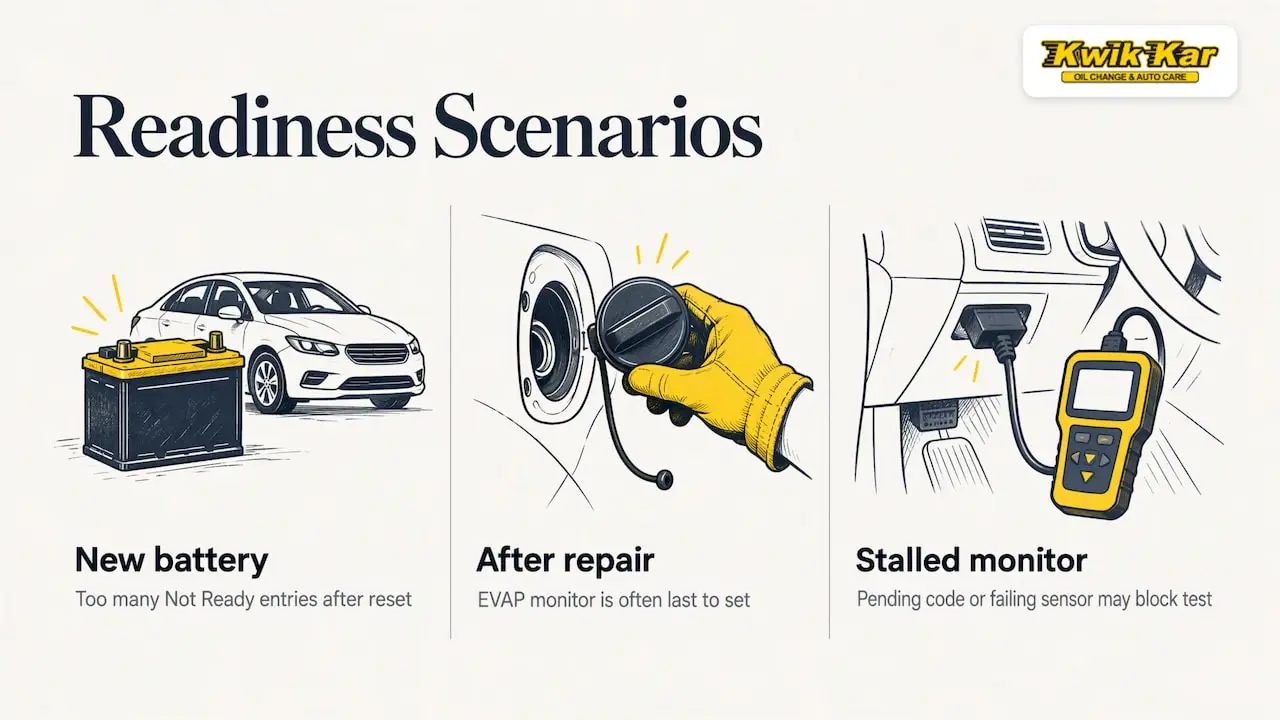
New battery, registration due next week. A driver replaces a dead battery and heads straight to the station. The monitors are reset, the report shows too many “Not Ready” entries, and the car fails. The fix is time and varied driving, not a repair. Checking the status first would have saved the trip.
Check engine light cleared after a repair. A repair is done and the codes are cleared. The light stays off, but the computer has to re-run its tests. If it was an EVAP-related repair, that monitor is often the last to set. Our guide to EVAP leak codes explains why a loose gas cap and a leak in the vapor system look similar to the computer.
Monitors never complete. The driver has commuted for more than a week and one monitor won’t set. That pattern suggests something is blocking the test, such as a pending code or a failing sensor. This is where engine diagnostics earn their keep, because the cause has to be found rather than driven around.
Our perspective: check first, drive second
We see the same pattern each registration season: drivers who did everything right on repairs and still got turned away because the computer hadn’t finished its self-checks. The most useful habit we can recommend is to treat readiness like a step in the repair, not an afterthought.
When we replace a battery or finish an engine repair, we tell the customer the monitors will need to reset and we plan around their registration date. Our ASE-certified technicians can read monitor status with a professional scan tool, and when a vehicle needs specific steps to finish, they can walk you through them. Because we do a Digital Vehicle Inspection with photos, video and technician notes sent to your phone, you can see what we found rather than take our word for it.
We would rather tell you to drive another two days than sell you a repair you don’t need. If the monitors will not set and a real fault is behind it, we will show you the evidence and let you decide.
— Kwik Kar
When driving isn’t enough
Some “Not Ready” situations are not about patience. Look into a shop visit if:
- The check engine light is on or comes back after you clear it. Stored codes need repair, and DPS notes the vehicle must be repaired before it will pass when the light is commanded on.
- A monitor stays “Not Ready” after a week or more of varied driving.
- The engine misfires, idles roughly, or the fuel economy dropped. Our P0300 misfire guide shows how we read live data.
- You have a diesel. The EPA notes that diesel vehicles may need more time than gasoline vehicles to set monitors after a repair.
For a deeper look at fixing a single open monitor, read our article on readiness monitors that are not ready, and our Texas inspection checklist covers what to bring and check before you go.
Get a readiness check before your emissions test
If you are in Irving, Las Colinas, Grand Prairie, Euless or nearby and want to know where your car stands before you spend time at the station, bring it by. We will connect a scan tool, tell you which monitors are ready, and explain what is left. Our Texas emissions and commercial inspections page lists what we handle, and our battery testing and replacement service is worth scheduling well ahead of your registration deadline, since a new battery resets the monitors. Repairs that qualify carry our 24-month/24,000-mile warranty.
FAQ
How much does it cost to do a drive cycle?
Driving a cycle yourself costs only fuel. If you want a technician to check your monitor status with a scan tool, call us at (469) 276-7337 for current pricing, since we do not publish a set price for that check. If a fault is blocking the monitors, the cost depends on the repair needed.
How long is a drive cycle to clear codes?
Driving does not clear codes. Codes are cleared with a scan tool or by disconnecting the battery, and either one resets your monitors. After that, plan on a few days of mixed city and highway driving, and longer for some vehicles or monitors.
Is there one drive cycle that works for every car?
No. Manufacturers set their own conditions, and different monitors need different driving. Ordinary commuting often completes them, but a technician with the right tool can read your status and give vehicle-specific steps.
Can I pass inspection with a monitor “Not Ready”?
Sometimes. Texas allows one “Not Ready” non-continuous monitor on 2001 and newer vehicles, and two on 1996 to 2000 models. The misfire, fuel system and comprehensive components monitors must always be ready, and the check engine light must not be commanded on.
Sources
- Ready or Not, Texas Department of Public Safety
- Emissions Testing, Texas Department of Public Safety
- Register Your Vehicle, TxDMV
- TxDMV Release Notes
- Evaluation of the Effectiveness of On-Board Diagnostic Systems in Identifying Fuel Vapor Losses, EPA
- Best Practices for Addressing OBD Readiness in IM Testing of Diesel Vehicles, EPA