A failing torque converter usually announces itself through a shudder or vibration at steady speeds, a transmission that slips or revs without pulling, delayed engagement when you shift into Drive, overheating or burnt-smelling fluid, odd noises, and worse fuel economy. Several of these also show up with low fluid, worn fluid, a misfire or a different transmission fault, so the symptom alone does not condemn the converter. The reliable answer comes from a scan, a fluid check and a road test.
We see these complaints from drivers all over Irving, from Las Colinas commuters to families coming in from Grand Prairie and Euless. Here is what each sign feels like, what else can cause it, and what to do before a small problem becomes a transmission-sized one.
TL;DR
- The most common torque converter symptoms are shudder, slipping, overheating or burnt fluid, delayed or harsh shifting, unusual noises, poor fuel economy and delayed engagement.
- A light, rumble-strip shudder at steady cruising speed often points to the converter clutch, but a misfire or old fluid can feel the same.
- Do not replace a converter on symptoms alone. Fluid condition, scan data and a road test come first.
- Replacement is labor-heavy because the transmission has to come out, and national estimates run from several hundred to well over a thousand dollars.
- If the transmission slips, overheats or smells burnt, stop driving it hard and have it inspected promptly.
Table of Contents
- What does a torque converter do?
- What are the most common signs of a bad torque converter?
- What does torque converter shudder feel like?
- Is it the torque converter, a misfire or something else?
- How is a failing torque converter diagnosed?
- What causes torque converter problems?
- Can a bad torque converter damage the transmission?
- What does torque converter replacement cost?
- Get a transmission check in Irving
- How to protect your transmission and converter
- FAQ
- Sources
What does a torque converter do?
The torque converter is the fluid coupling between your engine and an automatic transmission. It lets the engine keep running while the car sits at a red light in gear, and it multiplies engine torque when you pull away. At cruising speed, a clutch inside it (the torque converter clutch, or TCC) locks the engine and transmission together to cut slip and save fuel.
That clutch is where many complaints start. It has to apply and release smoothly, and it depends on clean fluid of the right type, stable hydraulic pressure and a transmission computer that commands it correctly. When any of those slip, you feel it.
CVT-equipped cars are a different design with different fluid. If your vehicle has a CVT, our guide on CVT fluid versus ATF explains why the two cannot be swapped.
What are the most common signs of a bad torque converter?
A national parts retailer’s guide lists slipping, shuddering, overheating or burnt fluid, delayed or harsh shifting, unusual noises, poor fuel economy and delayed engagement as the warning signs. Here is how each tends to show up on the road.
1. Shudder or vibration
This is the symptom most people search for. Drivers often describe it as driving over rumble strips for a second or two, usually at light throttle in a higher gear, when the transmission is trying to lock the converter clutch. It tends to come and go with speed and throttle rather than showing up at every moment of the drive.
2. Slipping
The engine revs, but the car does not accelerate in proportion. Think of a sensation like the car is in neutral for a moment. Gear slippage and unexpected shift delays can happen when the converter cannot maintain the consistent hydraulic pressure the transmission needs.
3. Overheating or burnt-smelling fluid
Heat is both a symptom and a cause of converter damage. Heavy towing, inadequate cooling, incorrect gearing or a poorly matched converter can all raise operating temperature. Dark fluid with a burnt smell is a sign to get the transmission looked at soon, not next season.
4. Delayed or harsh shifting
Long pauses before a gear change, or a thump when it finally arrives, can come from the converter. They can also come from solenoids, low fluid or internal wear. Our article on delayed engagement in a transmission walks through that cluster of causes.
5. Unusual noises
Whining, rattling or buzzing that changes with engine speed can come from a damaged converter, but it can just as easily come from the transmission pump, a bearing or an engine accessory. Noise narrows the search. It does not finish it.
6. Poor fuel economy
If the clutch is not locking, the engine runs faster than it should at highway speed and burns more fuel. A slow drop in miles per gallon is easy to miss, so look for it alongside another symptom.
7. Delayed engagement
You shift from Park to Drive or Reverse and the car waits a beat or two before it moves. Low fluid, worn internal seals and a failing converter can all produce this.
What does torque converter shudder feel like?
Shudder has a recognizable pattern. It is a fast, rhythmic vibration, like rolling over a rumble strip, felt through the seat and floor. It typically appears under light acceleration or steady cruising, often somewhere in the middle of the speed range, and it can fade if you press the pedal harder or lift off.
One published troubleshooting table ties shudder at light throttle to worn or degraded transmission fluid, brief rumbling at lockup to converter clutch wear, and vibration under load across several gears to an engine misfire. Treat that as a guide to the questions a technician asks, not a diagnosis.
Can a torque converter clutch cause shudder on acceleration?
Yes. When the clutch friction surface applies unevenly, it grabs and releases in rapid cycles, and you feel that as shudder during light acceleration. A control problem can do the same thing: if the converter clutch command or line pressure is unstable, the converter can cycle in and out of lockup.
The cause is not always the clutch itself. Fluid that has lost its friction properties is a frequent culprit, which is why the first step is often the fluid and not the converter.
Is it the torque converter, a misfire or something else?
A vibration on acceleration has many possible sources: engine misfires, worn motor or transmission mounts, driveline wear, tires and wheel bearings. Some quick, safe observations help a technician:
- Does it happen only at a certain speed range and light throttle? That leans toward the converter clutch.
- Does it happen under hard load in several gears? That leans toward a misfire. A check-engine light with a code such as P0300 supports it. See our walkthrough of diagnosing P0300 with live scan counters.
- Does it come with clunks when you shift or turn? Look at mounts. Our transmission mount symptoms article covers that.
- Does it follow wheel speed rather than engine speed? Tires, wheels and bearings become suspects. Our guide on wheel bearing replacement cost can help you sort that out.
One converter manufacturer suggests that lightly touching the brake during the vibration may release the converter clutch. If the shudder stops, the clutch is implicated, although a technician should also rule out a misfire. Only try this when traffic is clear and you can do it without distraction. Better still, let the shop observe the pattern with a scan tool.
How is a failing torque converter diagnosed?
Good diagnosis moves from cheap and non-invasive to invasive. Typical steps are checking fluid level and condition, scanning transmission codes and performing a stall test, with a mechanic inspection if symptoms persist. A broader list includes stall-speed testing, scan-tool checks, pressure tests, road tests and fluid and filter inspection.
Automaker procedures are more cautious than most drivers expect:
- A GM service bulletin tells technicians to collect TCC slip data with a service tool when diagnosing shudder or poor TCC control.
- Another GM bulletin says a confirmed degraded TCC-shudder condition with no clutch or hardware damage and no coolant contamination should first get the specified DEXRON VI drain-and-fill procedure, followed by at least 200 miles of driving to confirm the result.
- GM’s service procedure warns against condemning the converter solely for harsh shifts, ordinary vibration, intermittent P0741 or P0742 codes, poor launch or fluid and debris findings. Engine, transmission, hydraulic and TCC diagnostics come first.
That last point matters to your wallet. A converter replacement should come after the evidence points there, not before.
A caution on stall tests
A stall test is a technician’s tool, not a driveway experiment. The same GM procedure cautions that holding the accelerator too long during an accelerator-based converter test can damage the transmission, and its example limits the test to approximately 1,200 rpm for no more than six seconds. Leave that to a shop with the vehicle’s specifications.
What causes torque converter problems?
The common threads are heat, fluid and wear:
- Old or wrong fluid. The clutch relies on fluid friction characteristics. Over-extended service intervals and the wrong fluid type both hurt. Our transmission fluid change guide covers intervals and when to bring in a pro.
- Heat. Towing, stop-and-go traffic in Texas summers and an undersized cooling path all raise fluid temperature.
- Control faults. Solenoids, pressure problems or software can make the converter apply erratically.
- Mechanical damage. Worn bearings, damaged hubs or welds and internal debris can ruin a converter and contaminate the whole transmission.
Can a bad torque converter damage the transmission?
It can. A failing converter can overheat the transmission and send metal debris through the fluid. One parts guide for specific Genesis models warns that driving with a failing converter can lead to catastrophic transmission failure. That guidance is for those models, but the mechanism, heat plus debris, is why we take slipping and burnt fluid seriously on any automatic.
A practical rule:
- Mild shudder at one speed, no other symptoms: schedule an inspection soon and avoid heavy towing in the meantime.
- Slipping, harsh or delayed shifts, burnt smell, warning lights: limit driving and have it inspected right away. If the vehicle loses drive entirely, do not keep trying to move it.
What does torque converter replacement cost?
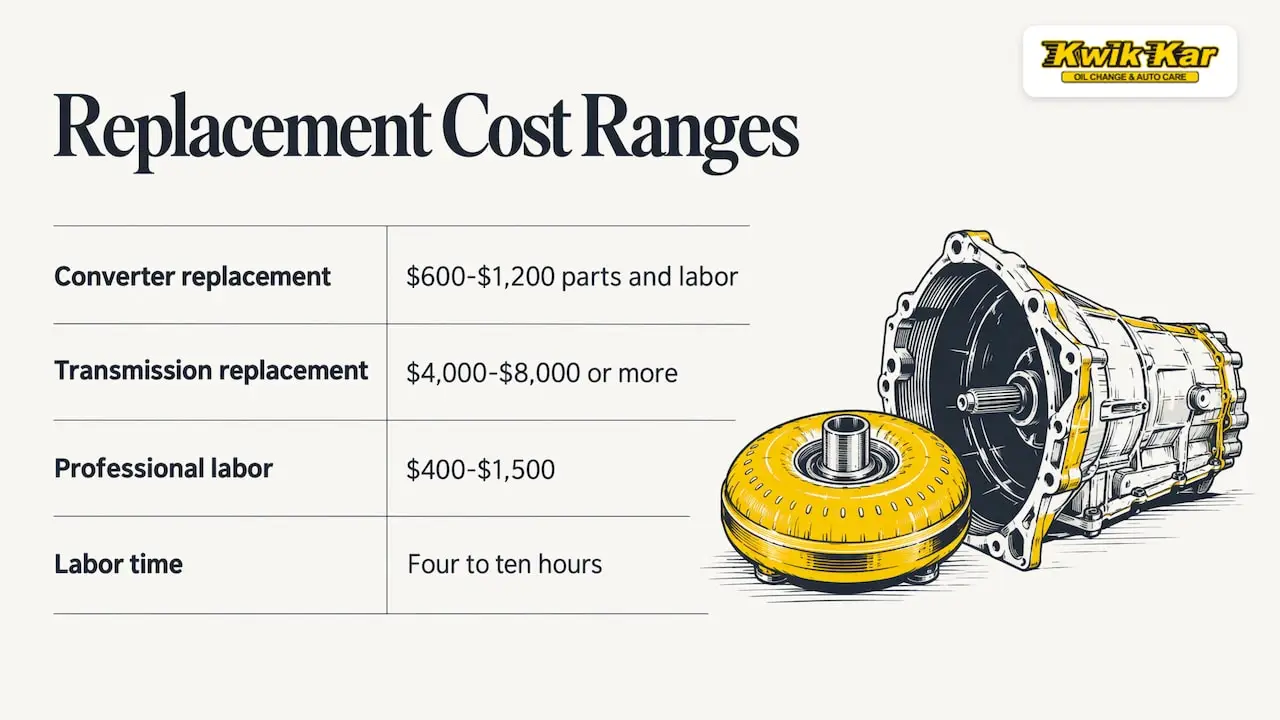
Replacement is labor-intensive because the transmission must be removed to reach the converter. National parts-retailer figures put torque converter replacement at roughly $600 to $1,200 with parts and labor, while a complete transmission replacement can run $4,000 to $8,000 or more. Another source says professional labor commonly runs about $400 to $1,500, or roughly four to ten hours.
Those are national ranges, not quotes from us. Your vehicle, the converter itself and what else is found in the transmission change the total. Because the transmission is already out, a shop will often discuss related items like seals, so ask for the recommendations in writing.
Can a torque converter be replaced without replacing the transmission?
Often yes, when the transmission itself is undamaged. GM’s service information lists conditions where converter replacement is called for, including coolant contamination, external hub or weld leaks, pilot or hub damage, overheating or discoloration, and internal converter damage when the transmission is not damaged. If debris has spread, more work may be needed, which is one more reason early inspection pays.
What we tell Irving drivers
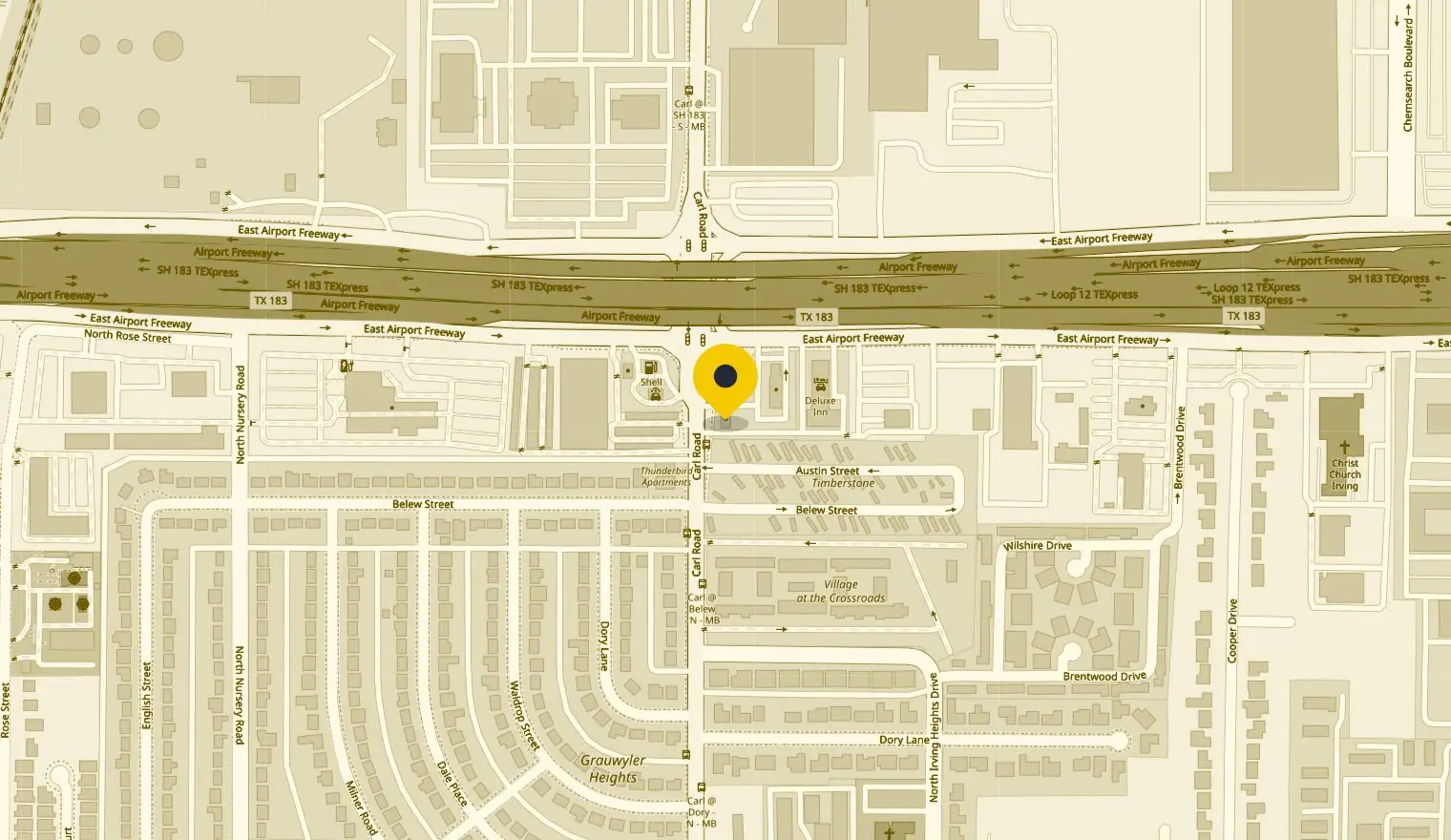
Most of the shudder complaints that come through our bay at 2100 Carl Rd are not a bad converter on day one. We start with the evidence: fluid condition and level, stored codes, a road test and a look at live data. Then we show you what we found.
That is where our Digital Vehicle Inspections help. You get photos, video and technician notes sent to your phone, so you can see the fluid, the leak or the worn part and decide with confidence. Our ASE-certified technicians make recommendations in plain language, and we would rather rule out a misfire or a fluid problem than sell you a converter you do not need.
If a repair does qualify, our 24-month/24,000-mile warranty on qualifying repairs applies. We are RepairPal certified and recognized as CARFAX Top-Rated, and we back our work with the same transparency on every visit.
Kwik Kar
Get a transmission check in Irving
If your car shudders, slips or hesitates, we can inspect it. We begin with an engine diagnostic and scan to rule out misfires and read stored codes, then inspect the fluid and test-drive the vehicle. If the evidence points to the transmission, our transmission and clutch repair team takes it from there.

We serve drivers across Irving, Las Colinas, Coppell, Grapevine and nearby communities. Call (469) 276-7337 or stop by 2100 Carl Rd, Irving, TX 75061. Fleet managers can ask about our fleet maintenance programs. If a repair is larger than planned, third-party financing options may be available, subject to provider approval and terms.
How to protect your transmission and converter
No routine guarantees a converter will last, but these habits reduce the stress on it:
- Follow the manufacturer’s fluid schedule, and use the correct fluid. Severe use such as towing or heavy city driving often calls for the shorter interval in your owner’s manual.
- Fix misfires and check-engine lights promptly. Rough engine operation puts extra strain on the drivetrain.
- Watch your temperatures. A cooling system problem can raise transmission temperatures too. Our A/C, heating and cooling service team can check the system.
- Report small changes early. A new shudder, a delayed engagement or a drop in fuel economy is cheaper to look at now than later.
- Keep up with scheduled maintenance. Regular service gives a technician a chance to spot dark fluid or leaks before they become symptoms.
FAQ
What are the first signs of a bad torque converter?
Usually a light shudder or vibration at steady speed, a slip where the engine revs without matching acceleration, or a delay when you shift into gear. Burnt-smelling fluid and a drop in fuel economy often follow. Any of these deserves an inspection, since other transmission and engine faults can cause them too.
Can I fix torque converter shudder without replacing the converter?
Sometimes. If a shop confirms the shudder is a degraded fluid condition and finds no clutch or hardware damage, GM’s guidance for its vehicles calls for a fluid drain-and-fill with the specified fluid and a follow-up drive of at least 200 miles. If the clutch or converter is damaged, replacement is the remedy. Procedures differ by manufacturer, so the correct fluid for your car matters.
How long can I drive with a bad torque converter?
There is no safe number of miles. A mild shudder may let you drive to a shop, but slipping, overheating or burnt fluid can escalate quickly and spread debris through the transmission. Limit driving and get it inspected as soon as you can.
Is a torque converter problem the same as a bad transmission?
No, though they overlap. The converter is one component inside the transmission system. Solenoid, fluid, pump and internal wear problems create similar symptoms, so a scan, fluid check and road test separate a converter repair from a bigger transmission job.
How much does it cost to replace a torque converter?
National estimates run roughly $600 to $1,200 including parts and labor, with heavier labor figures reported for some vehicles. Your actual cost depends on the vehicle and what the inspection finds, so ask us for a written estimate after we look at it.
Sources
- Symptoms and Causes of a Bad Torque Converter
- Bad Torque Converter vs Bad Transmission
- Follow This Guide to Replace Torque Converter
- Bad Torque Converter Symptoms, HowStuffWorks
- Torque Converter Troubleshooting Guide
- Torque Converter Shudder: Signs, Causes, and What to Do Next
- What is Torque Converter Shudder?
- GM technical service bulletin, September 2024 (NHTSA)
- GM bulletin 23-NA-072, April 2023 (NHTSA)
- GMC service procedure, Document ID 5601149
- Pricing Guide: Torque Converter Replacements
- Genesis G80, GV70 and GV80 torque converter guide