Steering wheel vibration at speed, looseness when you turn, clunking over bumps, and uneven tire wear are the clearest signs of a failing tie rod. If you notice more than one of these, limit your driving to short, low-speed trips and get the steering linkage inspected right away.
TL;DR:
- At home, check steering slack at the 9 and 3 o’clock positions with the engine off, and inspect visible boots; leave undercar checks to technicians.
- Mild symptoms may permit a short, low speed trip to a shop, but severe looseness or self steering calls for stopping and arranging a tow.
- Outer tie rod replacement takes about 1 to 2 hours; inner rod or rack repairs take longer, and an alignment is almost always needed afterward.
- Because ball joints and wheel bearings can cause overlapping symptoms, have a technician inspect related steering and suspension parts before replacing the tie rod.
- Ask for photos or video of measured play, plus a written estimate separating parts, labor, and alignment costs before approving repairs.
Table of Contents
- Top Symptoms of a Failing Tie Rod
- How to Check and Diagnose Tie Rod Issues
- Common Causes and How Tie Rod Failure Progresses
- Can You Drive With Bad Tie Rods?
- Repair Options, Costs, and Timeline
- What to Ask Your Technician for a Transparent Estimate
- How We Inspect Steering and Tie Rod Issues
- Why a Professional Inspection Beats Guessing
- Schedule a Steering Inspection in Irving
- FAQ
- Sources
Top Symptoms of a Failing Tie Rod
A worn tie rod rarely announces itself with one dramatic symptom. It usually shows up as a combination of small, steadily worsening signs.
- Steering wheel vibration or shaking that gets worse as your speed increases.
- Play or looseness in the steering wheel, noticeable both when it’s centered and while turning.
- Clunking, knocking, or popping noises when you turn the wheel or roll over bumps and potholes.
- A vehicle that wanders on straight roads or responds inconsistently to steering input.
- Uneven or unusually fast tire wear, often a sign that toe alignment has shifted.
These bad tie rod symptoms are consistent with what aftermarket parts manufacturers and mechanics report as the primary indicators of wear. Vibration and looseness often point to outer tie rod end wear, while clunking near the center of the vehicle can suggest an inner tie rod issue. If you’re also seeing uneven tire wear alongside these symptoms, treat it as a stronger signal that the linkage, not just the tires, needs a look.
How to Check and Diagnose Tie Rod Issues
You can run a few safe checks before heading to a shop, but a full diagnosis takes a lift and the right tools.
- With the engine off and the vehicle parked, grab the steering wheel at the 9 and 3 o’clock positions and gently turn it back and forth to feel for slack before the wheels respond.
- Walk around the vehicle and visually check the rubber boots near the tie rod ends for tears, cracks, or grease leaking out.
- Have someone drive slowly in an empty lot while you listen from outside for knocking or popping near the front wheels.
Pro Tip: Never crawl under a vehicle that isn’t properly supported on jack stands. Keep DIY checks visual and limited to what you can see and feel from outside the car.
A technician’s diagnosis goes further: lifting the vehicle, applying controlled pressure to check inner and outer tie rod play, inspecting the steering rack and its boots, and checking related parts like ball joints and wheel bearings since their symptoms overlap, as explained in detail in how to identify when your windshield needs repair or replacement guidelines. According to the tie rod replacement cost estimate from RepairPal, technicians also check for power steering fluid near the rack boots, since leakage there can point to a failed rack seal rather than a simple tie rod problem. Ask for digital photos or video of what they find, along with a written estimate before any work begins.
Common Causes and How Tie Rod Failure Progresses
Tie rods wear out gradually, and knowing why helps explain why early inspection matters.
- The ball-and-socket joint loses lubrication or gets contaminated with dirt and moisture, leading to friction and wear.
- Hitting a pothole or curb hard can damage the joint or bend the rod itself.
- Corrosion and age weaken the metal and rubber boots over years of exposure to road salt and moisture.
- Symptoms typically start as mild play or a faint noise and progress toward looser steering and, eventually, a risk of the joint separating.
Can You Drive With Bad Tie Rods?
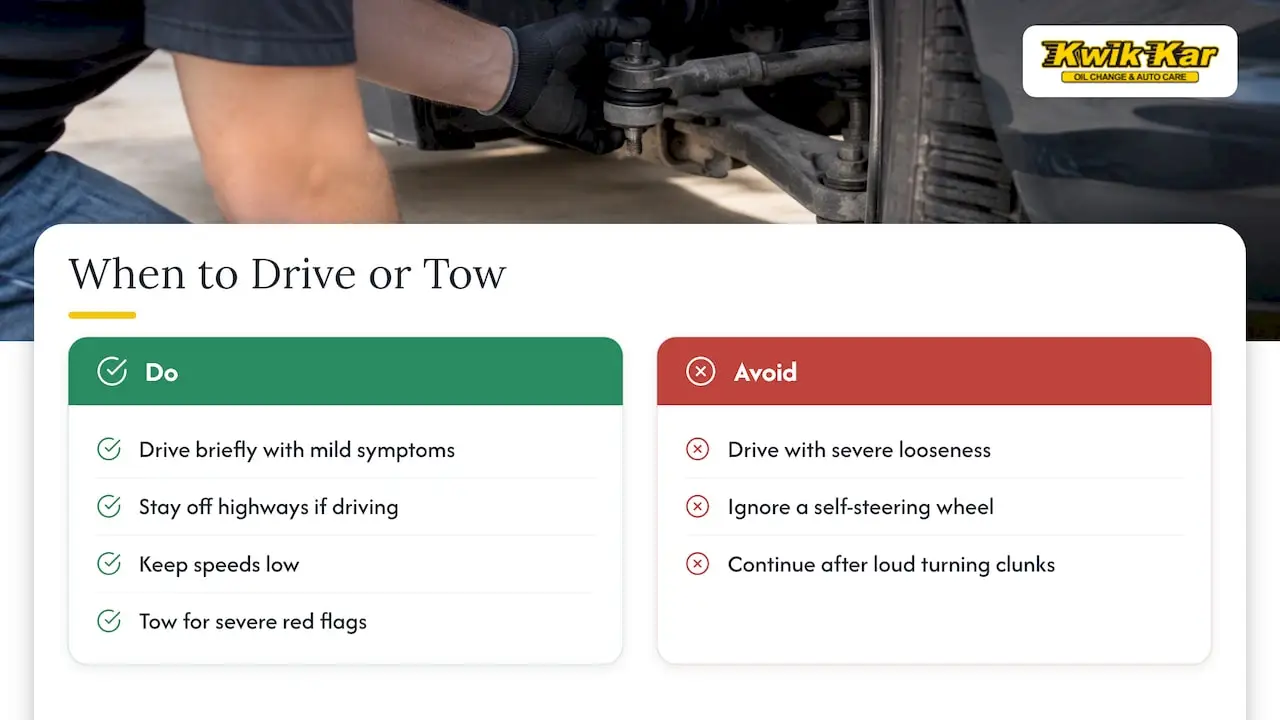
Mild vibration or a small amount of looseness may allow a careful, short drive straight to a shop, especially at low speeds on surface streets. The RepairPal estimator notes that drivers often have a brief window, sometimes a few days, before a worn joint deteriorates further, though it can eventually separate and cause a sudden loss of steering control.
Severe looseness, a wheel that seems to steer on its own, or a loud clunk every time you turn are red flags. Stop driving and arrange a tow instead. If you must drive any distance, stay off highways, avoid sharp steering maneuvers, and keep speeds low.
Repair Options, Costs, and Timeline
Outer tie rod replacement is the most common repair and is usually straightforward since the part is easy to access. Inner tie rod replacement or steering rack work takes longer because it often means removing more components to reach the linkage.
- Cost depends on the part needed, local labor rates, and how complex your vehicle’s steering system is.
- A simple outer tie rod swap often takes around 1 to 2 hours of shop time.
- Inner tie rod or rack-related repairs typically take longer due to additional disassembly.
- An alignment is almost always needed afterward, which adds time to the visit.
A worn ball-and-socket joint that goes unaddressed can progress from minor play to a risk of separation, according to RepairPal’s diagnostic guidance. That’s the practical reason shops recommend fixing play early rather than waiting for symptoms to worsen.
What to Ask Your Technician for a Transparent Estimate
A good inspection should leave you with clear evidence, not just a verbal recommendation.
- Request photos or video of the tie rod, the boots, and any measurable play found during inspection.
- Ask the technician to show you the difference between inner and outer tie rod play, in plain terms or with a short demonstration.
- Confirm whether an alignment is included in the repair price and what the parts and labor warranty covers.
- Ask whether other steering or suspension components, like ball joints, should be inspected or replaced at the same time.
A written estimate that spells out parts, labor, and alignment costs upfront protects you from surprises once the work is underway.
How We Inspect Steering and Tie Rod Issues
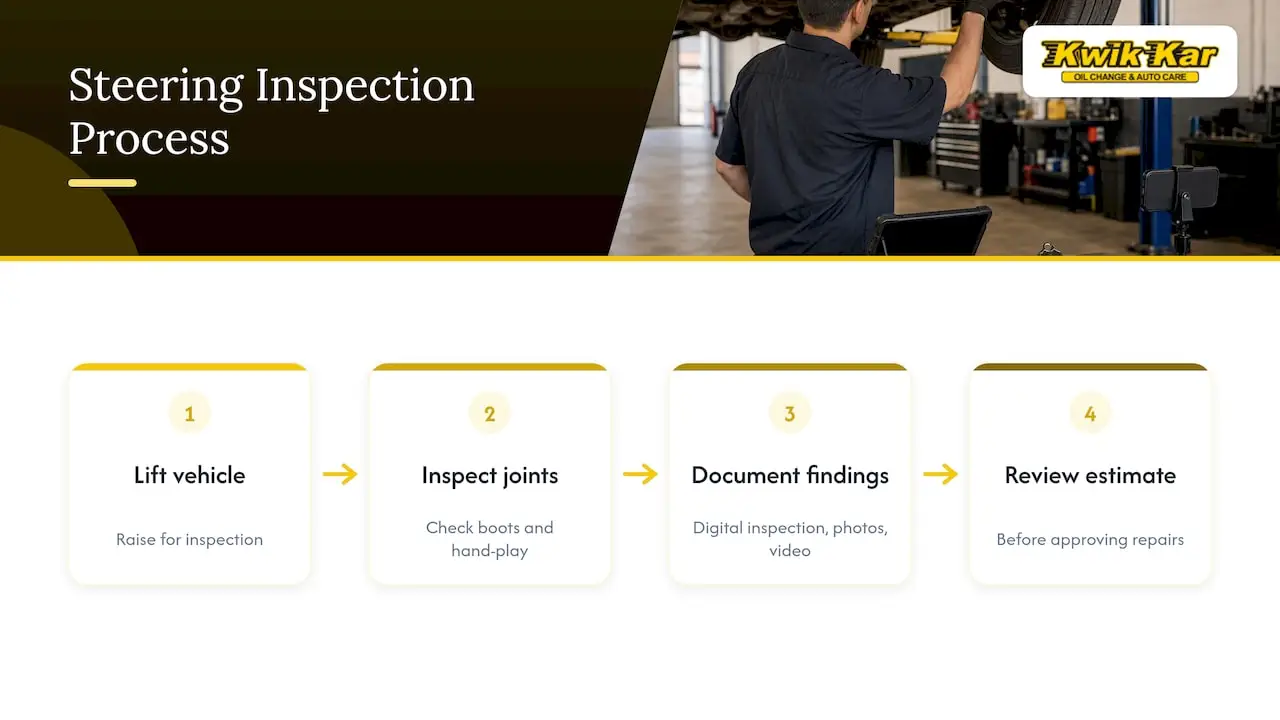
We lift the vehicle, inspect the tie rod boots and joints, and check for inner and outer play by hand before anything is recommended. Every finding gets documented with a Digital Vehicle Inspection, photos and video sent to your phone, so you can see the condition of your steering linkage and review a clear estimate before approving any repair.
Why a Professional Inspection Beats Guessing
Steering play isn’t something to diagnose by feel alone. We’d rather show you a photo of a torn boot or a measurable amount of play than ask you to take our word for it. Catching a tie rod issue early, with an ASE-certified technician and documented findings, almost always costs less than waiting for it to become a safety problem.
Schedule a Steering Inspection in Irving
If you’re noticing vibration, looseness, or clunking, we’ll get your steering linkage checked properly rather than guessing at the cause. An inspection appointment with our team includes:
- A thorough check of the tie rods, boots, and related steering components.
- Digital Vehicle Inspection photos and video sent to your phone.
- A written estimate before any repair work begins.
- A recommendation on whether an alignment is needed afterward.
Visit our steering and suspension repair page to schedule your inspection, and ask about same-day availability when you call.
FAQ
Can you still drive a car with bad tie rods?
You may be able to drive short, careful distances at low speed if symptoms are mild, but severe looseness or a wheel that seems to move on its own means you should stop driving and call for a tow. Worn tie rod joints can eventually separate, causing a sudden loss of steering control.
How much does it cost to replace a tie rod?
Cost depends on the vehicle, the specific part needed, and local labor rates, and most shops include an alignment check afterward since replacing a tie rod changes toe alignment. Ask your shop for a written estimate that breaks out parts, labor, and alignment separately.
How does a tie rod fail after just a couple of years?
Failure usually comes from the ball-and-socket joint losing lubrication or picking up contamination, which creates friction and gradual wear, sometimes accelerated by hitting a pothole or curb hard. Corrosion from road salt and moisture can also weaken the joint and its rubber boot faster in some climates.
What’s the worst that can happen with a bad tie rod?
In the most serious cases, a severely worn tie rod joint can separate while driving, causing a sudden and complete loss of steering control. This is why shops recommend addressing looseness, vibration, or clunking noises as soon as they appear rather than waiting.