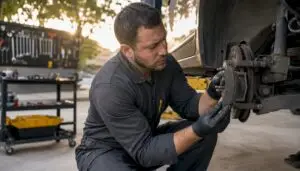
A spongy brake pedal means your brake hydraulics aren’t building firm pressure, usually from air or contaminated fluid, sometimes from a failing master cylinder or a leak. If the pedal sinks toward the floor or you see fluid pooling under the car, stop driving and call for a tow. Otherwise, drive gently and directly to a shop. A fluid flush and proper bleed fixes many cases, but persistent sponginess points to a bigger repair.
TL;DR:
- A spongy brake pedal often results from air or moisture in the hydraulic system, which lowers braking firmness and increases stopping distances.
- Common causes include air trapped during service, old or water-contaminated fluid, external leaks, or swollen flexible hoses, each requiring specific diagnostics.
- Initial checks at home involve inspecting fluid clarity, reservoir levels, leak signs, and performing a pump test to distinguish between air and master cylinder issues.
- A fluid flush and proper bleed often fix the problem, but persistent sponginess may indicate internal master cylinder failure or ABS module trapping air.
- Repair costs vary from inexpensive flushes to higher-cost part replacements, emphasizing the importance of starting with a fluid check before parts are replaced.
Table of Contents
- Why Is My Brake Pedal Spongy? Understanding the Hydraulic Problem
- What Causes a Spongy or Mushy Brake Pedal?
- How Can I Check a Spongy Brake Pedal at Home?
- What Does a Shop Do to Diagnose a Soft Brake Pedal?
- How Much Does It Cost to Fix a Spongy Brake Pedal?
- Our Take on Diagnosing a Spongy Brake Pedal
- Get Your Brakes Checked in Irving Before It Gets Worse
- Sources
- FAQ
Why Is My Brake Pedal Spongy? Understanding the Hydraulic Problem
Brake fluid works because it’s incompressible. Push the pedal, and that pressure transfers instantly through the lines to the calipers or wheel cylinders, clamping the brakes. Air is compressible. So is vapor from overheated fluid. When either gets into the system, your foot compresses that air pocket first, and the pedal feels soft, mushy, or spongy instead of firm.
Different symptom patterns point to different problems. Air in the lines is the most frequent cause of a spongy pedal, and pumping the pedal a few times often firms it up temporarily as the air compresses toward the top of the master cylinder.
- Pedal firms up after pumping: usually air in the lines.
- Pedal slowly sinks to the floor under steady pressure: classic sign of internal master cylinder failure.
- Spongy only after hard or repeated braking (like on a hill): fluid is boiling from heat, turning to vapor.
- Spongy only on the first press after the car sits: often pad knockback or a slightly warped rotor pushing the caliper piston back.
A spongy pedal is a hydraulic warning sign, and technicians generally agree the condition doesn’t fix itself. It tends to get worse, and it always means longer stopping distances than your brakes were designed to deliver. If the pedal ever goes to the floor with no resistance, do not drive the vehicle. Call for a tow instead.
What Causes a Spongy or Mushy Brake Pedal?
Most spongy pedal complaints trace back to one of seven root causes, and figuring out which one applies determines whether you’re looking at a cheap fix or a bigger repair bill.
Air in the brake lines is the top offender. It gets in during brake service when a line is opened, through a low fluid reservoir that lets air get drawn in, or from a tiny leak that sucks air in as fluid seeps out. The fix is straightforward: bleeding the system forces the compressible air out and replaces it with fresh, incompressible fluid.
Old or moisture-contaminated brake fluid is a slower-building problem. Brake fluid is hygroscopic, meaning it absorbs moisture from the air over time. That moisture lowers the fluid’s boiling point, and under hard braking, the fluid near the calipers can flash to vapor, which compresses just like air does. Fluid replacement on a regular schedule keeps this from creeping up on you.
External leaks at the lines, calipers, or wheel cylinders drop your fluid level and let air enter the system as a byproduct. Check under each wheel and beneath the car for wet spots or a fluid puddle, and watch for a reservoir level that keeps dropping between top offs.
Deteriorated or ballooning flexible brake hoses are an easy cause to miss because the hose looks fine from the outside while the inner lining swells under pressure. Flexible hoses age and can balloon internally, absorbing pedal pressure instead of transferring it to the caliper. Heat, road chemicals, and simple age all contribute, which is why hoses deserve a visual check during routine service.
Master cylinder internal bypass shows up as a pedal that slowly sinks to the floor under steady foot pressure, rather than one that’s just soft. A sinking pedal is the clearest single sign of a failing master cylinder, and internal seal wear can’t be bled away. It needs replacement.
ABS hydraulic modulator issues trap air inside the ABS valve body where a standard manual bleed can’t reach it. This calls for a bidirectional scan tool procedure that cycles the ABS valves open to force the trapped air out.
Pad and rotor issues are less common contributors but worth ruling out. New pads or a recently machined rotor can push the caliper piston back slightly, causing a soft first pedal stroke that firms up on the second press. This isn’t a hydraulic fault. If you’re chasing pad wear specifically, our brake pad replacement guide covers when that service is due.
Pro Tip: Never top off with whatever fluid is on the shelf. Mixing incompatible types, like DOT 5 silicone fluid into a DOT 3 or DOT 4 system, can swell seals and cause its own hydraulic failure. Always match the type stamped on your master cylinder cap.
How Can I Check a Spongy Brake Pedal at Home?
A few careful checks can tell you a lot before you ever call a shop, and they take less than five minutes.
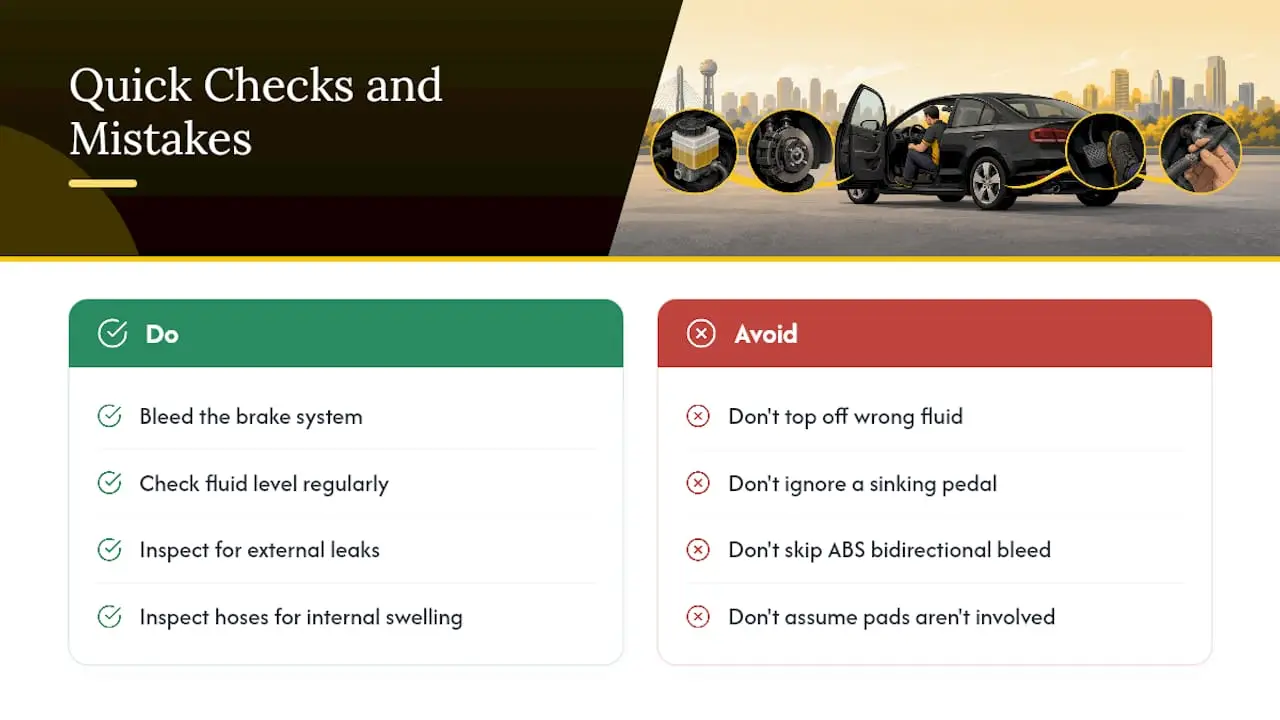
- Look at the fluid reservoir. Fluid should sit between the min and max lines and look light amber or clear. Dark, cloudy, or near-black fluid signals contamination and age.
- Check under each wheel and under the car for wet spots, drips, or a visible puddle. Any active leak means the vehicle needs professional attention before you drive it again.
- Run the firm-pedal pump test. With the engine off, pump the brake pedal several times, then hold steady pressure for about 30 seconds. If the pedal slowly sinks under your foot, that points to a master cylinder problem, not air.
- Note whether the pedal firms up after pumping. If it does and holds firm on the hold test, air is the more likely culprit, and a flush or bleed is a reasonable next step.
If you don’t see leaks and the pedal firms up on the pump test, driving carefully to a shop is generally reasonable. If your vehicle has ABS, skip home bleeding attempts. Trapped air in the ABS unit needs a bidirectional scan-tool procedure that a shop’s diagnostic equipment can perform. And remember, pumping the pedal to build emergency stopping pressure is a way to slow down in a pinch, never a substitute for repair.
What Does a Shop Do to Diagnose a Soft Brake Pedal?
Professional shops follow a set sequence rather than guessing at parts. It starts cheap and escalates only as needed, which protects your wallet from unnecessary repairs.
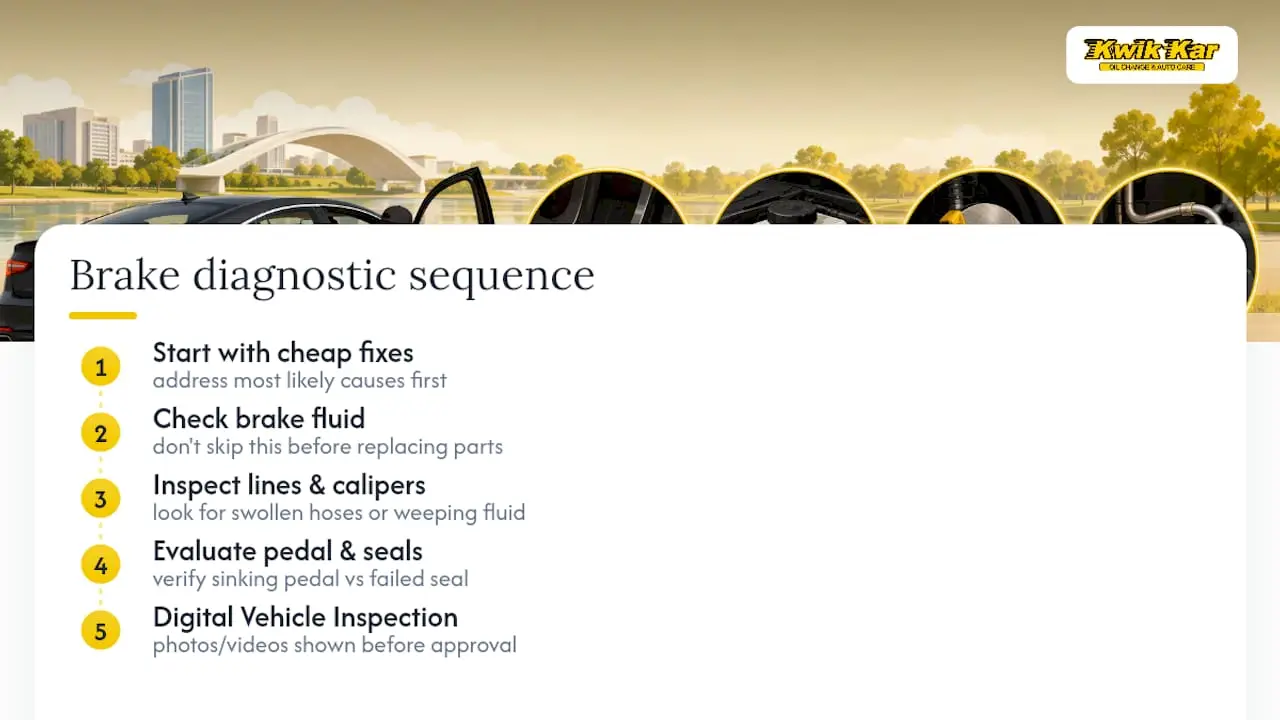
The process typically runs like this: check the reservoir and look for visible leaks, perform the pump and hold test, check fluid color and test for moisture content, then move to a full flush with a proper four-corner bleed. A fluid flush and correct bleeding sequence is the standard first diagnostic step because it’s inexpensive and resolves a meaningful share of soft-pedal complaints tied to air or moisture on its own.
If the pedal stays spongy after a flush, the diagnosis moves to component-level testing:
- Pressure-testing the lines and inspecting hoses for internal swelling or chafing.
- Checking calipers and wheel cylinders for external leaks at the seals.
- Testing master cylinder output pressure to confirm internal bypass.
- Running a bidirectional ABS purge if the vehicle’s ABS module was involved.
A moisture tester on the fluid tells the technician whether the root issue is simple air or fluid that’s absorbed enough water to need a full flush regardless of other findings. Once the repair is done, the shop rechecks pedal feel and often documents fluid condition before and after. That’s where our Digital Vehicle Inspections come in. Every brake job includes photos and video of what was found, sent straight to your phone, so you’re not just taking a technician’s word for a leaking caliper or a swollen hose.
Pro Tip: When you book a brake inspection, ask specifically for a moisture reading on your fluid and DVI documentation of any leak found. If your car has ABS and the pedal issue started with hard or repeated braking, ask whether an ABS module purge is needed.
How Much Does It Cost to Fix a Spongy Brake Pedal?
Cost depends entirely on which cause you’re dealing with, and that’s exactly why starting with a flush before jumping to parts saves money. A flush and bleed resolves air and moisture cases without replacing a single component, which keeps the diagnostic step cheap even if you end up needing more work.
- Fluid flush and four-corner bleed: the least expensive fix and usually completed same day.
- Hose or brake line replacement: moderate cost, generally same-day depending on parts availability.
- Caliper or wheel cylinder replacement: moderate to higher cost depending on how many corners need work.
- Master cylinder replacement: a bigger job, since it involves the whole hydraulic system and a full bleed afterward.
- ABS hydraulic module service: typically the most involved repair, requiring specialized bidirectional bleeding equipment.
A flush-first approach narrows down the cause before a shop quotes you on parts, which means you’re not paying for a master cylinder when the real problem was air. For a closer look at flush pricing and timing specifically, see our guide on brake fluid flush service.
Our Take on Diagnosing a Spongy Brake Pedal
Too many drivers treat a soft pedal as something to monitor rather than something to fix, largely because it doesn’t always come with a warning light. That’s backward thinking. A spongy pedal is one of the few brake symptoms you can feel directly through your foot, and it’s telling you something a dashboard light can’t: your stopping distance is already longer than it should be, right now, on today’s drive.
The technicians are ASE-certified and trained to work through the diagnostic sequence in order, starting with the cheapest, most likely fix rather than guessing at parts. We don’t skip the fluid check to sell a master cylinder, and we don’t ignore a sinking pedal hoping a flush will cover for a failing seal. Every brake inspection includes a Digital Vehicle Inspection, showing actual photos and videos of what technicians found under your car, not just a verbal description on an invoice. If a hose is swollen or a caliper is weeping fluid, you’ll see it yourself before you approve the repair. That transparency is the difference between trusting a recommendation and verifying it.
— Kwik Kar
Get Your Brakes Checked in Irving Before It Gets Worse
The diagnostic sequence starts with a fluid check and bleed before recommending any parts. Technicians handle everything from a routine flush to master cylinder replacement and ABS bidirectional bleeding, and every visit includes a Digital Vehicle Inspection with photos and video so you see exactly what’s happening under your vehicle.

If your pedal feels soft, sinks, or takes two pumps to feel normal, don’t wait for it to get worse on the drive home. Head to our brake repair service page to see what’s included, or check our current brake service coupon for savings on your visit. Book your brake inspection with Kwik Kar Oil Change & Auto Care in Irving today, and drive with the stopping power your brakes were built to deliver.
Sources
- Why Are My Brakes Spongy? — Wagner Brake
- Diagnose brake issue: soft / spongy pedal — PowerStop
- Brakefluidreplacementcost
- Technical tip: Spongy pedal feel — Ferodo
- Why Do My Brakes Feel Spongy? — Kelley Blue Book
FAQ
Why Is My Brake Pedal Soft but I Don’t See Any Leaks?
A soft pedal without visible leaks almost always means air trapped in the lines or brake fluid that’s absorbed moisture and is boiling under heat. Both problems build up internally with no external sign, which is why a fluid check and bleed is the right first step even when nothing looks wrong outside.
Will Spongy Brakes Fix Themselves?
No. A spongy pedal is a hydraulic warning sign that typically worsens over time rather than resolving on its own, since air and moisture in the system don’t disappear without a proper bleed or flush.
Why Are My Brakes Still Spongy After Bleeding?
If the pedal stays soft after a bleed, the cause is likely something bleeding can’t fix: a swollen hose, an internal master cylinder leak, or air trapped inside the ABS hydraulic module that needs a bidirectional scan-tool purge instead of a standard bleed.
How Much Does It Cost to Fix a Spongy Brake Pedal?
Cost depends on the cause. A fluid flush and bleed is the least expensive option and often resolves air or moisture cases, while hose replacement, caliper work, master cylinder replacement, or ABS module service cost more depending on parts and labor. Current pricing is available directly through Kwik Kar Oil Change & Auto Care’s brake repair page.
Can I Drive With a Spongy Brake Pedal?
You can drive cautiously to a shop if the pedal is soft but still stops the car predictably and there’s no visible fluid leak. If the pedal sinks toward the floor or you see fluid on the ground, stop driving and arrange a tow instead.