Most brake pads last somewhere between 30,000 and 70,000 miles, which works out to roughly three to seven years for many drivers. That range is wide for a reason: how you drive, what you drive and which pad material is on the car matter more than any single number. Some pads wear out under 20,000 miles, and others pass 100,000. The reliable answer is to measure the pads on a schedule instead of waiting for a mileage figure or a noise.
This guide explains what drives pad wear, what the warning signs sound and feel like, what grinding or metal-on-metal braking means, and how Irving drivers can keep stopping distances predictable.
TL;DR
- Typical pad life is about 30,000 to 70,000 miles, though real-world results run from under 20,000 to more than 100,000 depending on driving and vehicle.
- Stop-and-go traffic, hard braking, towing and heavy vehicles shorten pad life. Steady highway driving and gentle braking extend it.
- Squealing is an early warning. Grinding or a metal-on-metal sound means the pad material may be gone, so have the brakes inspected right away.
- Wear indicators are not enough on their own. Have pad thickness measured at regular intervals, such as at tire rotations.
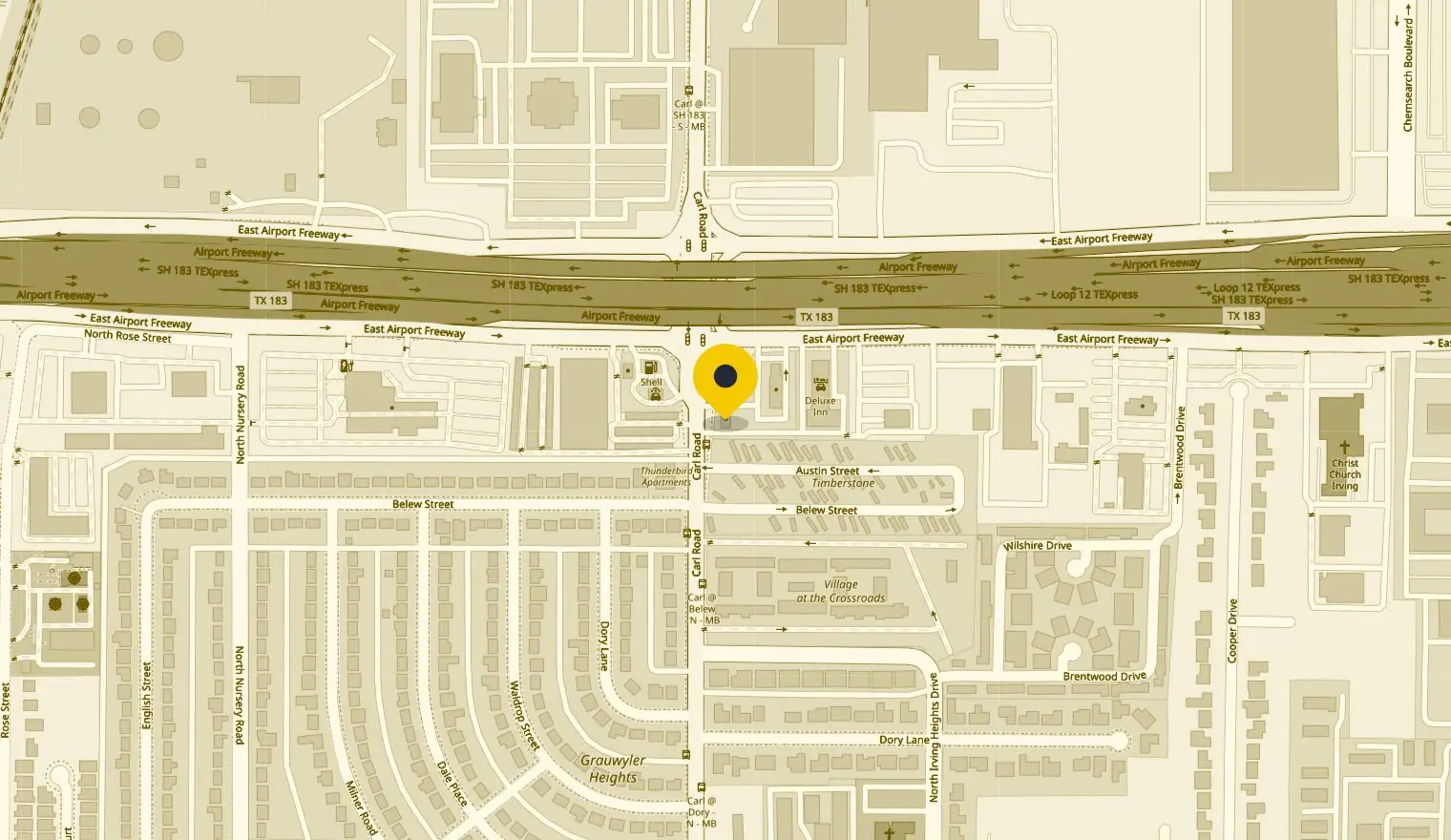
- We can inspect your brakes and send photos and video of the pads to your phone. Call (469) 276-7337 or visit 2100 Carl Rd, Irving, TX 75061.
Table of Contents
- How long do brake pads last?
- What makes brake pads wear out faster?
- How do you know when brake pads are wearing out?
- What does a grinding noise when braking mean?
- When should brake pads be replaced?
- How can you make brake pads last longer?
- Our perspective on brake pad lifespan
- Get your brakes inspected in Irving
- Brakes, inspections and Texas rules
- FAQ
- Sources
How long do brake pads last?
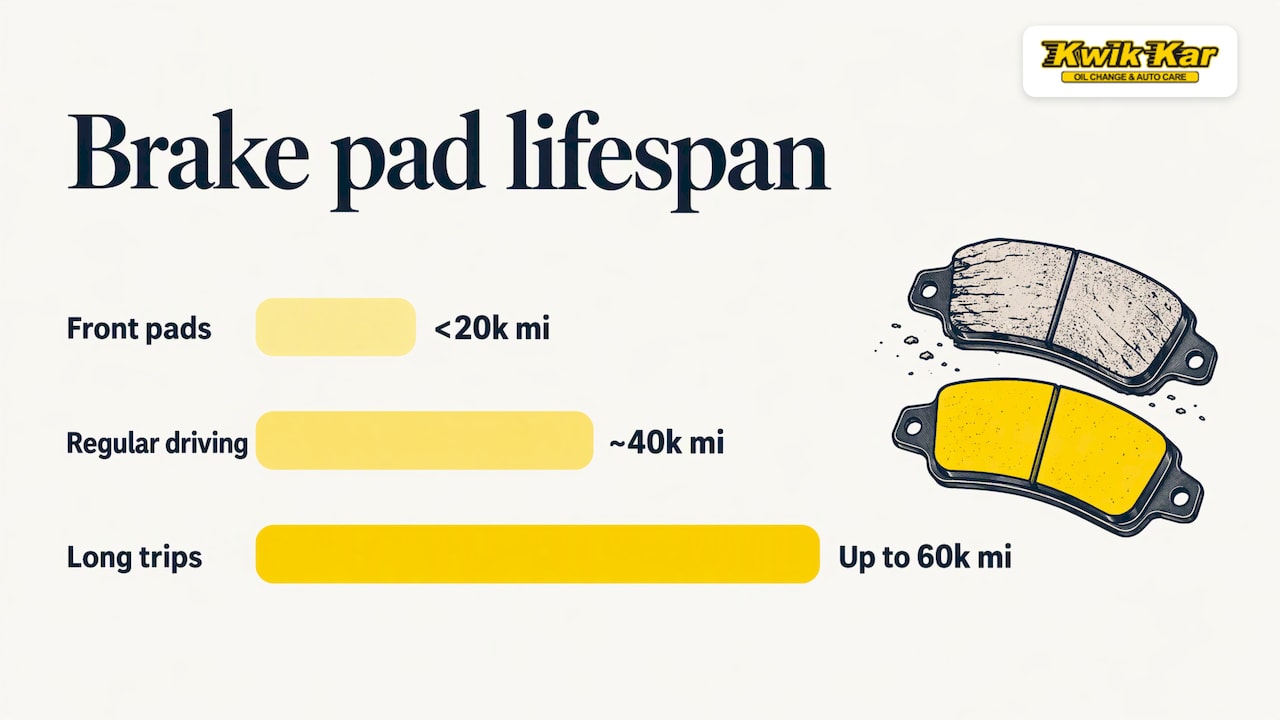
Automotive sources give different ranges, and that is the honest picture. One service-focused estimate says that under regular driving conditions, pads can last about 40,000 miles or three years, and up to 60,000 miles with long trips because the brakes are used less often. Another retailer guide notes that front pads can wear out under 20,000 miles or last beyond 60,000, with rear pads lasting much longer.
Chevrolet takes a different approach. It says brake wear varies with driving habits and conditions, so it gives no fixed mileage interval and instead recommends regular inspection.
A practical way to read all of this:
| Situation | What to expect |
|---|---|
| Mostly highway commuting, gentle braking | Toward the long end of the range |
| Mixed city and highway | Around the middle of the range |
| Heavy stop-and-go, towing, hard stops | Toward the short end, sometimes less |
| Front vs. rear pads | Front pads usually wear faster than rear |
| Electric and hybrid vehicles | Often much longer, thanks to regenerative braking |
Can brake pads last 100,000 miles?
Yes, in the right conditions. Motor1 reports drivers reaching 100,000 miles or more, and says electric-vehicle pads can last well beyond that because regenerative braking does part of the slowing. It is the exception for a gas-powered car in daily Dallas-Fort Worth traffic, though. Time also matters: pads that look thick can still age, so a long gap between inspections is not a plan.
What makes brake pads wear out faster?
Pads work by friction. Every stop converts the car’s motion into heat, and a little pad material wears away each time. Anything that asks the brakes to do more work speeds that up.
- Stop-and-go driving. Frequent stop-and-go traffic, aggressive braking, hills, heavy vehicles and towing all accelerate wear. Think of the I-35E and Highway 183 corridors at rush hour, or a commute through Las Colinas with a light at every block.
- Late, hard braking. Coming up to a red light at speed and stopping hard uses far more pad than coasting down early.
- Vehicle weight. A loaded SUV or a truck with a trailer carries more momentum into every stop.
- Pad material. J.D. Power says ceramic pads last the longest, followed by metal variants, while organic pads wear out soonest.
- Neglected hardware. A sticking caliper or a seized slide pin can wear one pad down in a fraction of the normal time. If you notice the car pulling to one side when you brake, see our guide on what to check when a caliper is sticking.
Highway cruising and smooth, early braking do the opposite. Looking farther ahead and letting off the gas sooner is the cheapest way to stretch a set of pads.
How do you know when brake pads are wearing out?
There are three main ways: your ears, your eyes and a measurement.
Sound: squealing, then grinding
Many pads have a small metal tab built in. When the friction material gets thin, the tab touches the rotor and makes a persistent high-pitched squeal or chirp. Chevrolet confirms that a metal wear indicator can cause that squeal, and that some vehicles instead use thickness sensors and show a brake-pad-life message on the dashboard. If that sound is new to you, our article on why brakes squeak and what to do covers the harmless causes too, such as morning moisture and dust.
Sight: thickness
The number that matters is the thickness of the friction material. A typical brake pad service limit is about 0.1 inch, roughly the thickness of a few stacked coins. Some pads can be seen through the wheel spokes, but many designs hide the inner pad, which often wears faster than the outer one.
Measurement: the habit that works
Wear indicators should not be your only warning. One brake manufacturer’s FAQ advises inspecting and measuring pad thickness periodically, often when tires are rotated. That fits well with a routine you may already follow: tire rotations every 5,000 to 7,500 miles are a natural time to pull the wheels and look at the pads.
Other signs that the pads or the rest of the braking system need attention:
- The pedal feels softer, sinks lower or needs more travel than before.
- The car takes longer to stop than it used to.
- The steering wheel or pedal pulsates when braking. That is more often a rotor issue, covered in our piece on warped rotor symptoms.
- A brake warning light or pad-life message appears on the dashboard.
What does a grinding noise when braking mean?
Grinding is a different sound from squealing, and it deserves a faster response. Chevrolet lists grinding noises among the signs that brake service may be necessary. In practice, the most common cause is pads worn down to the metal backing plate, which then scrapes against the rotor.
What is metal-on-metal braking?
Every pad is a steel backing plate with friction material bonded to it. When the friction material is gone, the steel plate presses directly against the steel rotor. The result is a harsh grinding or growling sound, sometimes a vibration through the pedal, and rapid damage to the rotor surface. Stopping power drops and stopping distance can grow.
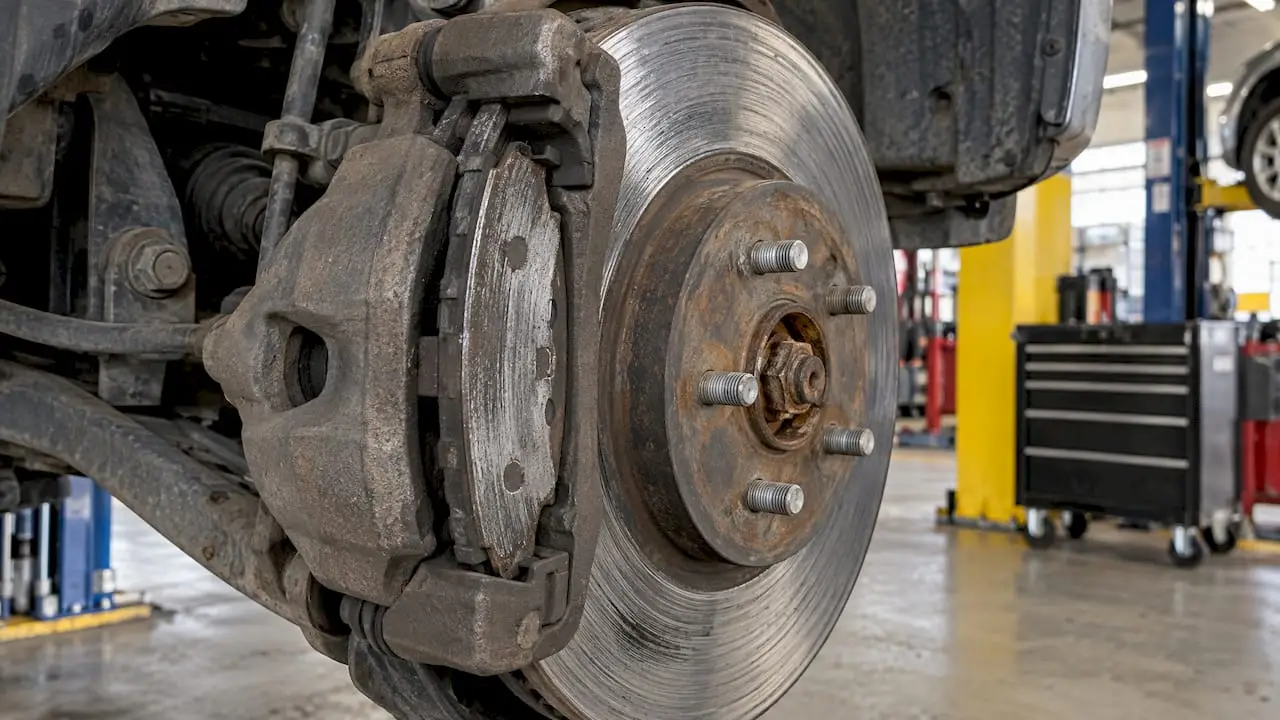
If you hear it, the safe move is to limit driving and get the brakes inspected right away. Brakes are the most safety-critical system on the car, and the longer metal-on-metal contact continues, the more likely a simple pad replacement becomes pads plus rotors, and sometimes calipers. Our guide to brake rotor replacement cost explains what to ask when that happens.
Brakes grinding but the pads look fine?
Not every grinding sound means worn pads. Common non-pad causes include:
- A small stone or debris caught between the pad and rotor, or in the dust shield.
- Rust on the rotor after the car sat for a few days, which usually fades after a few stops.
- A heavily grooved or lipped rotor, even with decent pad material left.
- A stuck caliper or loose hardware that lets a pad drag or rattle.
- A noise that comes from a wheel bearing and only seems like a brake sound.
Because several of these look the same from outside the wheel, it is worth having a technician pull the wheel and inspect all four corners instead of guessing. Brake safety is not a place for trial and error.
When should brake pads be replaced?
Replace them when they reach the manufacturer’s minimum thickness, or earlier if you see uneven wear, hear grinding or see a warning message. Waiting for the squeal to become a grind is the expensive path.
A few practical rules:
- Inspect on a schedule. Have the pads measured at least at every tire rotation, and any time the brakes feel or sound different. GM dealerships, for example, inspect brakes during every Multipoint Inspection instead of waiting for a mileage interval.
- Replace in axle pairs. Pads on the same axle wear together and should be changed together so the car brakes evenly.
- Look at the rotors and fluid at the same visit. New pads on a damaged rotor wear unevenly and noisily. Old fluid can also soften the pedal. See when a brake fluid flush makes sense.
- Treat the mileage ranges as a reminder to check, not as a replacement date.
Want the full process, from signs through cost? Our brake pad replacement guide walks through it.
How can you make brake pads last longer?
- Look ahead. Ease off the throttle early and let the car slow before touching the pedal.
- Keep following distance. More room means fewer hard stops.
- Remove extra weight. Roof racks and a trunk full of gear add momentum.
- Use lower gears on long descents if your vehicle allows it, instead of riding the brakes.
- Have brakes checked with tire rotations. Catching a stuck slide pin early can save a set of pads.
- Choose the right pad material for how you drive. Ceramic pads tend to last longer, as noted above, while your vehicle’s needs and your budget guide the final choice.
If you drive a fleet vehicle, brake checks belong in your regular maintenance schedule too, since commercial use means more stops per day. Our fleet maintenance program is built for that.
Our perspective on brake pad lifespan
Drivers often ask us for a mileage number, and we understand why. But the most useful number is the one on the pad itself. A set that has lasted 60,000 miles on the highway and a set that wore out at 25,000 miles in city traffic can both be perfectly normal.
That is why we lean on inspection instead of guesswork. Our ASE-certified technicians measure the pads, check the rotors and calipers, and document what they find with Digital Vehicle Inspections: photos, video and technician notes sent to your phone. You can see the thickness of the pad for yourself and decide with the facts in front of you.
Our recommendations are meant to be transparent. If the pads still have life, we say so. If they are near the limit, we show you why, and let you choose the timing. Our shop is RepairPal certified and we are recognized as CARFAX Top-Rated, and qualifying repairs carry a 24-month/24,000-mile warranty.
The best moment to replace pads is before a squeal becomes a grind. It is usually the smaller job.
Kwik Kar
Get your brakes inspected in Irving
If your pads are near the end of their life, or you are just not sure, we can look at them. Our brake repair service in Irving includes a pad, rotor and caliper inspection, and you receive photos and notes on your phone so you can see what we see.
We serve drivers across Irving, and many customers come from nearby areas such as Las Colinas, Grand Prairie, Euless, Coppell and Dallas. Check our brake replacement coupon before you book. Military members, first responders and ladies on Wednesdays can also ask about our service discounts. If you plan to finance a larger repair, third-party financing options may be available, subject to provider approval and terms.
Brakes, inspections and Texas rules
Since January 1, 2025, most non-commercial vehicles in Texas no longer need an annual safety inspection before registration, under House Bill 3297. That does not change how brakes wear. Texas DPS also notes that emissions tests remain required for vehicles registered in emissions counties, which includes Dallas County, and that qualifying commercial vehicles remain subject to applicable safety inspections. With no yearly check forcing the issue, a regular brake inspection is now entirely up to you.
FAQ
How often should I change my brake pads?
There is no single interval that fits every car. Many pads last 30,000 to 70,000 miles, but city driving, towing and heavy vehicles shorten that. Have the pad thickness measured at regular intervals, such as at tire rotations, and replace the pads when they approach the minimum thickness.
Do front or rear brake pads wear out first?
Front pads usually wear out first because they handle most of the stopping force. Rear pads can last much longer, sometimes twice as many miles. Both should be measured at each inspection, since a stuck caliper can wear a rear pad out early.
Is it safe to drive with grinding brakes?
It is not a good idea. Grinding often means the pad material is gone and metal is contacting the rotor, which reduces stopping power and damages the rotor quickly. Limit driving and have the brakes inspected right away. If the pedal feels soft or the car pulls hard to one side, do not keep driving.
Do electric and hybrid vehicles need brake pads replaced less often?
Often, yes. Regenerative braking shares the work of slowing the car, so pads can last well past 100,000 miles. The pads and hardware still age and can corrode, so they should still be inspected regularly.
Can I replace just one brake pad?
No. Pads should be replaced in pairs on the same axle so braking stays even. Rotors and hardware should be checked during the same visit.
Ready to schedule? Call Kwik Kar Irving at (469) 276-7337, visit kkirvingtx.com, or stop by 2100 Carl Rd, Irving, TX 75061.
Sources
- Expected Life of Brake Pads, Goodyear Brakes
- How Long Do Brake Pads Last?, AutoZone
- How Long Do Brake Pads Last?, Motor1
- How Much Does It Cost to Replace Brake Pads?, J.D. Power
- The Brake System, Chevrolet Vehicle Support
- When to Replace Your Car’s Brake Pads, Car and Driver
- FAQ, Goodyear Brakes
- Vehicle Safety Inspection Program Changes Now in Effect, Texas DPS