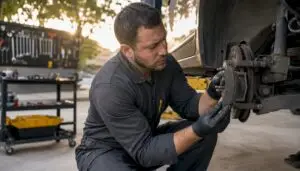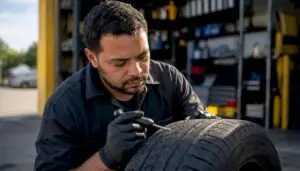
A slow tire leak is a gradual loss of air pressure over hours or days rather than a sudden flat, and it is worth taking seriously the moment you notice it. Inflate the tire to your vehicle’s manufacturer-recommended PSI right away, skip long highway trips until you know more, and run a quick check with a gauge or soapy water. If the leak keeps returning, get the wheel inspected at a shop before it turns into a roadside breakdown.
TL;DR:
- A 24-hour pressure check, accounting for temperature changes, helps distinguish between a true leak and weather-related pressure shifts.
- Common leak causes include tread punctures, damaged valve stems, bead-seat failures, and rim corrosion, each with distinct telltale patterns.
- Small punctures in the central tread can often be repaired with patches or plugs, but sidewall damage and deep rim corrosion require tire replacement.
- Using sealants can be a temporary emergency fix but may complicate future repairs and damage TPMS sensors if misused.
- Professional inspection with wheel removal, water submersion, and rim treatment is the only reliable way to accurately diagnose and fix slow tire leaks.
Table of Contents
- How to Tell If You Have a Slow Tire Leak
- Common Causes of Slow Leaks and How They Behave
- Step-by-Step DIY Detection You Can Do at Home
- Fixing a Slow Leak: DIY Options and Their Limits
- When to Stop DIYing and Call a Professional
- Preventing Slow Leaks Before They Become Emergencies
- What a Technician Actually Checks During a Slow Leak Repair
- The Part of Slow Leak Advice Most Guides Get Wrong
- Get Your Slow Leak Checked at Kwik Kar Irving
- Sources
- FAQ
How to Tell If You Have a Slow Tire Leak
The first clue is usually a dashboard warning, but don’t stop there. Your TPMS light typically triggers once pressure drops well below spec, so by the time it flashes, you may have already lost a meaningful amount of air. A manual check catches problems earlier.
Here’s a simple way to confirm what you’re dealing with:
- Check the pressure with a dial or digital gauge and compare it to the number on your door-jamb placard, not the number printed on the tire itself.
- Walk around the vehicle and look for anything embedded in the tread, plus any bulges or cuts along the sidewall.
- Listen closely near the valve stem and wheel rim for a faint hiss, especially in a quiet garage.
- Mix a little dish soap with water, spray it around the valve, bead, and tread, and watch for steady bubbling.
- Reinflate to spec and recheck the pressure after 24 hours indoors to rule out temperature swings.
That last step matters more than people think. Temperature alone can shift tire pressure by roughly 1 PSI for every 10°F change, which can look exactly like a leak when it’s just a cold morning. A net loss of more than 1 PSI after 24 hours, once you’ve accounted for temperature, points to an actual leak rather than weather.
Common Causes of Slow Leaks and How They Behave
Most slow leaks trace back to one of four sources, and each one has its own telltale pattern. A tread puncture, damaged valve stem or core, bead-seat failure, or rim corrosion accounts for the overwhelming majority of cases mechanics see.
- Tread punctures from nails or screws often leak at a steady, predictable rate and are usually repairable if the hole sits in the central tread.
- Valve stem or core problems show up as air escaping right at the wheel’s air fitting, and a worn core is frequently the entire problem.
- Bead-seat leaks and rim corrosion happen where the tire meets the wheel; pitting on the rim lets air seep out slowly, often only when the damaged spot rotates to the bottom.
- Sidewall or shoulder damage cannot be safely patched under any circumstance and calls for a new tire.
- Mounting damage can nick the bead during installation, and low-profile tires are especially prone to this because they leave less room for error.
Step-by-Step DIY Detection You Can Do at Home
Before you touch anything, park on level ground, set the parking brake, and block the wheels if you plan to jack the car up. Working on an unstable vehicle is the one shortcut you should never take.
- Run your bare hand slowly across the tread and sidewall, feeling for anything sharp or protruding.
- Look closely at the valve stem for cracking, and check the rim edge where it meets the tire bead.
- Mix a squirt of dish soap into a spray bottle of water and coat the valve, bead line, and any suspicious tread area. A steady stream of small bubbles marks the leak.
- If the wheel is already off the vehicle, submerge it in a tub or trough of water and watch for a consistent trail of bubbles, marking the spot with a grease pencil once you find it.
- Squeeze the valve core gently with a valve tool to check for a weak seal, and swap it for a new one if it’s worn. A valve core tool costs under $5 and takes about two minutes to install, making it the cheapest fix worth trying first.
Pro Tip: Test one area at a time and dry the tire between attempts. Soap residue from a previous spray can create false bubbles and send you chasing a leak that isn’t there.
Fixing a Slow Leak: DIY Options and Their Limits
Not every slow tire leak needs a shop visit, but knowing which ones do will save you money and keep you safe. A plug can seal a small central tread puncture temporarily, while a proper patch applied from inside the tire tends to last longer and is what most technicians recommend for anything beyond a pinhole.
- Plugs work as a quick fix, but a patch installed from the inner liner is generally the more permanent repair.
- Sidewall and shoulder punctures are not repairable by plug, patch, or any other method; the tire needs replacement.
- Large holes, tears, or multiple punctures close together also mean replacement rather than repair.
- Aerosol or liquid tire sealants can get you home in an emergency, but they coat TPMS sensors and often require a shop to clean the residue before a real repair can happen.
- A worn valve core is a simple swap, but a cracked or brittle valve stem needs full replacement.
- Rim corrosion and bead-seat leaks respond to wire-brushing and a bead sealer applied by a shop, which usually resolves the issue without replacing the wheel unless pitting runs deep.
Professional repair is generally limited to punctures in the central tread, and that boundary exists for a good reason: sidewall flexing puts stress on a repair that the tread simply doesn’t.
When to Stop DIYing and Call a Professional
Some symptoms mean it’s time to hand the tire to a technician instead of reaching for more soap and water. Trust these signals over your own patience.
- A visible bulge, tear, or soft spot on the sidewall means the tire’s internal structure is compromised and needs replacement.
- Rapid pressure loss, rather than a slow drop over days, suggests a larger puncture or a failing valve that a plug won’t fix.
- Heavy rim pitting or flaking corrosion often needs a shop’s wire-brushing and bead sealer to seat properly again.
- Any change in steering feel, pulling, or braking after you reinflate the tire is a sign to get it inspected before driving further.
- If you can’t pinpoint the leak after a reasonable soapy-water check, a shop can remove the wheel and inspect the bead and inner liner directly.
If you must drive before getting it checked, inflate to the correct PSI first and keep the trip short and slow. A nail lodged in the tread is often fine for a short drive to a shop, but don’t push your luck on the highway.
Preventing Slow Leaks Before They Become Emergencies
A little routine maintenance goes a long way toward catching a slow leak before it strands you somewhere inconvenient.
- Check pressure monthly with a quality gauge, and keep a small portable inflator in your trunk for peace of mind.
- Ask your technician to inspect valve stems and caps during routine oil changes or tire rotations.
- If you notice rim corrosion starting to show, especially after winter road salt or coastal driving, get it cleaned and resealed before it worsens. Protective coatings on alloy wheels, like ceramic coatings, can also slow corrosion in the first place.
- Rotate tires on schedule and replace any that are aging out, since older rubber loses elasticity and becomes more prone to slow leaks.
- Treat your TPMS light as a backup warning, not your primary check. Sensors often trigger only after a leak has been active for a while.
Pro Tip: Write your tire pressure readings on a sticky note in the glove box each month. A quick log makes it obvious when one tire starts dropping faster than the others.
What a Technician Actually Checks During a Slow Leak Repair
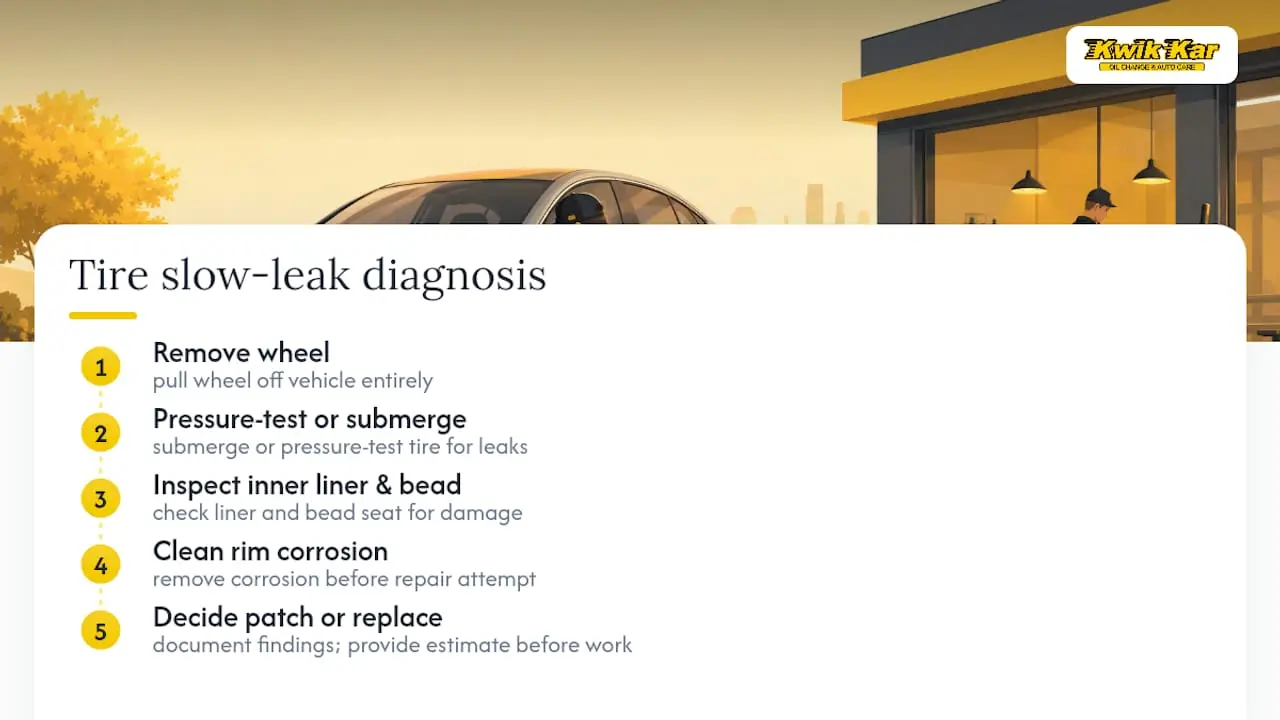
A proper diagnosis starts with pulling the wheel off the vehicle entirely, not just spraying soap on the outside. Technicians submerge or pressure-test the tire, inspect the inner liner and bead seat, and clean any rim corrosion before deciding whether a patch will hold or the tire needs replacing.
Some shops use Digital Vehicle Inspections to document the process, sending photos and videos to customers so they can see exactly what was found. When a shop recommends replacement over a patch, it’s usually because the damage sits somewhere a repair can’t reliably hold, not because it’s the easier sale. You get the findings and an estimate before any work begins.
The Part of Slow Leak Advice Most Guides Get Wrong
Most articles on slow tire leaks treat every fix like a coin flip between “patch it yourself” and “replace the whole tire.” That’s not how it actually works. The research is clear that location on the tire, not the size of the hole, is what determines whether a repair is even on the table. A pinhole in the sidewall is a replacement no matter how small it looks, while a decent-sized puncture dead center in the tread is often perfectly repairable.
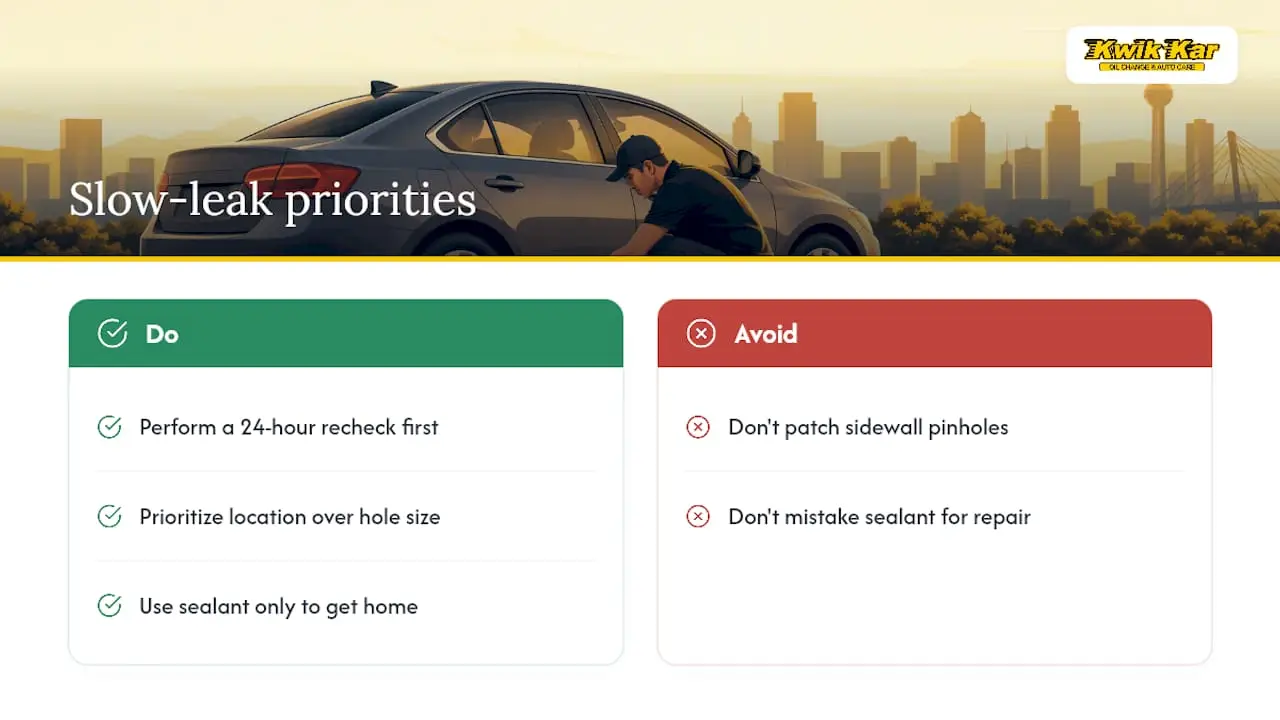
The bigger blind spot is sealants. They get pitched as a fix, but they’re really a stopgap that can leave your TPMS sensors coated and cause more work at the shop later. If you use one to get home safely, that’s a reasonable call. Just don’t mistake it for a repair.
What readers should prioritize first is the 24-hour recheck. It’s the cheapest, fastest way to know whether you’re chasing a real leak or just reacting to a cold morning, and almost nobody does it before assuming the worst.
— Kwik Kar
Get Your Slow Leak Checked at Kwik Kar Irving
Chasing a slow leak with soap and a flashlight only gets you so far. A professional auto care shop can provide a wheel-off inspection, valve stem replacement, bead resealing, and a patch-or-replace decision backed by experienced technicians who send photos and videos to customers for transparency before any work starts.

That transparency means you’re never guessing whether a repair was actually necessary. Whether the leak turns out to be a worn valve core or rim corrosion that needs cleaning, you’ll see it yourself in the Digital Vehicle Inspection before you approve anything. Many auto repair shops offer timely service availability, which can help prevent a slow leak from disrupting your day. Head to Kwik Kar Irving’s service page to schedule an inspection and get a straight answer on what your tire actually needs.
Sources
FAQ
Can You Drive With a Slow Leak in Your Tire?
You can drive short distances if you inflate the tire to the correct PSI first, but avoid highway speeds or long trips until the cause is identified. A leak that seems minor can worsen quickly if the underlying puncture or valve problem goes unaddressed, so get it diagnosed as soon as possible.
How Do You Fix a Slow Leak in a Tire?
The fix depends on the cause: a worn valve core often just needs replacing, while a small central tread puncture can typically be plugged or patched. Sidewall damage or heavy rim corrosion usually means replacement or a shop-level bead reseal rather than a simple DIY patch.
What Causes a Tire to Leak Slowly?
The most common causes are a tread puncture, a damaged valve stem or core, a bead-seat leak, or rim corrosion. Sidewall or shoulder damage can also cause slow air loss, but that type of damage cannot be repaired and requires a new tire.
How Much Does It Cost to Fix a Slow Leak in a Tire?
Costs vary by cause, since a valve core swap is far cheaper than a bead reseal or full tire replacement. Kwik Kar Oil Change & Auto Care doesn’t publish set repair prices online, but current pricing and estimates are available once a technician inspects the wheel and tire in person.
Is a Slow Tire Leak an Emergency?
It’s not usually an emergency if you catch it early and keep the tire properly inflated, but ignoring it can lead to a sudden flat or unsafe handling. Treat any rapid pressure drop, sidewall bulge, or steering change as a reason to get to a shop right away.