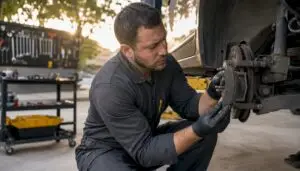
Transfer case service is routine preventive maintenance, but it becomes urgent the moment you notice noise, leaking fluid, or trouble staying in 4WD or AWD. If any of those symptoms show up, skip the wait-and-see approach and get the vehicle inspected right away. Otherwise, follow your manufacturer’s recommended interval as your baseline to help avoid a much bigger repair bill down the road.
TL;DR:
- Transfer case symptoms such as unusual noises, shifting issues, or fluid leaks require immediate inspection to prevent major repairs or internal damage.
- A thorough transfer case service involves draining old fluid, inspecting the magnetic plug for metal particles, and refilling with the manufacturer’s specified fluid, recorded for maintenance history.
- Metal shavings on the drain plug, burnt-smelling fluid, or significant leakage indicate internal wear and may require repairs beyond simple fluid exchange.
- Using the correct, VIN-specific transfer case fluid is critical, as incompatible fluids can cause clutch chatter, overheating, and component failure.
- Regular maintenance intervals typically range from 30,000 to 60,000 miles, with severe duty or leaks demanding more frequent inspections to preserve drivetrain health.
Table of Contents
- What Does a Transfer Case Service Include?
- What Symptoms Mean You Should Get the Transfer Case Checked?
- How Do Shops Decide the Scope of a Transfer Case Repair?
- Why Does the Right Transfer Case Fluid Matter?
- How Often Should You Service Your Transfer Case?
- What Does Transfer Case Repair Cost?
- Which Transfer Case Checks Are Safe to Do Yourself?
- How Do You Actually Perform a Transfer Case Service?
- What Tools Do You Need for a Transfer Case Service?
- What Safety Precautions Matter During a Transfer Case Service?
- How Do You Check Transfer Case Fluid Level Properly?
- Why Does Regular Transfer Case Maintenance Matter?
- How Do You Troubleshoot Transfer Case Issues After Service?
- Why a Documented Shop Inspection Matters
- Schedule Transfer Case Service in Irving
- Sources
- FAQ
What Does a Transfer Case Service Include?
A proper transfer case service follows a specific sequence, and knowing the steps helps you tell a thorough job from a quick fluid top-off. The technician drains the old fluid first, checking its color, smell, and texture for early warning signs. A thorough transfer case service includes inspecting for metal shavings and confirming seals and plugs are intact before anything gets refilled.
Here’s the typical rundown:
- Drain the old fluid and inspect it for color, odor, and metal flakes
- Clean and examine the magnetic drain plug, then check surrounding seals and plugs for wear
- Refill with the manufacturer-specified fluid, recording the exact spec used for your VIN
- Document findings with photos or video and flag any follow-up repairs
At Kwik Kar Oil Change & Auto Care, this documentation is done through a Digital Vehicle Inspection, so you see exactly what the technician saw instead of taking their word for it.
What Symptoms Mean You Should Get the Transfer Case Checked?
Your transfer case usually gives you warning before it fails outright. Catching these signs early is the difference between a fluid service and a rebuild.
- Whining, growling, or grinding noises from the center of the vehicle that change pitch with your speed
- Trouble engaging or holding 4WD/AWD, or rough, clunky shifts between drive modes
- Reddish or brown fluid puddles under the center of the vehicle, often paired with a burning smell
- Vibration or shuddering at speed, or a dashboard warning light tied to an AWD fault code
Reddish or brown puddles, difficulty shifting, and unusual noises are among the most common signs of a transfer case leak. Worth knowing: leaks often only show up while you’re driving, since the spinning output shafts fling fluid outward. A dry driveway doesn’t always mean a dry seal.
How Do Shops Decide the Scope of a Transfer Case Repair?
Not every symptom means a rebuild. A technician’s job is narrowing down whether you’re looking at a $150 fluid service or a $2,000 repair, and that decision comes from a specific diagnostic sequence.
- Scan for AWD/4WD fault codes to separate an electrical sensor issue from a mechanical one
- Remove the fill and drain plugs, then check fluid color, smell, and whatever clings to the magnetic plug
- Weigh the evidence: heavy metal shavings or burnt-smelling fluid point toward internal wear, not a simple fluid change
- Match the finding to a repair path, whether that’s a seal replacement, an actuator repair, a rebuild, or a full unit swap
The amount and type of metal on that magnetic plug tells a technician a lot. A light dusting of fine metal is normal wear; chunky shavings usually mean something inside is grinding against something it shouldn’t be. That single inspection point often decides whether you walk out with a fluid receipt or a repair estimate.
Pro Tip: Ask your shop to photograph the drain plug and old fluid before they clean it. It’s the fastest way to confirm the diagnosis matches what actually came out of your transfer case.
A small leak can drain fluid fast enough to cause overheating and catastrophic internal wear within a few hundred miles, which is why shops treat leaking seals as a same-week fix, not a someday fix.
Why Does the Right Transfer Case Fluid Matter?
Transfer case fluid isn’t one-size-fits-all, and this is where a lot of DIY jobs go wrong. Some transfer cases use automatic transmission fluid, others call for a specific gear oil, and some require a proprietary blend the manufacturer sells under its own part number.
- ATF, standard gear oil, and proprietary transfer case fluids are not interchangeable across makes and models
- The wrong fluid can cause clutch chatter, chain slippage, or overheating inside the unit
- Always confirm the exact OE spec tied to your VIN, not just the fluid type listed for your model year in general
- Ask the shop to note the fluid brand and spec on your service record before you leave
Some newer transfer cases share fluid with the transmission system, which makes VIN-specific verification even more important. A generic gear oil that’s fine in one truck can quietly damage another. If a shop can’t tell you the exact spec they’re using, that’s a red flag worth asking about before they refill anything.
How Often Should You Service Your Transfer Case?
There’s no single number that applies to every vehicle, but most manufacturer windows land between 30,000 and 60,000 miles for normal driving. Some automakers specify 50,000 miles under typical use and cut that closer to 25,000 for severe service, so your owner’s manual is the real source of truth, not a shop’s default sticker.
Severe duty changes the math. Regular towing, frequent off-roading, or consistently heavy loads often cut the recommended interval roughly in half. Time matters too: even low-mileage vehicles benefit from an inspection every 2 to 3 years, since condensation and moisture can degrade fluid quality regardless of how far you’ve driven. And if symptoms show up between intervals, mileage stops being the deciding factor. Get it checked.
What Does Transfer Case Repair Cost?
Cost depends almost entirely on how early the problem gets caught. A fluid exchange and minor repairs typically run on the lower end, while an actuator or shift motor replacement lands in the middle, and a rebuild or full unit replacement sits at the top of the range.
- Fluid service and minor seal work: the least expensive fix, often comparable to other routine drivetrain services
- Actuator, shift motor, or electrical repairs: a mid-range cost tied to parts and diagnostic labor
- Rebuild or full replacement: the highest cost tier, commonly reaching into the low thousands depending on the vehicle and labor rates
Ignoring early symptoms can push repair costs toward $2,500 or more once the unit fails completely. The pattern is consistent across shops: a small leak caught early is a cheap fix, and the same leak ignored for six months is a very different bill.
Which Transfer Case Checks Are Safe to Do Yourself?
You don’t need a lift to catch most early warning signs. A few minutes of looking is often enough to know whether you’re dealing with nothing or something.
- Check under the center of the vehicle for puddles, and inspect fluid color through the fill plug if it’s accessible
- Run an OBD2 scanner for AWD/4WD fault codes before assuming the problem is mechanical
- Top off fluid or perform a drain and refill yourself only if you’re comfortable and the service manual supports it
- Stop driving and call a shop immediately if you hear severe grinding, smell burning, or notice the vehicle losing drivability
A quick visual check after a drive is a genuinely effective habit, since it catches small leaks while they’re still small. If a fault code appears, our engine diagnostics service can confirm whether it’s electrical or something deeper before you spend money guessing.
How Do You Actually Perform a Transfer Case Service?
If you’re comfortable working under your vehicle and your service manual supports a DIY fluid change, the process follows a consistent order. Skipping steps is where most DIY jobs go sideways.
Start by getting the vehicle level and secure on stands, then locate the fill plug and drain plug on the transfer case housing. Remove the fill plug first. This matters more than it sounds, because if the fill plug is stuck or damaged, you don’t want to be stuck with an empty case and no way to refill it. Next, remove the drain plug and let the old fluid empty completely into a catch pan. While it drains, take a close look at the plug itself, especially if it’s magnetic, since metal buildup here tells you a lot about internal wear.
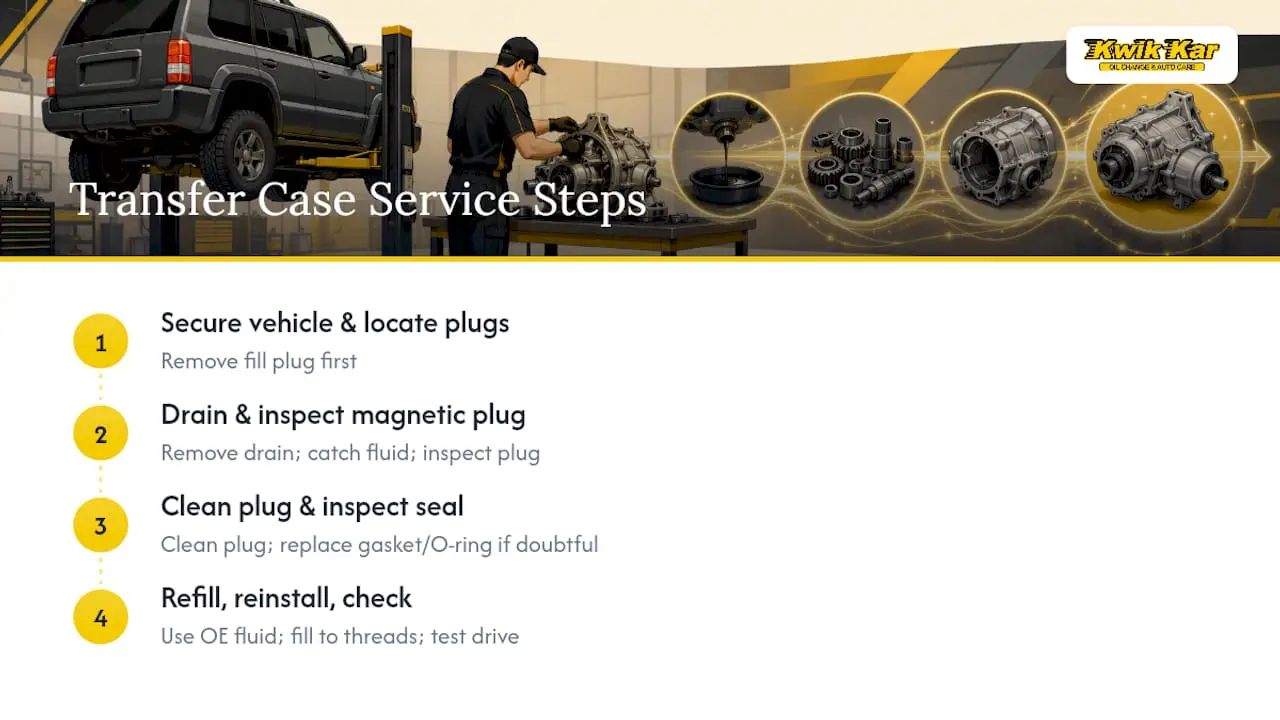
Once drained, clean the magnetic plug and inspect the gasket or O-ring for cracking or flattening. Replace it if there’s any doubt. Reinstall the drain plug to the manufacturer’s torque spec, then refill through the fill hole using the exact OE-specified fluid for your VIN, not a generic equivalent. Fill until fluid reaches the bottom of the fill hole threads, then reinstall that plug.
Finish by checking for leaks after a short test drive, then rechecking the fluid level once the vehicle has sat level for a few minutes. If you’re not fully confident on torque specs or fluid identification, this is a reasonable point to hand it to a shop instead.
What Tools Do You Need for a Transfer Case Service?
The tool list for a transfer case service is shorter than most drivetrain jobs, but precision matters more than quantity here.
You’ll need a socket set or specific drain/fill plug wrenches sized to your vehicle, since transfer case plugs often use hex or square-drive fittings that a standard wrench won’t grip properly. A torque wrench is non-negotiable for reinstalling plugs correctly. Overtighten a drain plug and you can strip the housing threads, turning a $150 fluid job into an expensive case repair.
You’ll also need a fluid pump or transfer funnel, since most transfer cases fill from the side rather than the top, which makes gravity-pouring impossible. A catch pan rated for the fluid volume, nitrile gloves, and shop rags round out the basics. If you’re troubleshooting rather than just servicing, an OBD2 scanner capable of reading AWD/4WD-specific codes is worth owning, since generic code readers sometimes miss transfer case fault codes entirely.
Finally, keep the exact OE fluid on hand before you start, along with a replacement gasket or O-ring for the drain plug. Starting the job without the correct fluid already in hand is how a same-day service turns into a multi-day project with your vehicle sitting on stands.
What Safety Precautions Matter During a Transfer Case Service?
Working underneath a vehicle carries real risk, and transfer case service specifically comes with a few hazards people underestimate.
Always use proper jack stands rated for your vehicle’s weight, never a jack alone, and never work under a vehicle supported only by a floor jack. Let the transfer case cool completely before draining fluid, since fluid that’s been circulating can reach temperatures hot enough to cause burns on contact.
Wear gloves and eye protection when removing the drain plug, since fluid can spray unexpectedly if there’s residual pressure in the housing. Dispose of the old fluid properly through a recycling center rather than pouring it out, since transfer case fluid is a regulated waste product in most areas. One caution shops repeat often: avoid pressure-washing the underbody near the transfer case, since high-pressure water can push past breather tubes and contaminate the fluid inside, undoing the service you just paid for.
If you smell burning, see smoke, or notice the transfer case housing is hot to the touch before you’ve even started working, stop and let it cool fully. Never attempt a service on a unit that’s just come off a highway drive.
How Do You Check Transfer Case Fluid Level Properly?
Checking the level correctly starts with the vehicle sitting level, engine off, and fully cooled. Uneven ground gives you a false reading, since fluid pools toward the lower side of the housing.
Locate the fill plug, which sits higher on the housing than the drain plug. Remove it carefully, since some designs are under slight pressure. The fluid should sit right at the bottom edge of the fill hole threads. If it’s below that line, add fluid through the same opening using a pump or funnel until it just begins to trickle out, which confirms the case is full without overfilling.
Overfilling causes its own problems, including seal pressure and leaks, so resist the urge to top it off “for good measure.” If the fluid you see is dark, gritty, or smells burnt rather than the typical clean gear-oil odor, that’s a sign the fluid needs a full change, not just a top-off. Reinstall the fill plug to spec and wipe away any spillage before it attracts road grime to the housing exterior.
Why Does Regular Transfer Case Maintenance Matter?
Many drivers treat transfer case service as optional because it doesn’t get the same attention as an oil change. That’s a mistake. Scheduled fluid replacement is genuinely one of the most cost-effective ways to protect your entire 4WD or AWD drivetrain, since the transfer case feeds power to components that are far more expensive to repair than the case itself.
Fresh fluid keeps internal gears and chains lubricated and cool, which prevents the gradual wear that eventually shows up as noise or slipping. Old fluid breaks down over time, losing its ability to protect metal surfaces from friction, and that breakdown accelerates once moisture or metal particles start contaminating it.
The effects of skipping maintenance compound. A transfer case that runs hot for years wears its internal components faster, which increases the odds of a chain jump or gear failure that damages the housing itself. What would have been a routine fluid service becomes a repair that touches your differential and transmission systems too, since drivetrain components share load in ways that aren’t always obvious until one part fails and stresses the others. Regular service is the cheapest insurance this system gets.
How Do You Troubleshoot Transfer Case Issues After Service?
If a symptom persists after a transfer case service, don’t assume the work was wasted. A few specific checks usually explain what’s happening.
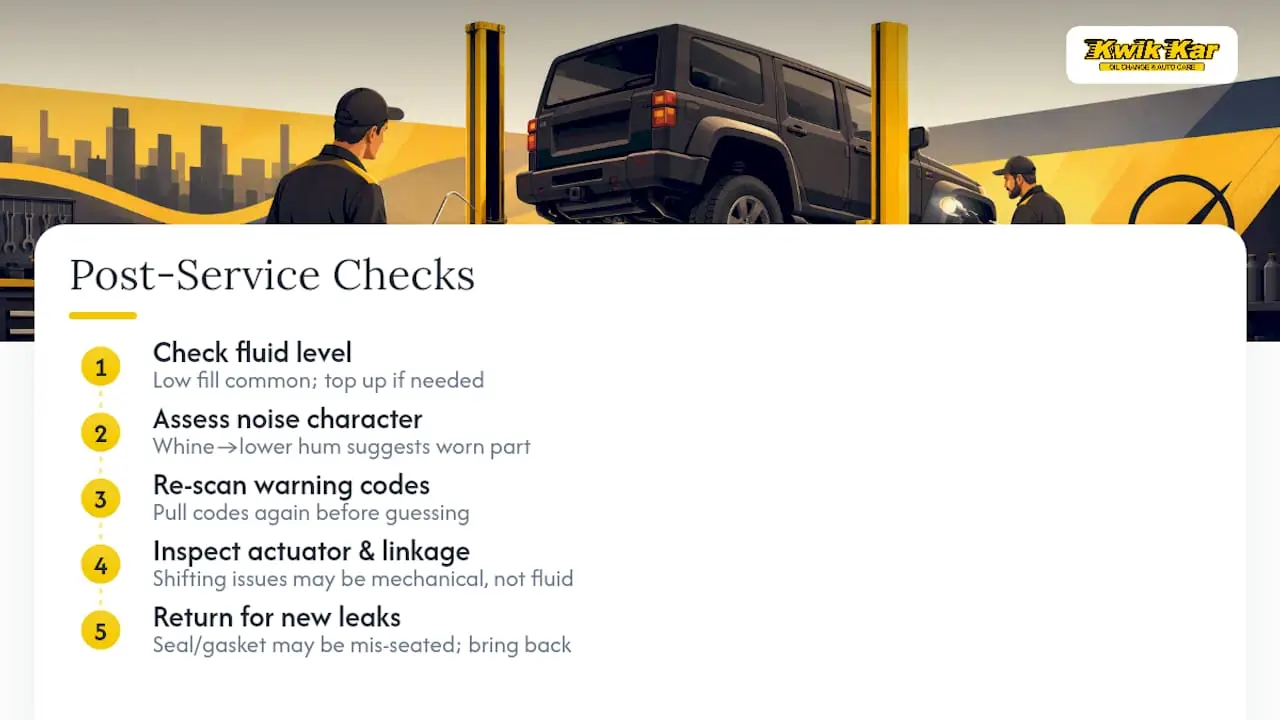
First, confirm the fluid level itself. A slightly low fill after service is one of the most common causes of lingering noise, and it’s an easy fix if the shop under filled during the refill. Next, listen for whether the noise has changed character. A whine that’s become a lower-pitched hum often means the fluid is doing its job but a worn component still needs attention, which the service wasn’t designed to fix on its own.
If a warning light returns within days, get the code pulled again rather than guessing. Sometimes a fault code was stored before the service and simply needs to clear after a drive cycle. Other times it indicates an actuator or sensor issue that fluid service alone can’t resolve.
If shifting problems between 2WD and 4WD persist, ask whether the shop checked the actuator motor and linkage, not just the fluid. A fluid change addresses lubrication, not mechanical binding. And if you notice a new leak shortly after service, that usually points to a seal or gasket that wasn’t seated correctly during reassembly, which is worth bringing back to the same shop immediately rather than waiting for it to worsen.
Why a Documented Shop Inspection Matters
A verbal “it’s fine” from a technician isn’t the same as seeing the actual condition of your transfer case fluid and drain plug for yourself. Digital Vehicle Inspections with photos and video can provide proof, turning a repair recommendation into something you can actually evaluate instead of just trust.
Technicians trained to catch early wear signs can identify issues like the specific texture of metal debris on a magnetic plug or a subtle discoloration in fluid that hasn’t yet turned obviously dark. That kind of documentation does more than build confidence in the moment. It creates a service record that matters for warranty claims, for resale value, and for avoiding a repeat diagnosis fee the next time something feels off. A photo of your fluid condition today is also the baseline your next technician compares against.
— Kwik Kar
Schedule Transfer Case Service in Irving
If you’ve read this far because something sounds or feels off, Kwik Kar Oil Change & Auto Care gives you a straightforward path forward instead of another round of guessing: a local shop that documents exactly what your transfer case needs and shows you the proof.

We handle transfer case fluid exchanges, diagnostic scans for AWD and 4WD fault codes, and full Certified restoration and driveline expertise Digital Vehicle Inspection documentation on every visit. Book a visit and mention your specific symptoms, whether that’s noise, a shifting hiccup, or a puddle you noticed in the driveway, and we’ll inspect the magnetic drain plug, check fluid condition, and refill to your VIN’s OE spec with photos and video sent straight to your phone. It’s the same transparency-first approach we use across oil change and fluid services, so you’re never left wondering what actually happened under your vehicle. Fleet managers running multiple 4WD trucks can fold transfer case checks into a broader fleet maintenance program to catch drivetrain wear before it turns into downtime. Ready to get it looked at? Schedule your visit through our auto repair services page and let us know what you’re noticing.
Sources
Claims in this guide draw on the following sources: AutoZone’s guide to transfer case leak symptoms for warning signs and fluid risks, Jalopnik’s breakdown of service intervals for mileage guidance, Oards’ repair cost overview for pricing ranges, and EngineerSkill.blog’s service explainer for standard shop procedure.
- Symptoms of a transfer case leak — AutoZone
- How often does 4WD/AWD transfer case fluid need to be replaced? — Jalopnik
- 8 Symptoms of a Bad Transfer Case (And Repair Cost in 2026) — Oards
- Engineerskill
FAQ
How Much Does It Cost to Service a Transfer Case?
A basic fluid exchange or minor seal repair sits at the lower end of the cost range, while a rebuild or full replacement can run into the low thousands depending on your vehicle and labor rates. The gap between those two outcomes is usually how early the problem got caught.
Is Transfer Case Service Really Necessary?
Yes. Scheduled fluid replacement is one of the most cost-effective ways to protect your entire 4WD or AWD drivetrain, since fresh fluid prevents the gradual wear that eventually leads to expensive repairs.
What Is Included in a Transfer Case Service?
A standard service includes draining the old fluid, inspecting the magnetic drain plug for metal debris, checking seals and plugs, and refilling with the manufacturer-specified fluid for your VIN. Kwik Kar Oil Change & Auto Care documents each step with photos and video through a Digital Vehicle Inspection.
Can You Drive With a Bad Transfer Case?
Driving with a leaking or failing transfer case is risky, since low fluid can cause overheating and catastrophic internal wear within a few hundred miles. If you notice grinding noises, fluid puddles, or trouble engaging 4WD, get it inspected before continuing to drive.
How Often Should You Change Transfer Case Fluid?
Most manufacturers recommend service between 30,000 and 60,000 miles under normal driving, with shorter intervals for towing or frequent off-road use. Check your owner’s manual for the exact figure tied to your vehicle.