Most drivers pay a wide range per ball joint at an independent shop, with the total cost often falling between $400 and $750 for a two-joint job on a sedan including alignment; SUVs and trucks typically run $650–$1,200 or more. Dealer pricing, luxury vehicles, 4WD trucks, and press-fit or integrated designs can push the cost significantly higher. The part itself is rarely the expensive piece. Labor is what drives the invoice, and that number swings hard depending on how your vehicle is built.
Key things to know before you call a shop:
- Parts alone run $25–$200 for a standard ball joint; integrated control-arm assemblies cost $80–$600.
- Labor is the dominant cost, typically $150–$480 per joint depending on access complexity.
- Alignment adds $80–$180 and is effectively required after any suspension geometry work.
- Replacing both joints on the same axle in one visit saves a second labor charge later.
- If a ball joint is already failing, tow the vehicle or drive it only at reduced speed to the nearest shop.
Get at least two written estimates before authorizing work — one from an independent ASE-certified shop and one from a dealer. The spread can be $300 or more for the same job, and a written estimate forces the shop to itemize parts, labor, and alignment separately.
Table of Contents
- How much does ball joint replacement cost? A full line-item breakdown
- What changes the price for your specific vehicle
- How does a shop confirm it’s actually the ball joint?
- Can you drive with a bad ball joint?
- Should you replace ball joints yourself?
- What to expect at the shop: timeline, invoice, and warranty
- How to avoid overpaying and spot red flags
- Questions to ask before you approve any ball joint work
- Kwik Kar Irving handles ball joint work with full transparency
- Key Takeaways
- Useful sources
- FAQ
How much does ball joint replacement cost? A full line-item breakdown
The average cost for a suspension ball joint replacement sits between $308 and $463 at most shops, with labor accounting for $212–$311 of that and parts running $96–$152. Those figures reflect a single joint on a common passenger car. The real-world range is wider once you factor in vehicle class, joint design, and whether you need both sides done.
Here is how a typical invoice breaks down:
| Line Item | Low | Typical | High | Notes |
|---|---|---|---|---|
| Ball joint (parts, per joint) | $25 | — | — | Aftermarket to OEM; integrated control arms cost more |
| Labor (per joint) | $150 | — | $480 | 1–2 hrs on simple bolt-in; 3–4 hrs on press-fit/4WD |
| Alignment | $80 | $100 | $180 | Required after disturbing suspension geometry |
| Shop supplies/disposal | $10 | $30 | $60 | Grease, boots, fluid disposal |
| Taxes | — | — | $60 | State and local |
| Total (two joints, one axle) | $400 | $750 | $1,200 | Sedan/compact; higher for trucks and luxury vehicles |
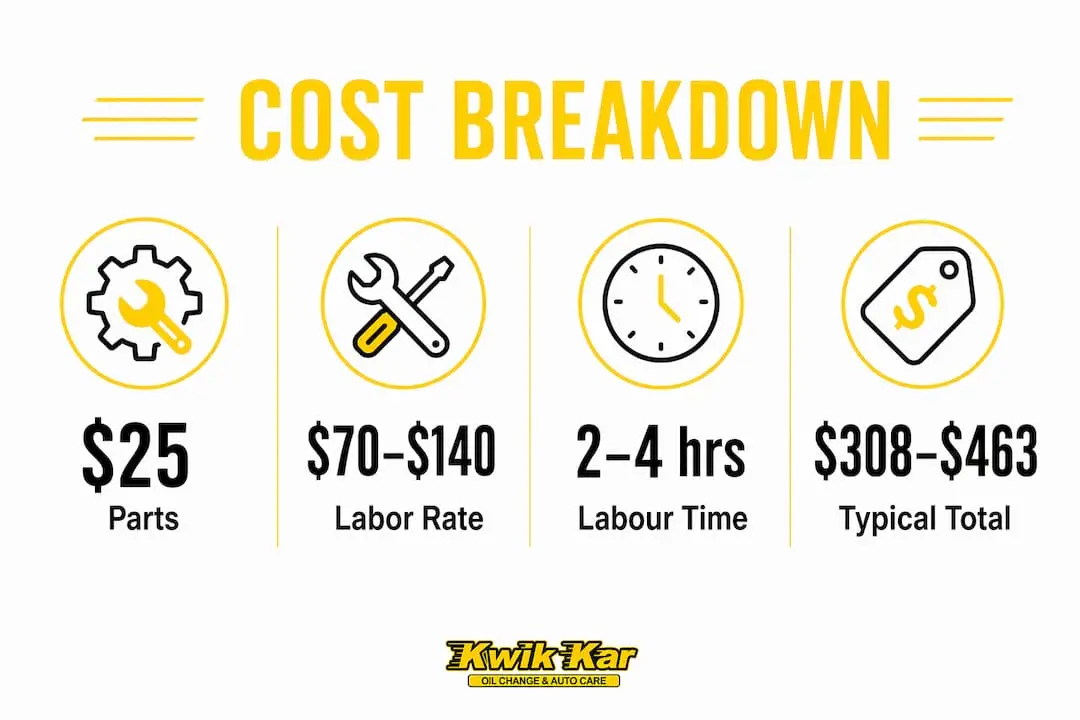
Labor rates at most U.S. shops run $70–$140 per hour. A standard two-joint job takes 2–4 hours of wrench time, plus 30–60 minutes for alignment. On a Ford F-150 or a BMW with multi-link suspension, teardown time alone can double those hours. Watch for shop-supply line items that are vague or unusually high — $10–$30 is normal; $100+ without explanation is worth questioning.
What changes the price for your specific vehicle
Joint type is the single biggest variable. A bolt-in ball joint on a Honda Civic or Toyota Camry is the most straightforward job: the joint unbolts from the control arm, a new one goes in, and the tech is done in under two hours. A press-fit joint requires a hydraulic press to remove and seat the new joint, adding time and sometimes a specialty tool charge. An integrated control-arm assembly means the ball joint cannot be replaced separately — the whole arm comes out, which raises parts costs to $80–$600 and adds significant labor.
Other factors that move the quote:
- Vehicle type: Compact sedans sit at the low end. Full-size SUVs, 4WD pickups, and heavy-duty trucks sit at the high end because of added disassembly, heavier components, and more complex geometry.
- Luxury and European multi-link designs: BMW, Mercedes-Benz, and similar platforms often require specialized tools and longer labor times, pushing totals well above $1,000 per axle.
- Part quality: Aftermarket joints cost less upfront but may wear faster. OEM or premium aftermarket parts (such as Moog) cost more but tend to hold up longer and fit more precisely.
- Regional labor rates: A shop in rural Texas charges less per hour than one in Manhattan or Los Angeles. That gap can mean $100–$200 on the same job.
- Seized hardware and adjacent wear: Corroded bolts, broken sway-bar links, or worn control-arm bushings discovered during teardown add parts and labor. This is not padding — it is the reality of working on a high-mileage suspension.
How does a shop confirm it’s actually the ball joint?
A proper diagnosis starts with the vehicle on a lift. The technician visually inspects the rubber boot that seals the ball joint. A cracked or torn boot lets in dirt and moisture, which accelerates wear. If the boot is compromised but the joint itself still moves correctly, a boot replacement alone can sometimes save the full replacement cost.
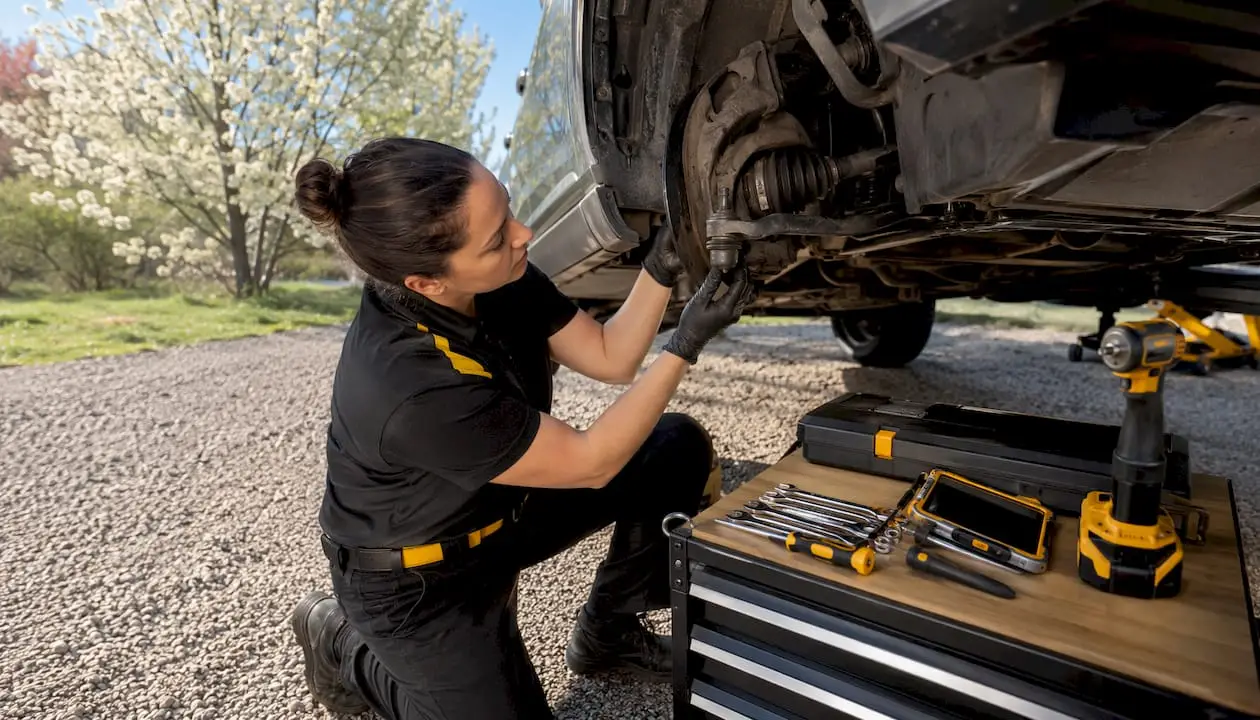
Next comes the wheel rock test: the tech grabs the tire at 12 and 6 o’clock and rocks it. Vertical play indicates a worn ball joint. Horizontal play at 9 and 3 o’clock points more toward tie-rod ends. Checking both directions is what separates an accurate diagnosis from a guess — worn bushings and rack-and-pinion issues can mimic ball joint symptoms on a road test.
The tech will also check for uneven tire wear, which is a downstream sign that suspension geometry has been off for a while. On some vehicles, a wear indicator pin protrudes from the bottom of the joint housing; when it becomes flush with the housing, replacement is due regardless of other symptoms.
Pro Tip: Ask for a Digital Vehicle Inspection (DVI) with photos or video tied to the specific component. A shop that can show you the torn boot, the measured play, or the worn indicator pin on your phone is a shop that has actually looked at the car. This also gives you documentation if a second opinion is needed.
Can you drive with a bad ball joint?
The short answer: no, not if you know it’s bad. Driving on a failed ball joint risks catastrophic wheel separation — the joint pops out of its socket, the wheel folds under the car, and you lose steering instantly. There is no safe mileage window once a joint is confirmed worn beyond spec.
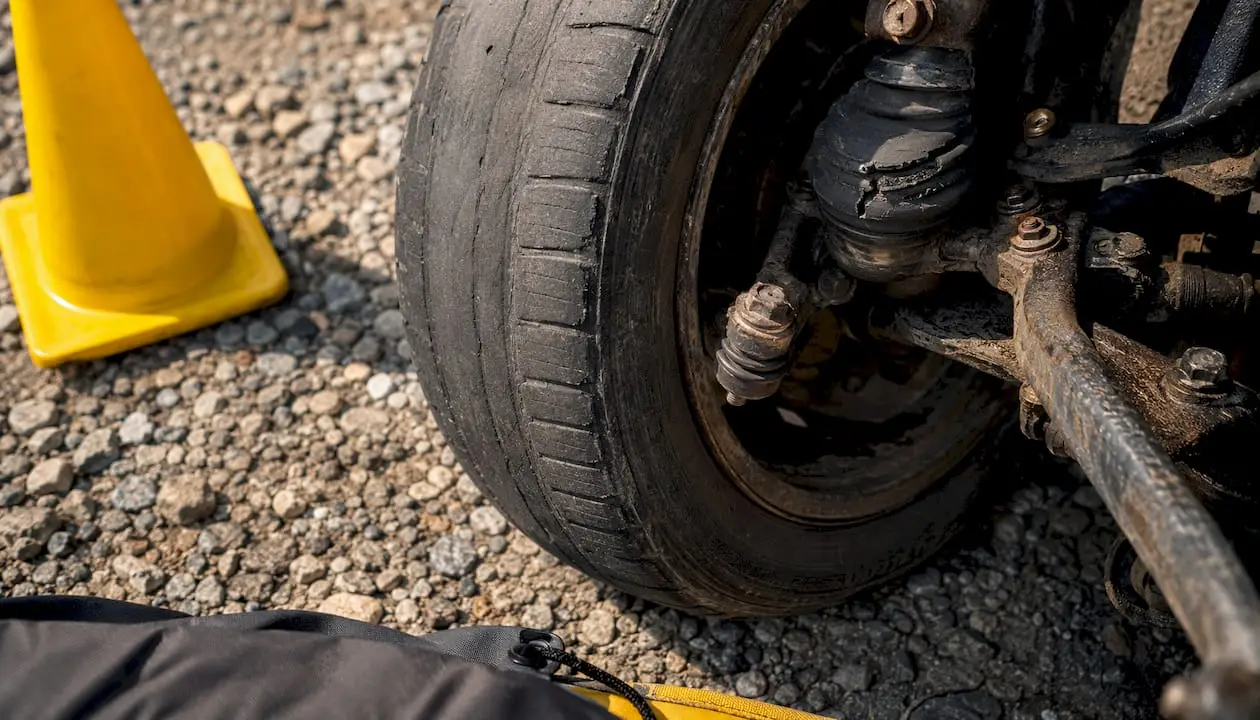
What makes this tricky is that failure timing is unpredictable. Premium parts tend to degrade with audible warning signs — clunks over bumps, vibration through the steering wheel, or a pull under braking. Lower-quality aftermarket joints can separate suddenly with no prior noise at all. You cannot always hear a bad ball joint coming.
The guidance from repair professionals is consistent: if symptoms suggest a ball joint problem, treat the vehicle as unsafe for normal highway driving until it has been inspected on a lift. Drive it slowly and directly to a shop if it is close, or have it towed if the joint is confirmed failed or if symptoms are severe.
Pro Tip: Clunks over speed bumps, a wandering steering wheel, or a tire that looks tilted are all reasons to pull over and call a shop rather than finish your commute. The tow bill is a fraction of what a wheel separation costs.
Should you replace ball joints yourself?
DIY is realistic for experienced home mechanics, but the job is not beginner territory. Here is an honest breakdown:
- Best candidates for DIY: Bolt-in ball joints on common domestic or Japanese vehicles where the joint separates cleanly from the control arm. If you have done brake jobs and basic suspension work, this is a reasonable next step.
- Tools you actually need: Ball-joint press or separator, torque wrench, breaker bar, jack stands, and a floor jack. Press-fit joints require a hydraulic press — renting one is possible, but the process is more involved.
- Time estimate: 1.5–3 hours per wheel for a practiced DIY on a bolt-in joint. Integrated control-arm replacements or press-fit jobs on trucks can run 4–6 hours or more.
- What you give up: Most shops warranty both parts and labor. A DIY install typically voids the parts warranty if the joint fails due to installation error. You also will not catch adjacent wear — a seized bushing or a cracked control arm — the way a tech on a lift will.
- The alignment problem: You cannot do a proper four-wheel alignment at home. After any ball joint replacement, the vehicle needs an alignment. Budget $80–$180 for that regardless of whether you did the rest of the job yourself.
The labor savings from DIY can be real, but on press-fit or integrated-arm designs, the tool rental, time, and risk of a missed concurrent failure often narrow that gap considerably.
What to expect at the shop: timeline, invoice, and warranty
A typical ball joint job runs like this: 15–30 minutes for a lift inspection, parts ordered same-day if in stock (or 1–3 days for less common vehicles), 1.5–4 hours of repair time depending on joint type and vehicle, and 30–60 minutes for alignment at the end. Plan for the vehicle to be in the shop for most of a day, or overnight if parts need to be sourced.
| Invoice Line | Sedan/Compact | SUV/Truck |
|---|---|---|
| Ball joint parts (per joint) | $25–$200 | $80–$200 |
| Labor (per joint) | $150–$480 | $150–$480 |
| Alignment | $80–$180 | $100–$180 |
| Shop supplies/disposal | $10–$30 | $10–$60 |
| Taxes | $10–$30 | $10–$30 |
| Estimated total (two joints) | $400–$750 | $650–$1,200+ |
Shops routinely recommend replacing both joints on the same axle in one visit. The opposite side has the same mileage and wear history, and doing both at once means paying for the teardown only once. Skipping the second joint to save money now often means paying full labor again within a year or two.
On the warranty side, most reputable shops offer 12 months/12,000 miles on parts and labor as a baseline. OEM parts often carry a longer manufacturer warranty. Ask specifically — “What warranty covers the parts and the labor?” — before you sign the work order.
How to avoid overpaying and spot red flags
A few tactics that actually move the needle on cost:
- Replace in pairs. Doing both joints on an axle in one visit cuts per-joint labor cost because the teardown is shared.
- Bundle with alignment. You need the alignment anyway. Booking it in the same visit avoids a second trip charge.
- Ask for aftermarket vs. OEM quotes. A quality aftermarket joint (Moog, Dorman) costs less than OEM and performs well on most vehicles. Get both prices and decide.
- Get a written, itemized estimate. “Ball joint replacement — $650” tells you nothing. The estimate should list parts cost, labor hours, alignment, supplies, and taxes separately.
- Ask what’s included. Some shops quote labor only and add alignment as a surprise line item at pickup.
Red flags worth walking away from:
- No lift inspection before quoting — a shop that quotes without looking at the car is guessing.
- Vague labor hours or a one-line invoice with no part numbers.
- Pressure to replace unrelated components (shocks, tie rods, control arms) without showing you photos or measurements that justify it.
- A quote dramatically higher than a second estimate with no explanation of why.
Pro Tip: Ask the shop to hold the removed parts for you to inspect. A shop confident in its diagnosis will have no problem with this. If they resist, that is worth noting.
Questions to ask before you approve any ball joint work
Walk into any shop with this short list and you will get better information and fewer surprises:
- “Is this a bolt-in, press-fit, or integrated control-arm joint?” — The answer tells you immediately how complex and expensive the job will be.
- “Do you recommend replacing both sides? Why or why not?” — A good tech will explain wear patterns, not just upsell.
- “Does the quoted price include alignment, taxes, and disposal fees?” — Forces itemization upfront.
- “Which brand of part will you use, and what warranty does it carry?” — OEM vs. aftermarket matters for longevity.
- “Can I see the inspection photos or video before I approve the repair?” — Non-negotiable at a transparent shop.
Red-flag checklist before signing:
- No lift inspection performed before the estimate
- Labor hours not specified on the written quote
- Refusal to show failed parts or DVI photos
- Invoice descriptions like “suspension work” with no line-item detail
- Second estimate comes in more than 30% lower with no clear explanation
When two estimates differ significantly, ask both shops to explain the difference in writing. Sometimes it is part quality; sometimes it is labor time; occasionally it is one shop padding the bill.
Kwik Kar Irving handles ball joint work with full transparency

Kwik Kar in Irving, TX gives you something most shops skip: a Digital Vehicle Inspection with photos and video sent directly to your phone before any work begins. You see exactly what the technician sees — the torn boot, the measured play, the worn indicator — so the estimate ties to real evidence, not a verbal description.
The ASE-certified technicians at Kwik Kar handle bolt-in and press-fit ball joints, integrated control-arm replacements, and post-repair alignments in one visit. Written estimates are itemized: parts, labor, alignment, and fees listed separately. Aftermarket and OEM part options are available so you can make the call that fits your budget and your vehicle.
Check the current service specials before your visit — Kwik Kar regularly runs discounts that can offset a meaningful portion of suspension repair costs. To schedule an inspection or request a written estimate, visit the auto repair services page or stop by the shop in Irving.
Key Takeaways
Ball joint replacement typically costs several hundred dollars for a two-joint job on a sedan at an independent shop, with labor as the largest cost driver and alignment an unavoidable add-on.
| Point | Details |
|---|---|
| Typical cost range | $400–$750 for two joints on a sedan including alignment; $650–$1,200 or more for SUVs and trucks. |
| Labor dominates the invoice | Labor runs $150–$480 per joint; joint type and vehicle complexity drive that number more than part price. |
| Alignment is not optional | Budget $80–$180 for alignment after any ball joint work — skipping it causes rapid, uneven tire wear. |
| Safety urgency is real | A confirmed bad ball joint means no normal driving; tow or drive slowly to a shop immediately. |
| Kwik Kar Irving | Offers ASE-certified ball joint service with DVI photos, itemized estimates, and alignment in one visit. |
Useful sources
The most consistent finding across repair data sources: labor time and joint design — not the part itself — determine whether your ball joint job costs $300 or $1,200. Get an itemized estimate that separates parts, labor, and alignment before you approve anything.
- Ball Joint Replacement Cost Guide — Cost Insider: Detailed U.S. price tables covering parts, labor, and total ranges for single and dual-joint jobs, with notes on OEM vs. aftermarket trade-offs.
- Suspension Ball Joint Replacement Cost Estimate — RepairPal: National average cost data ($308–$463) with labor and parts split; useful for benchmarking independent shop quotes.
- Ball Joint Replacement Cost 2026 — Empire Auto Protect: Vehicle-specific price examples (Honda Civic, Ford F-150, BMW, Mercedes) and guidance on pair replacement and alignment bundling.
- Ball Joint Replacement Cost Guide — AmpAuto: Parts-only price ranges and explanation of when integrated control-arm replacement is required.
- Can You Drive with a Bad Ball Joint? — Tools Advisers: Safety guidance on failure risk and when to tow vs. drive to a shop.
- Signs of a Bad Ball Joint — Tedious Repairs: Technician-level diagnostic steps including lift inspection, boot check, and wheel rock test.
- Ball Joint Failure Modes and Symptoms — GDST Auto: Explains how part quality affects failure mode — gradual warning vs. sudden separation.
- Symptoms of Bad Ball Joints — MOOG Parts: Wear indicator guidance and OEM-quality replacement context.
- Kwik Kar Irving — Auto Repair & Oil Change Services: Full-service suspension repair, alignment, and DVI inspection services in Irving, TX.
- Suspension & Steering Repairs — Total Mobile Mechanical: Industry reference covering suspension and steering repair techniques and proper diagnostic methods.
FAQ
Can you drive a vehicle with a bad ball joint?
No. Driving on a confirmed bad ball joint risks wheel detachment and immediate loss of steering. Tow the vehicle or drive it only at reduced speed directly to a repair shop.
What are the symptoms of a failing ball joint?
Common signs include clunking noises over bumps, a wandering or loose steering feel, uneven tire wear, and a tire that appears tilted. Some joints fail silently, so any of these symptoms warrants a lift inspection.
Is replacing ball joints a big job?
It depends on the vehicle. A bolt-in joint on a compact car takes 1.5–2 hours per side. A press-fit or integrated control-arm design on a truck or luxury vehicle can take 3–4 hours or more, which is why labor is the largest cost driver.
Is replacing ball joints expensive?
At most independent U.S. shops, a single ball joint job runs $200–$500 including parts and labor. A full axle replacement with alignment typically lands $400–$750 on a sedan and $650–$1,200 or more on an SUV or truck.